

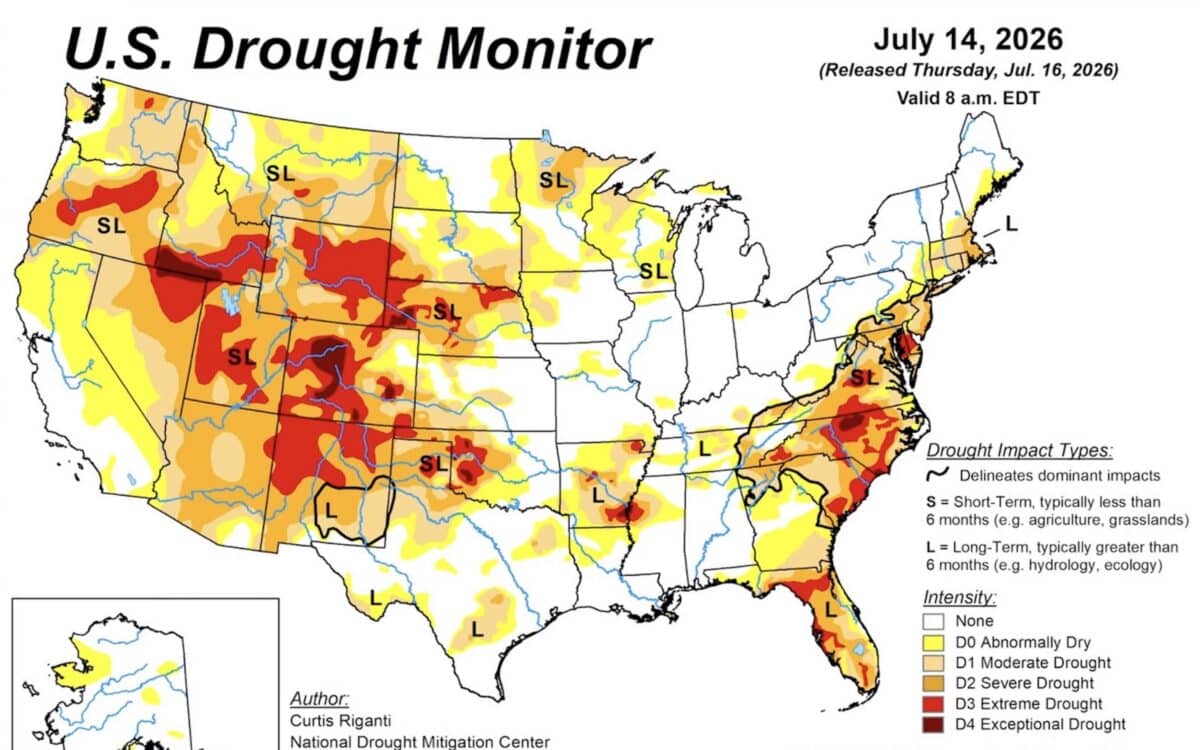
The latest U.S. Drought Monitor shows a modest improvement in drought conditions across the United States after widespread rainfall brought much needed moisture to parts of the country. While the overall footprint of drought shrank slightly during the past week, significant long term drought remains in place across many regions and conditions continued to deteriorate in parts of the West and Upper Midwest.
According to the July 16th U.S. Drought Monitor update, 38.88 percent of the United States, including all 50 states and Puerto Rico, is experiencing moderate drought or worse. That is down from 39.59 percent one week earlier.
The number of people living in drought also declined. An estimated 118.7 million people are now in drought affected areas compared with 125.1 million last week.
Heavy Rain Improves Conditions Across the East
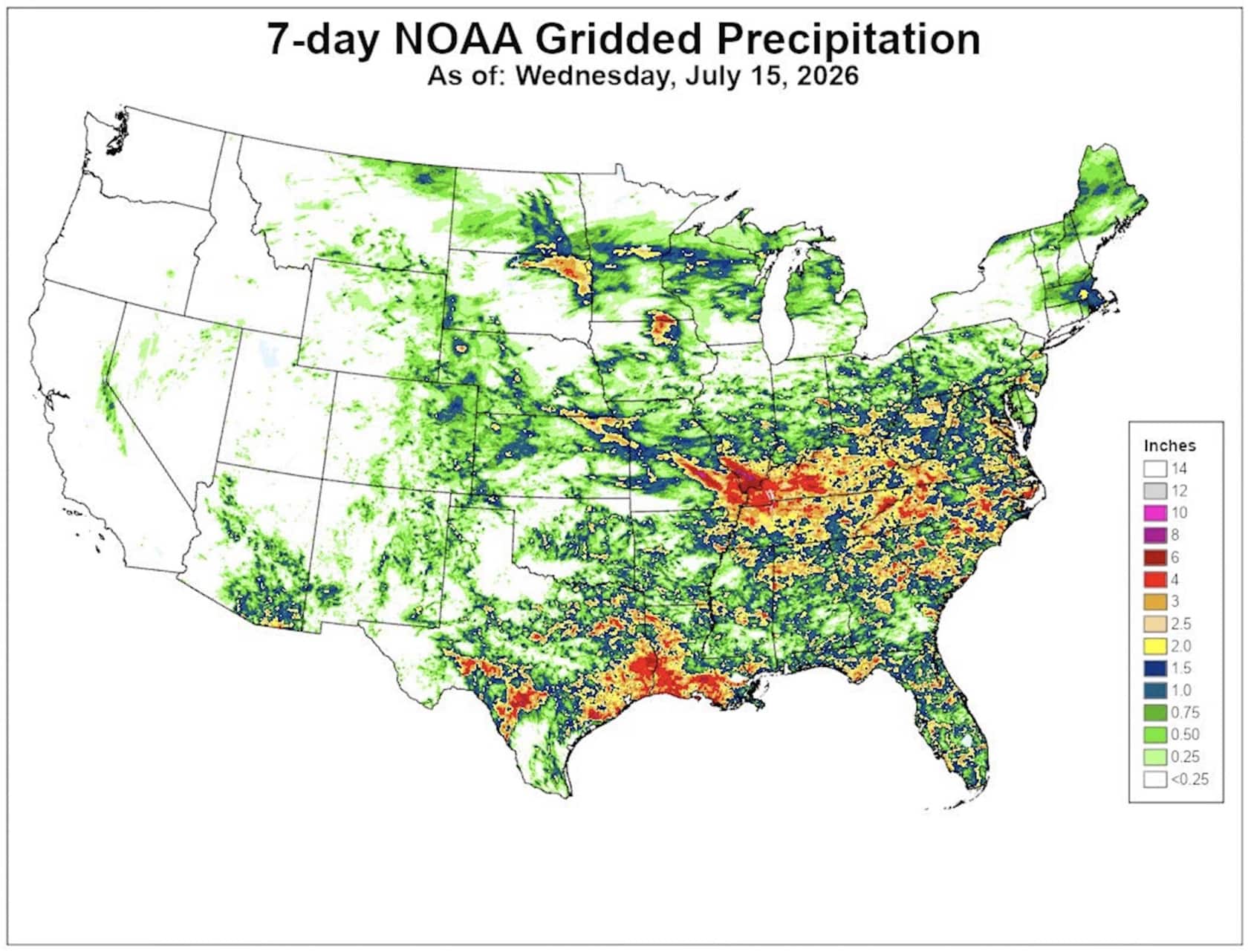
One of the biggest stories in this week’s report was the widespread rainfall that stretched from northeast Texas through the Mid Atlantic. The soaking rains brought relief to areas that had been dealing with drought and abnormal dryness, improving short term conditions across a broad swath of the country.
Localized improvements were also recorded in parts of New York, southern New England, and portions of the central Great Plains. Additional upgrades were made in Utah along with parts of Oklahoma and Texas after recent precipitation improved short term moisture levels.
Despite those gains, drought experts caution that many locations are still dealing with long term deficits. Recent rainfall has helped replenish surface moisture in some areas, but deeper groundwater shortages and longer lasting drought impacts remain.
Western States Continue to See Drought Expansion
While the eastern half of the country benefited from a wetter pattern, several western states saw conditions worsen during the past week.
Central Colorado experienced an expansion of both extreme and exceptional drought as dry weather continued to grip the region.
In the Pacific Northwest, Washington saw widespread degradation as poor streamflow and ongoing precipitation deficits continued to impact water supplies. The report described streamflow conditions in parts of the state as especially concerning, underscoring the cumulative effects of a prolonged lack of rainfall.
Upper Midwest Turns Hot and Dry
Drought also expanded across parts of the Upper Midwest after another week of warm and dry weather.
Wisconsin, the Upper Peninsula of Michigan, Minnesota, and North Dakota all experienced widespread degradation as rainfall failed to keep pace with increasing summertime demand. The combination of above normal temperatures and limited precipitation allowed drought conditions to spread across much of the region.
Alaska, Hawaii, Florida, and Puerto Rico See Mixed Results
Conditions were mixed outside the Lower 48.
Heavy rainfall brought localized improvements to northwest Alaska and north central Puerto Rico. At the same time, abnormal dryness developed across interior Alaska and parts of Hawaii.
Elsewhere, severe drought expanded in south central Puerto Rico and southeast Florida after continued short term rainfall deficits.
Drought Outlook Remains Uncertain
The latest U.S. Drought Monitor reflects how quickly conditions can change during the heart of summer. A single week of widespread rainfall improved drought coverage across several regions, but many of those gains remain fragile. Without additional storms, hot temperatures and increased evaporation can quickly erase recent progress.
At the national level, drought coverage has edged lower and millions fewer Americans now live in drought affected areas. Even so, nearly 39 percent of the country remains in moderate drought or worse, with some western states continuing to experience the most severe levels of drought on the U.S. Drought Monitor.