

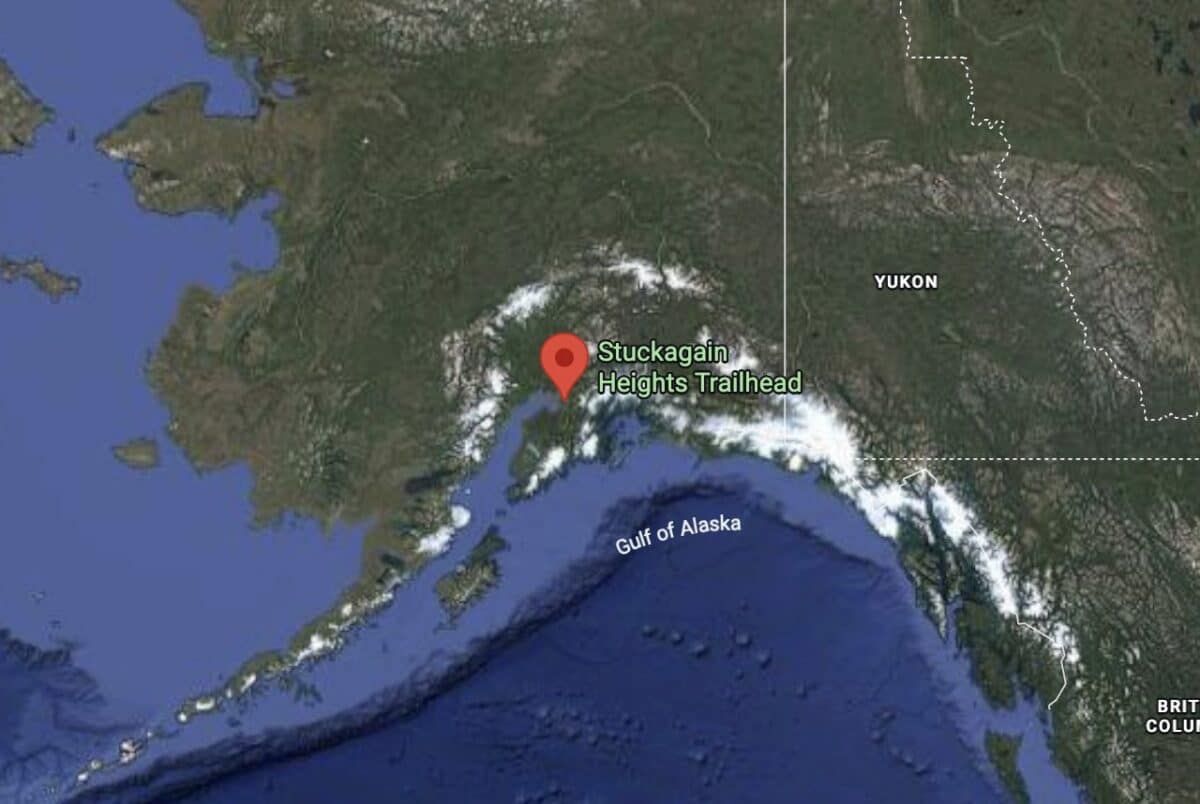
Anchorage, Alaska — A grizzly bear attacked a man biking the Dome Trail in Anchorage Saturday afternoon. The Alaska Department of Fish and Game reports the man was biking down a singletrack trail about a mile from the Stuckagain Heights trailhead when he encountered the bear walking toward his position.
The biker managed to stop before colliding with the bear and yelled at it while making himself look big to deter it. The bear charged the man who put his bike between himself and the bear. The grizzly bit the bike once and then knocked the bike away. The bear then knocked the man to the ground and scratched and bit the victim above the waist.
The victim suffered serious but non life threatening injuries. The man was able to make to the trailhead by himself and was taken to a local hospital. The man was carrying bear spray at the time but was not able to deploy it.
The attack was likely triggered due to the surprise nature of the encounter rather than aggressive behavior. The Alaska Department of Fish and Game determined they will not attempt to find the bear and neutralize it because it was exhibiting normal bear behavior.
This is the second grizzly bear attack on the Dome Trail in less than a year. Last July a woman was hiking on the trail when she was mauled by a grizzly bear. Learn more about Alaskan bear safety from below.
The Essentials for Traveling in Alaska’s Bear Country
Alaska is bear country and one of the few places in the world where all three species of North American bears live. You may have a chance to see a bear in Alaska. But even if you don’t you will never be far from one.
Brown bears, also called grizzly bears, are found nearly everywhere in Alaska. Black bears inhabit most of Alaska’s forests. Polar bears frequent the sea ice and tundra of extreme northern and western Alaska.
Bears are curious, intelligent and tend to avoid or ignore people, but can be dangerous. Many bears live in Alaska and many people enjoy the outdoors, but surprisingly few people see bears and only a few of those are ever threatened by a bear.
Respecting bears and learning proper behavior can help you avoid conflict—and help you know how to react if you do see a bear.
Fast Facts Bear Safety Tips
- Make noise so you don’t surprise a bear. Stay alert and look for signs of bears.
- Never approach or crowd bears; respect their “personal space.”
- Keep food, garbage and other attractants out of reach of bears.
- Stay calm during a bear encounter. Ready your deterrent. Stand your ground, group up with others and alert the bear by talking calmly. Don’t run.
Dealing with Close Encounters
If you see a bear, avoid it and give the bear every opportunity to avoid you. If you do encounter a bear, remain calm and try to observe what the bear is doing. Chances are good you are not in danger. Most bears are interested only in protecting food, cubs or their “personal space.” Once they feel there is no threat, they will move on. Remember the following:
If You See a Bear
- If the bear appears not to have sensed you, move away without alerting it. Keep your eyes on the bear.
- If the bear does notice you, face the bear, stand your ground and talk to it calmly. Let the bear know you are human. Talk in a normal voice. Help the bear recognize you. Try to appear larger by standing close to others in your group or wave your arms slowly above your head. Try to back away slowly, but if the bear follows, stop and hold your ground. Prepare your deterrent if you have one.
- If a bear cannot tell what you are, it may come closer or stand on its hind legs to get a better look or smell. A standing bear is usually curious, not threatening.
- If you take the above actions and the bear continues to focus on you or approach, you should become more assertive: raise your voice, beat on pans, use noisemakers, throw rocks or sticks. Use your deterrent if you have one. Drive a bear off rather than let it follow you. If you are with others, group together to look big and stand your ground.
Surprise Encounters
- If you surprise a bear at close distance, it may feel threatened and act defensively, especially if it has cubs or food. Continue to stand your ground. If the bear moves away, walk away slowly, keeping your eyes on the bear. Increase your distance.
Never Run
- You can’t outrun a bear. Bears can run much faster than a sprinter and, like dogs, they will chase fleeing animals. A charging bear might come within a few feet before running off. It’s important to stand your ground.
In the Rare Event of an Attack
If a bear makes contact, you have two choices: play dead or fight back. The best choice depends on whether the bear is acting defensively or is seeking food.
- Most brown bear attacks are a defensive response. Play dead in defensive situations: Hit the ground and lie still if a brown bear you have surprised or any female bear protecting cubs makes contact. Lie flat on your stomach, legs spread apart for stability, with your hands protecting the back of your neck. A defensive bear usually ends its attack if it feels you are not a threat. Remain motionless for as long as possible. If you move, and the bear sees or hears you, it may return and renew its attack. In a prolonged attack, fight back.
- Fight back in other situations: Rarely, lone black bears or brown bears may perceive a person as potential food. Fight any bear that has been calmly focused on you and makes contact or that breaks into a tent or building. In almost all situations, your best defense against an attacking black bear is to fight back. Concentrate on the bear’s face or muzzle with anything you have on hand.
