

For many skiers in the Northern Hemisphere, this past ski season was underwhelming. This has led some to seek solace from conditions in the Southern Hemisphere.
Winter is well underway down south, as ski resorts have been operating there for a couple of months now. While some countries are seeing some of their best conditions in years, one in particular is struggling.
Here’s a recap of how the Southern Hemisphere’s ski season has been, along with some of the big changes at these ski resorts this winter.
Argentina
Like Chile, Argentina had a very slow start to its season. However, they have seen lots of snowfall over the past month or so, resulting in a deep snowpack.
This season saw major additions at a few ski resorts. At Cerro Chapelco, a new ten-person gondola system was installed. At Cerro Martial, which is the world’s southernmost ski area, a new quad chairlift opened. This restored lift access to the upper mountain, which hadn’t been available for years.
Australia
Australia had a banner 2025 ski season, showing that the country can still offer excellent skiing when the conditions are right. Unfortunately, that hasn’t repeated itself this year.
El Niño, which recently arrived, doesn’t typically mean good conditions for Australia. Unfortunately, the Australian Alps have seen too many warm, rainy days. Snowmaking crews have been working when possible to keep terrain open. July was even one of the warmest in the country’s history. Now, Aussie skiers are wondering if spring arrived early.
This will likely lead to early closures. For example, Mt. Baw Baw has already announced it will close on August 23rd.
The big upgrade this season came from Charlotte Pass, which opened a new double chairlift following years of construction.
This struggle matters for Vail Resorts, which owns 3 ski resorts in the country. With below-average financial results last ski season in North America due to the rough winter, you have to wonder how a disappointing season in Australia could bog them down further.
Chile
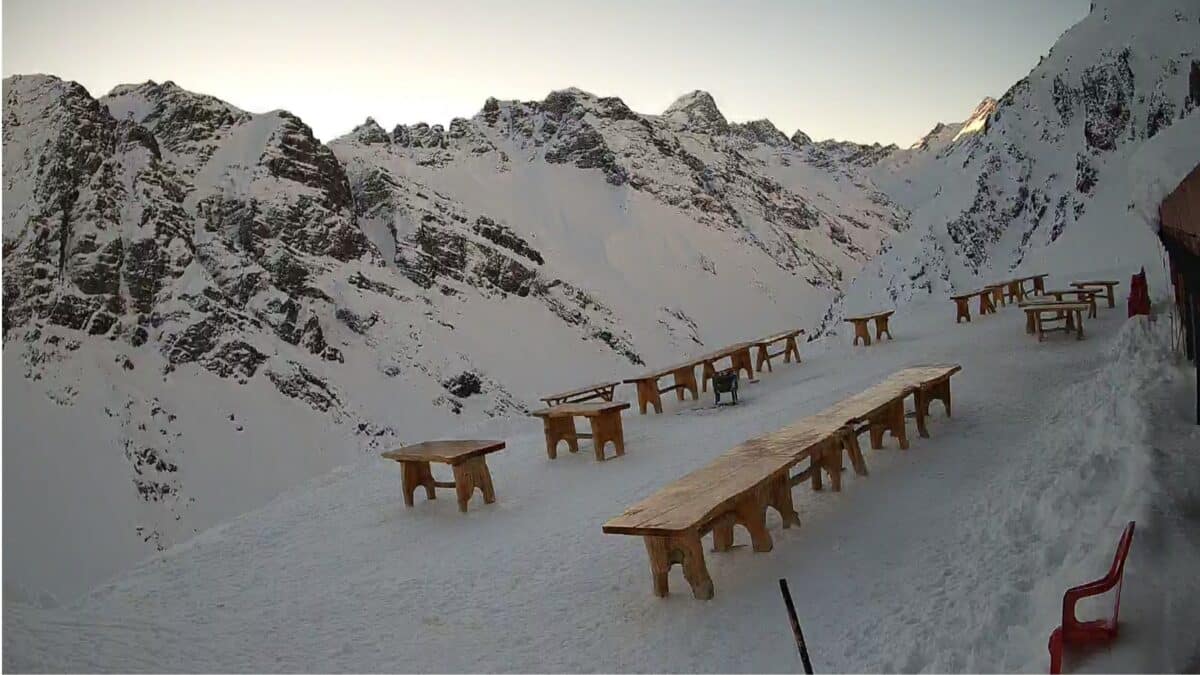
After a few great starts over the past few years, Chile’s ski season got off to a very slow start. It even drew headlines from international news outlets, such as CNN, about the struggle. Soon after, the faucet turned on, and it hasn’t stopped. The snow totals are incredible, with Portillo seeing over 300 inches and Valle Nevado surpassing 200 inches for this winter. Season extensions are likely, with La Parva, Portillo, and Valle Nevado already announcing plans to stay open until October.
However, has created operational challenges. For Portillo, the access road to the mountain was closed for around a month because the Chilean government wouldn’t reopen it due to the heavy snow. While guests could still reach the resort by helicopter, many couldn’t reach it by road. Following public criticism from Portillo, the road was reopened to a limited extent. Unfortunately, it’s closed again now (Update 8/21: it’s set to reopen on Saturday and Sunday to everybody).
Regarding major upgrades, Mountain Capital Partners invested millions in La Parva and Valle Nevado, improving their interconnectivity.
Speaking of Mountain Capital Partners, the big Chilean ski industry news this summer was their failed attempt to purchase several ski resorts in the country. This would have included El Colorado, which would have meant all three of the Tres Valles ski resorts would’ve been owned by the same company. While Mountain Capital Partners wanted to invest millions in these properties, the Chilean government had anti-trust concerns.
Lesotho
After a ski resort in South Africa closed in 2020 (possibly permanently), Afriski is the last operating African ski resort in the Southern Hemisphere. Regarded as one of the poorest countries in the world, Afriski plays an important part in Lesotho’s tourism sector. According to the Associated Press, tourism amounts to around 7% of its GDP. Like past winters, Afriski hasn’t seen much natural snow, so it relies on snowmaking to operate. Regardless, it sounds like they’ve had an enjoyable and busy season over there.
New Zealand
The vibes before the 2026 ski season were not good for the Kiwis. The past couple of years saw limited operations at club ski fields, leading a few ski areas to scale back their operational strategy.
While one ski field temporarily opened much earlier than usual, most major ski resorts had to delay their season start because of the lack of snow. However, these ski resorts have fared much better in July and August, with more frequent snowfall. Currently, results are promoting wall-to-wall coverage, signaling a rebound for New Zealand’s ski industry.
Pershaps the biggest offseason addition was Coronet Peak adding an all-weather snowmaking system. This allowed them to open a limited amount of terrain starting at the end of May.
Also of note is The Remarkables adding new inbounds terrain that was previously only accessible to backcountry skiers and riders. Meanwhile, The Remarkables is pushing forward with its expansion plan proposal, which would make it the largest ski resort in New Zealand.
Image/Video Credits: Ski Portillo, Bartholet Swiss/Cerro Martial, Karen the Burger Baron, Charlotte Pass Snow Resort, Afriski Mountain Resort, Mt. Hutt
