

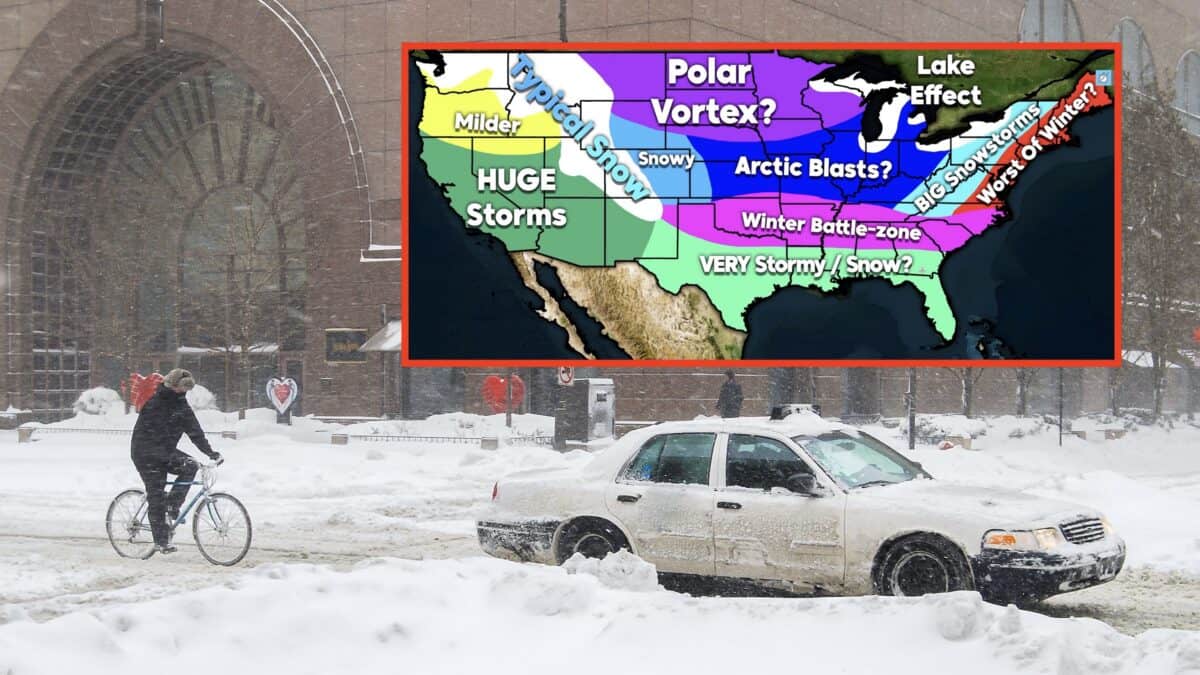
Direct Weather has released an updated forecast for the 2026-2027 winter, highlighting the potential for major snowstorms across the Southwest, southern Rockies and East Coast. The forecast points to a historically strong El Niño as the dominant influence on the upcoming season, with changes to the expected temperature pattern increasing the potential for winter weather across several regions.
The updated outlook also suggests a milder winter across parts of the northern United States, although Arctic outbreaks could still bring periods of intense cold and lake-effect snow.
Pacific Northwest and Northern Rockies
The Pacific Northwest faces the possibility of below-average precipitation and above-average temperatures, potentially limiting snowfall at ski resorts throughout the region. However Direct Weather described the precipitation forecast as one of the least certain parts of its outlook, leaving room for changes as winter approaches.
The northern Rockies are also expected to lean toward below-average snowfall, while warmer Pacific air could push temperatures above normal. Skiers and snowboarders in these areas may face a less consistent season if the forecast verifies.
Southern Rockies and Southwest
The Southwest stands out as one of the strongest storm signals in the updated forecast. California, Nevada and Arizona are expected to experience above-average precipitation as a strong Pacific jet stream directs storms into the region.
Direct Weather expressed particularly high confidence in a wetter-than-normal winter across parts of California and Arizona, raising the potential for substantial snowfall in the mountains. The Sierra Nevada could be especially active, with the forecast suggesting the possibility of a historically snowy season.
The southern Rockies, including Colorado, Wyoming and surrounding areas, also have favorable prospects for snowfall. However the forecast indicates a stronger snow signal across the southern Rockies than in the northern Rockies.
Northern Plains, Midwest and Great Lakes
The northern Plains and upper Midwest could experience below-average precipitation alongside warmer-than-normal temperatures. This combination would favor below-average snowfall, potentially reducing opportunities for skiing and snowboarding in some areas.
The region should not expect uninterrupted mild weather, though. Direct Weather anticipates occasional Arctic outbreaks that could bring sharp temperature drops into the Plains, Midwest and Ohio Valley. These cold spells could also produce lake-effect snow around the Great Lakes, particularly during the first half of winter when relatively warm lake waters could enhance snowfall.
Southeast and Gulf Coast
The South is forecast to experience above-average precipitation and a tendency toward below-normal temperatures. Frequent storms and persistent cloud cover could help keep average temperatures down despite the broader influence of El Niño.
The combination could also create opportunities for unusual winter weather, including occasional snow across parts of the Deep South. While widespread snowfall is far from guaranteed, Direct Weather suggests some southern locations could experience notable winter storms.
East Coast and Northeast
The East Coast is another region to watch closely, with above-average precipitation expected along much of the coastline. Direct Weather anticipates an elevated chance of nor’easters, potentially bringing significant snowfall to the Appalachians, Mid-Atlantic, Northeast and New England.
Storm tracks will determine whether precipitation falls as rain or snow, particularly near the coast. Nevertheless the updated forecast suggests the potential for several major winter storms that could deliver substantial snowfall to ski areas across the eastern United States.
The forecast remains subject to change as winter approaches, particularly across the Pacific Northwest. The coming season could feature a sharp contrast between warmer, potentially less snowy northern regions and stormier conditions across the Southwest and East Coast.
