

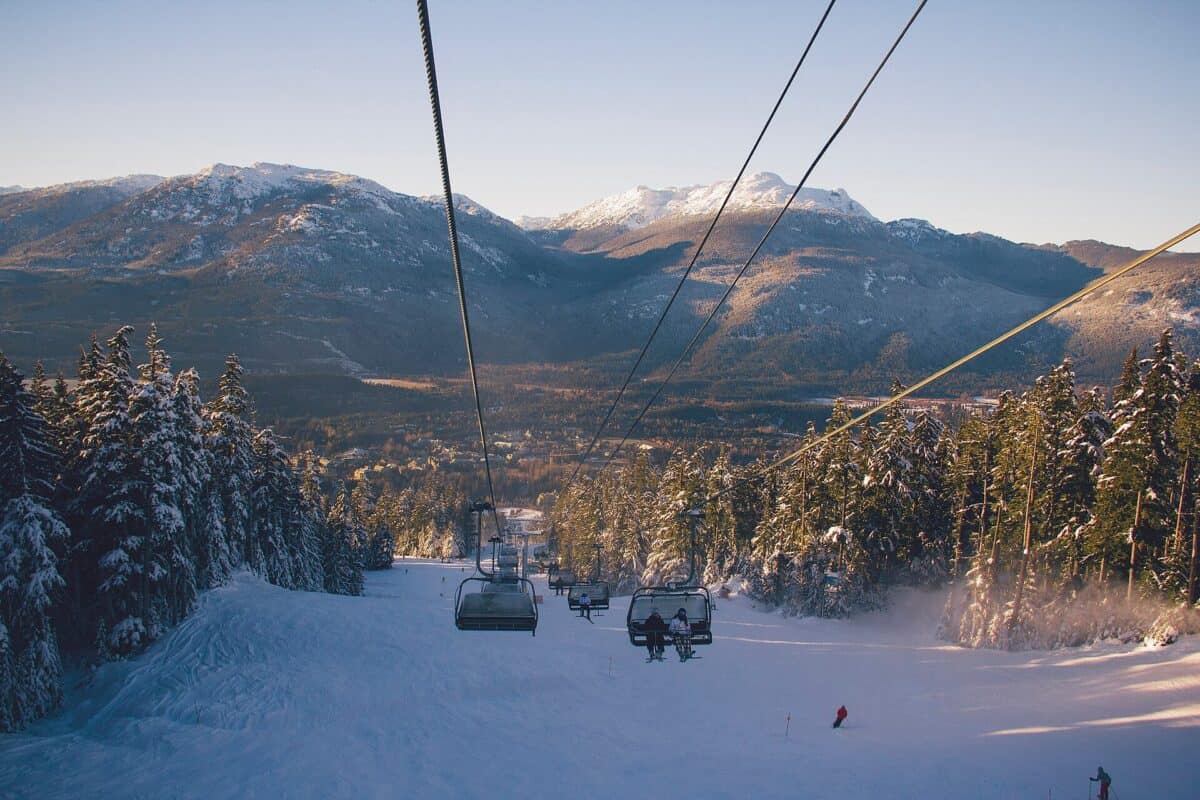
Faster isn’t always better. From lower construction costs to more dependable operations during winter storms, traditional fixed-grip chairlifts still offer some significant advantages.
For decades, ski resorts across North America have been racing to install faster, bigger and more technologically advanced chairlifts. High-speed quads have given way to six-packs, eight-person chairlifts, heated seats and enclosed bubbles.
But not every ski resort is convinced that faster is necessarily better.
Several resorts investing millions of dollars in new mountain infrastructure are deliberately choosing traditional fixed-grip chairlifts over high-speed detachable lifts.
One of the most interesting examples this winter comes from Killington Resort in Vermont, where a brand-new, $7.5 million fixed-grip quad is replacing a chairlift that had been in service since 1973.
The decision wasn’t driven by nostalgia.
There are several practical reasons why some ski resorts are sticking with a technology that has been around for generations.
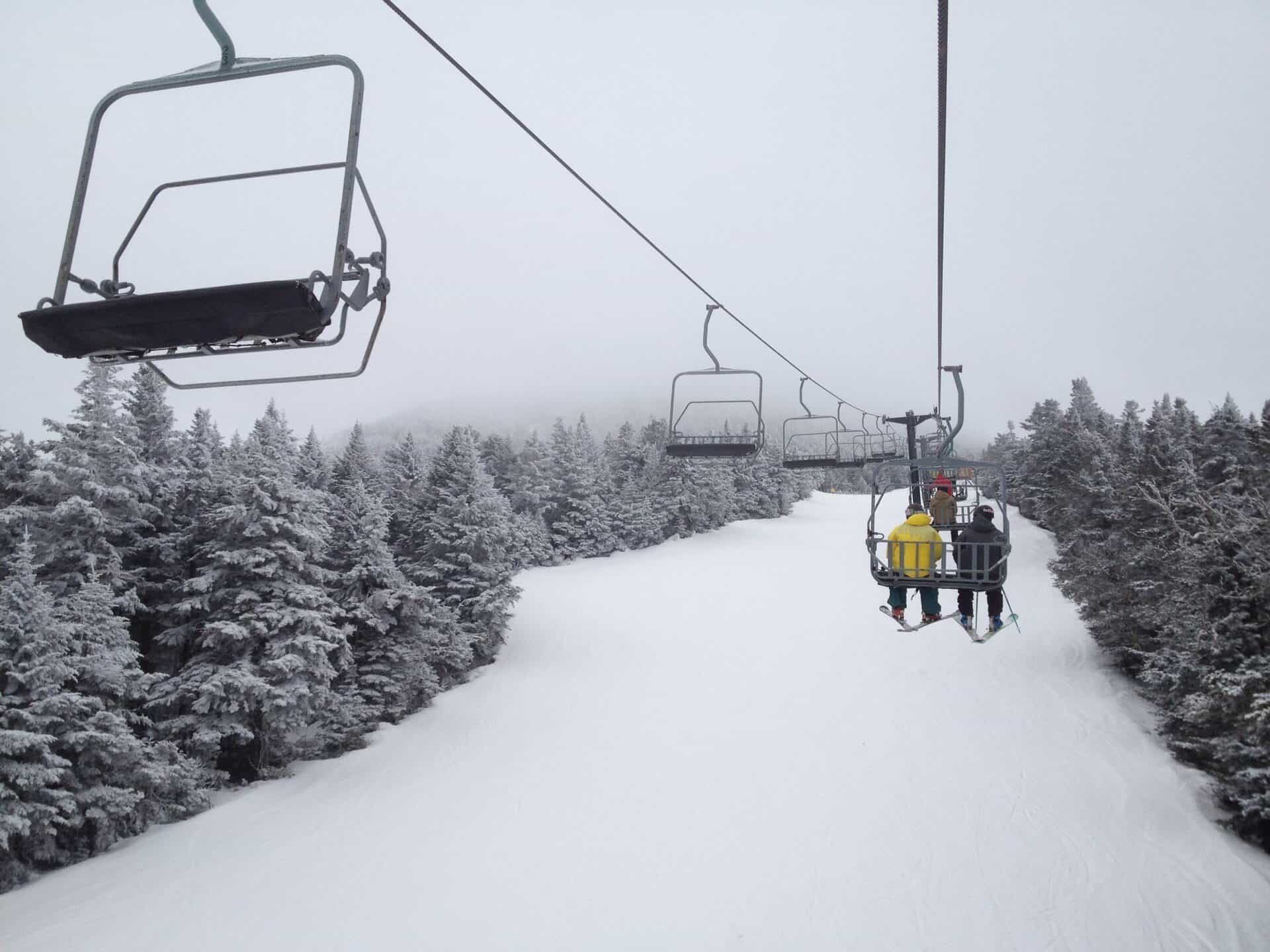
Killington Is Betting on Reliability Over Speed
As part of its capital improvements for the 2026–27 ski season, Killington replaced its aging Snowdon Triple with a new Doppelmayr fixed-grip quad.
The new Snowdon Quad features:
- A 33% increase in uphill capacity.
- A slightly faster ride than its predecessor.
- Modern electronic controls.
- A backup generator capable of operating the lift at full speed during a power outage.
Despite the availability of high-speed alternatives, Killington deliberately chose to retain a fixed-grip chairlift.
In a detailed explanation published by the resort, Killington’s lift maintenance team outlined how traditional chairlifts can be particularly valuable during the freezing rain, icing and unpredictable winter weather frequently experienced in New England.
The Snowdon Quad also provides an important alternative route when neighboring lifts are unavailable, helping keep skiers moving around the mountain.
Killington’s commitment to fixed-grip technology extends beyond Snowdon. Nearby Pico Mountain is scheduled to receive a new $3.8 million fixed-grip quad for the 2027–28 ski season.
1. Fixed-Grip Chairlifts Are Generally Less Expensive
Installing a new ski lift is an extraordinarily expensive undertaking.
Between engineering, permitting, excavation, concrete foundations, steel towers, electrical systems and the lift itself, a single chairlift project can cost millions of dollars.
High-speed detachable chairlifts generally require more sophisticated equipment and larger, more complex terminals than traditional fixed-grip lifts.
For comparison, Killington’s recently completed chairlift projects include:
- Snowdon fixed-grip quad: Approximately $7.5 million.
- Superstar high-speed six-pack: Approximately $12 million.
While these are different projects with different specifications, they illustrate the scale of investment involved in modern lift infrastructure.
For smaller and independently owned ski areas, the additional expense of installing a detachable lift can be difficult to justify, particularly on shorter lift lines.
Money saved by installing a fixed-grip lift can instead be invested in snowmaking, grooming equipment, additional terrain, base lodges or replacing other aging chairlifts.
2. Fewer Moving Parts Can Mean Less Downtime
The fundamental difference between a fixed-grip and detachable chairlift is surprisingly simple.
On a traditional fixed-grip chairlift, the chairs remain attached to the haul rope as they travel around the entire lift.
On a high-speed detachable chairlift, the chairs disconnect from the moving haul rope when entering the terminal. They slow down for passengers to load and unload before accelerating and reconnecting to the rope.
This allows detachable lifts to travel much faster up the mountain while providing a slower, more comfortable loading experience.
However, it also requires additional mechanical equipment.
Detachable lifts incorporate specialized grips, acceleration and deceleration systems, terminal conveyors and additional monitoring equipment.
More mechanical complexity means more components that require regular inspection, servicing and eventual replacement.
Modern detachable chairlifts are remarkably dependable when properly maintained, but the simpler mechanical design of a fixed-grip lift can translate into maintenance advantages over its operational lifetime.
As Killington lift maintenance manager Andy Lyman explained, “in general, we see less downtime on the fixed-grips.”
For a ski resort that depends on keeping its lifts operating every day of the winter, that simplicity has considerable value.
3. Fixed-Grip Chairlifts Can Be Easier to Operate During Ice Storms
Anyone who has spent significant time skiing in New England knows that winter precipitation doesn’t always fall as snow.
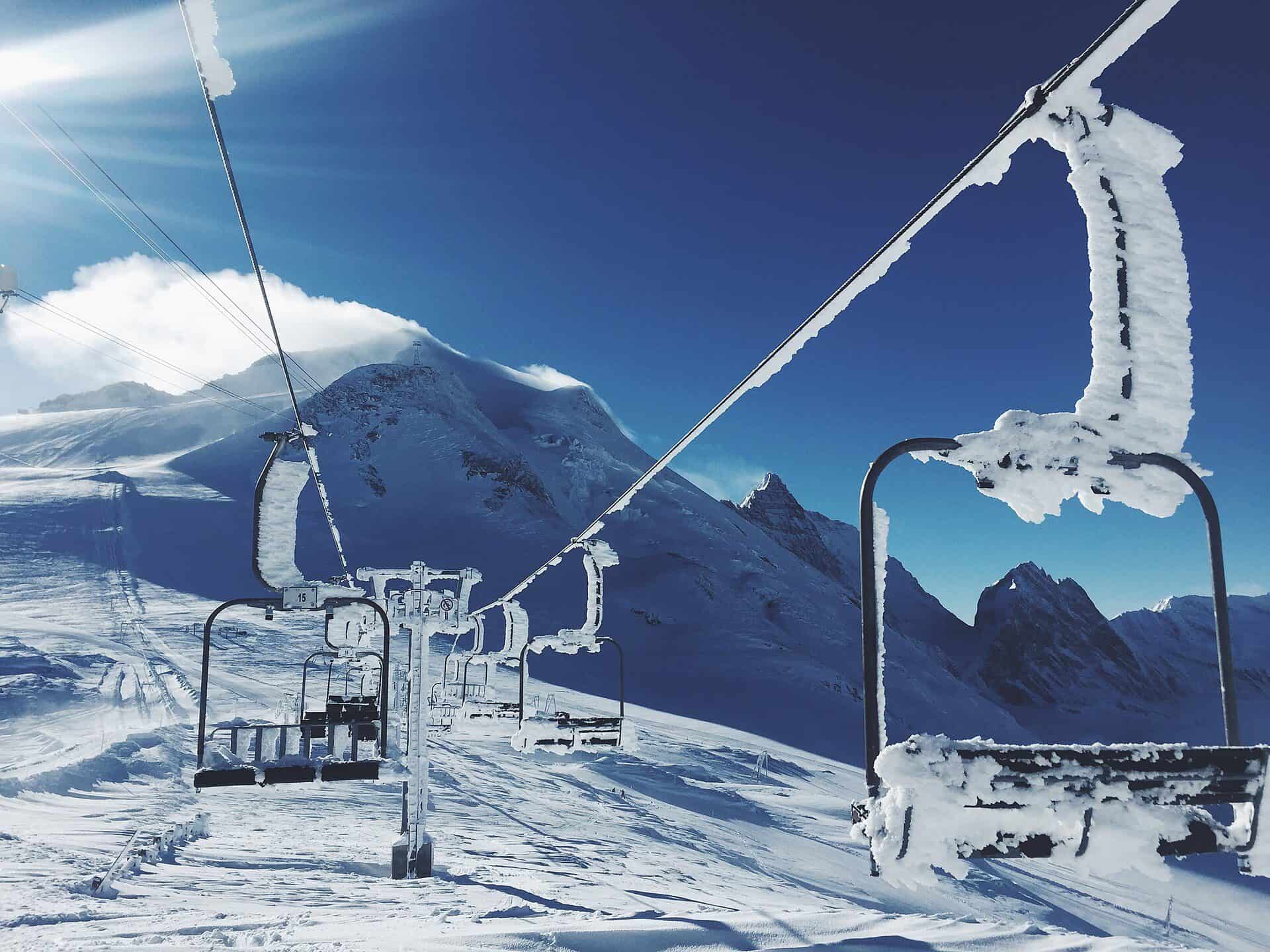
Freezing rain, sleet and dramatic temperature swings can coat chairlifts in thick layers of ice overnight.
For detachable chairlifts, ice accumulation can create complications involving the grips and the equipment responsible for moving chairs through the terminals.
Before opening, maintenance crews may need to clear ice from numerous components and carefully prepare the lift for operation.
Fixed-grip chairlifts eliminate some of that complexity because the chairs never detach from the haul rope.
They still require deicing, inspections and other preparations following severe weather, but getting them operational can be considerably more straightforward.
At Killington, fixed-grip chairlifts are an important part of the resort’s strategy for maintaining mountain access during difficult weather.
On some mornings, the slower chairlift may be the only one getting skiers up the mountain.
4. Wind Resistance Is More Complicated Than You Might Think
One commonly cited advantage of traditional chairlifts is their ability to operate during challenging mountain weather.
But are fixed-grip chairlifts actually better in high winds?
Not necessarily.
A chairlift’s ability to withstand wind depends on numerous factors, including:
- The direction and strength of the wind.
- The weight and design of the chairs.
- The height and placement of lift towers.
- The exposure of the lift line.
- Surrounding trees and terrain.
- Manufacturer specifications and operating restrictions.
According to reporting by Ski Area Management, some larger detachable chairlifts with heavier carriers and larger haul ropes can actually perform better in windy conditions than smaller fixed-grip lifts.
A well-designed fixed-grip chairlift positioned in a sheltered area, however, can provide a dependable alternative when more exposed lifts are placed on wind hold.
The advantage is often about the overall design of a resort’s lift network rather than simply the technology used by an individual chairlift.
5. Faster Chairlifts Don’t Always Move More Skiers Uphill
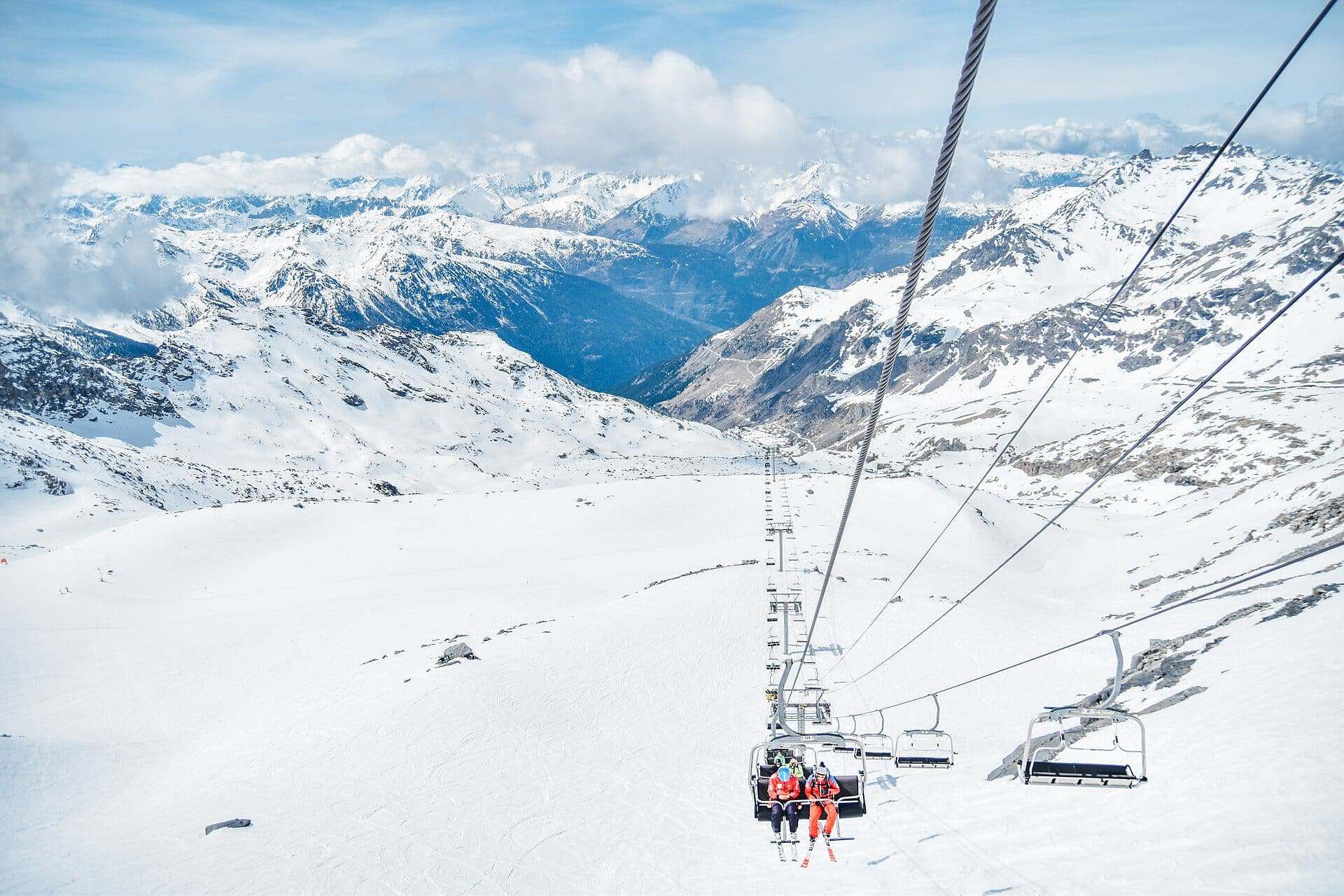
This may come as a surprise to many skiers: installing a high-speed chairlift does not automatically increase uphill capacity.
Lift speed and hourly passenger capacity are two different measurements.
According to manufacturer Leitner-Poma, a modern fixed-grip quad can transport as many as 2,400 passengers per hour.
A high-speed quad can theoretically have the same hourly capacity while delivering passengers to the summit in considerably less time.
The difference comes down to the spacing of the chairs and how frequently passengers are loaded.
Consider a hypothetical comparison:
| Specification | Fixed-Grip Quad | High-Speed Quad |
|---|---|---|
| Passengers per chair | 4 | 4 |
| Hourly capacity | 2,400 | 2,400 |
| Approximate line speed | 5.6 mph | 11.2 mph |
| Ride time over 1 mile | 10.7 minutes | 5.4 minutes |
The high-speed lift gets individual skiers to the top faster, but both lifts can deliver the same number of passengers per hour under these hypothetical operating conditions.
Actual capacity will also depend on loading efficiency and interruptions.
For a short chairlift serving a relatively small terrain pod, spending millions of additional dollars to save a few minutes of ride time may not make financial sense.
6. Slower Lifts Can Help Preserve the Skiing Experience
Not every section of a ski resort needs to accommodate thousands of skiers per hour.
Some terrain, particularly steep bowls, narrow trails, powder-filled glades and expert-only areas, can benefit from deliberately managing the number of skiers arriving at the top.
Installing a lower-capacity chairlift can help limit skier density, reduce congestion and slow the rate at which fresh snow gets tracked out.
However, it is the lift’s actual capacity and the rate of skier arrivals that matter here, not simply how fast the chairs travel.
For resorts looking to maintain a less crowded mountain experience, a carefully designed fixed-grip lift can be a practical choice.
Fixed-Grip Chairlifts Are Still Being Installed Across North America
Killington isn’t alone in investing in traditional chairlift technology.
According to Ski Area Management, North American ski resorts installed 21 fixed-grip triples and quads in 2024, accounting for nearly half of that year’s aerial lift installations. Manufacturers also reported strong demand for fixed-grip chairlifts in 2025.
Several notable projects for the 2026–27 ski season include:
Powder Mountain, Utah: The new DMI fixed-grip triple will provide access to more than 1,000 acres of newly public advanced and expert terrain, including steep glades and chutes.
Purgatory Resort, Colorado: The new Colorado Couloir fixed-grip triple will improve access to the upper mountain while serving additional challenging terrain.
Whistler Blackcomb, British Columbia: The new Showcase fixed-grip quad is replacing the former T-bar and improving access to Blackcomb’s alpine glacier terrain.
Lee Canyon, Nevada: A new fixed-grip quad will serve the resort’s West Bowl terrain expansion.
These aren’t simply small ski areas attempting to keep aging infrastructure operational. They are significant investments designed to improve the skiing experience and, in several cases, expand the mountains themselves.
High-Speed Lifts Aren’t Going Anywhere
Of course, detachable chairlifts still have some enormous advantages.
They offer shorter ride times, easier loading and unloading, greater potential passenger capacity and less exposure to the cold during lengthy trips up the mountain.
For major base-area lifts and long routes covering thousands of vertical feet, a high-speed detachable chairlift can be an excellent investment.
Powder Mountain offers a particularly good example of how both technologies can coexist. While the Utah resort is installing a fixed-grip triple to access its new expert terrain, it is also replacing its Sundown chairlift with a high-speed detachable quad.
Different lifts serve different purposes.
Sometimes the Best Chairlift Is the One That’s Actually Running
There is something undeniably appealing about riding an old-fashioned chairlift through snow-covered trees on a quiet winter morning.
But the case for fixed-grip chairlifts goes well beyond nostalgia.
Lower construction costs, simpler maintenance, dependable operations and carefully managed uphill capacity all make traditional chairlifts a viable option for modern ski resorts.
As the cost of developing and maintaining ski areas continues to rise, fixed-grip chairlifts remain an important part of the industry’s future.
After all, on a powder day, the fastest chairlift on the mountain isn’t much good if it’s not running.