

Vail Resorts is targeting $135 million in annual efficiencies by fiscal 2028, according to its November investor presentation. The Vail Resorts cost cuts combine a broader restructuring program with additional opportunities involving technology, artificial intelligence and operating efficiencies.
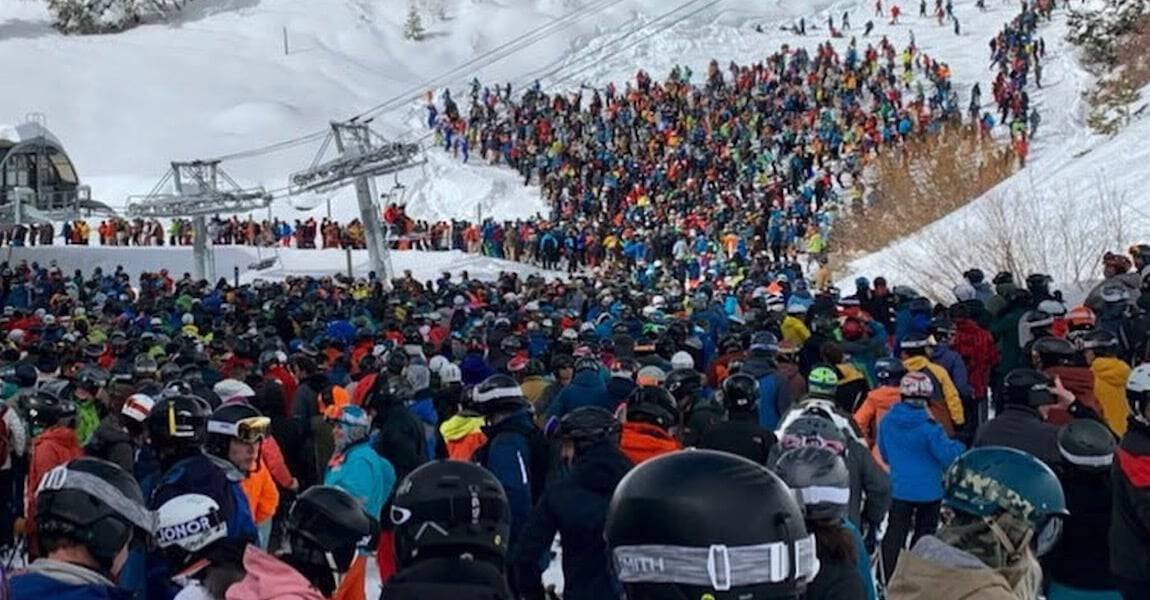
For skiers, the more useful question is what that looks like on a Saturday morning. Can a resort lower its costs while getting more people up the mountain?
Vail’s announcements offer some concrete examples of where the cost cuts land. They also leave questions about how the changes will work during the busiest days of the season.
How the Vail Resorts cost cuts add up
Vail’s Resource Efficiency Transformation Plan began in September 2024 with a $100 million annual savings goal. The November presentation outlines this updated breakdown:
| Part of the plan | Expected annual efficiencies | Timing |
|---|---|---|
| First phase: scaled operations, shared services and workforce management | $105 million | Fiscal 2027 |
| Additional operating, AI and technology opportunities | $30 million | $5 million in fiscal 2027; another $25 million in fiscal 2028 |
That brings the total to $110 million in fiscal 2027 and $135 million in fiscal 2028, before one-time implementation costs. The fiscal 2028 figure includes some capital savings. Vail’s fiscal year ends July 31.
The distinction matters: the additional $30 million covers several types of efficiencies, and Vail has not disclosed an AI-only savings figure.
Staffing changes are already part of the story
When Vail announced the original plan in 2024, it said position eliminations would affect less than 2% of its total workforce, including 14% of corporate staff and 0.2% of frontline roles. Operational reductions were concentrated in management and support structures.
Those percentages belong to the 2024 announcement. They do not describe a newly announced round of cuts for this winter.
In April 2025, Unofficial Networks also reported Vail’s announcement of 64 layoffs in its Broomfield HR Shared Services department, tied to the transformation plan.
Workforce scheduling is another part of the effort. Vail says its management tools help align employee hours with guest demand and give workers access to available shifts and cross-training.
That makes staffing coverage the most visible test of the Vail Resorts cost cuts. Better scheduling could put employees where they are needed most. The test is whether enough people are available when rentals, lessons and lift access all get busy at once.
Guest support is a concrete place to watch AI
Vail’s fiscal 2026 annual report describes consolidating and, in some cases, outsourcing finance and accounting, IT support and guest-facing call centers. Customer support is therefore one direct connection between the restructuring and a skier’s experience.
AI is already involved through My Epic Assistant. A March 2026 case study from Google Cloud and technology partner 66degrees reported a 45% reduction in escalations to human agents since the assistant’s launch, following improvements to personalization, search and conversations.
That figure measures handoffs to people. It does not establish a 45% reduction in staffing, shorter support waits or a specific dollar contribution to the Vail Resorts cost cuts.
For a guest, the practical test is whether the assistant resolves the problem — and how easily a person can step in when it cannot.
Rental changes have a clear timeline
Alongside its savings program, Vail is pursuing a separate guest-experience growth strategy called Epic Experience. Its rental changes are among the most tangible announcements for this winter.
For the 2026–27 season, customers booking high-performance Demo rentals at 12 participating resorts can select their preferred ski or snowboard model online before arrival, along with options such as BOA ski boots or Step On bindings, without a My Epic Gear membership fee.
As covered in Unofficial’s look at Vail’s rental overhaul, broader digital booking and equipment pickup or delivery improvements are planned for 2027–28, including a streamlined process for returning customers.
Vail has not assigned those rental changes a specific share of the Vail Resorts cost cuts. Their immediate appeal to skiers is straightforward: choosing equipment before arrival could mean fewer decisions at the counter. Whether that translates into a faster pickup will depend on how the service operates.
A lift upgrade explicitly targets lower labor costs
One particularly clear example comes from Pennsylvania. In its annual report, Vail says replacing Seven Springs’ Blitzen lift with a new four-person chair is expected to improve lift efficiency and reduce labor costs.
The project replaces an older triple with a quad, with stated uphill capacity increasing 33%. That shows how an investment can aim to increase capacity while lowering operating costs.
Vail does not specify how many positions would be affected or assign Blitzen a dollar contribution to the broader cost cuts.
The company also continues to plan major lift spending. Its September earnings release identified Park City projects for calendar 2027, including an eight-passenger Silverlode replacement, a six-passenger replacement for Eagle and Eaglet, and a Crescent retrofit. Those are planned investments for next year.
What the Vail Resorts cost cuts mean for skiers this winter
The useful measures are the ones guests can actually see:
- How long it takes to pick up rentals on a weekend morning
- Staff coverage at rentals, lessons and lift access during the first hour of the day
- Whether digital tools resolve a problem or simply reroute it
- How quickly a real person becomes available when something goes wrong
The Vail Resorts cost cuts are asking technology, shared services and tighter operations to lower costs while supporting a better guest experience. That could work well where it removes repetitive tasks and frees employees to help customers. It could create frustration where the service depends on having enough experienced people available.
For someone trying to get fitted, find a lesson and make the first lift, the meaningful result will be how much of the morning is spent skiing.