

Cycling safety has become a growing concern in cities where more commuters are sharing roads and paths with pedestrians. In London alone, around 1.5 million bike commutes take place every day, while the widespread use of noise canceling headphones has created a new challenge for riders trying to warn people of their approach.
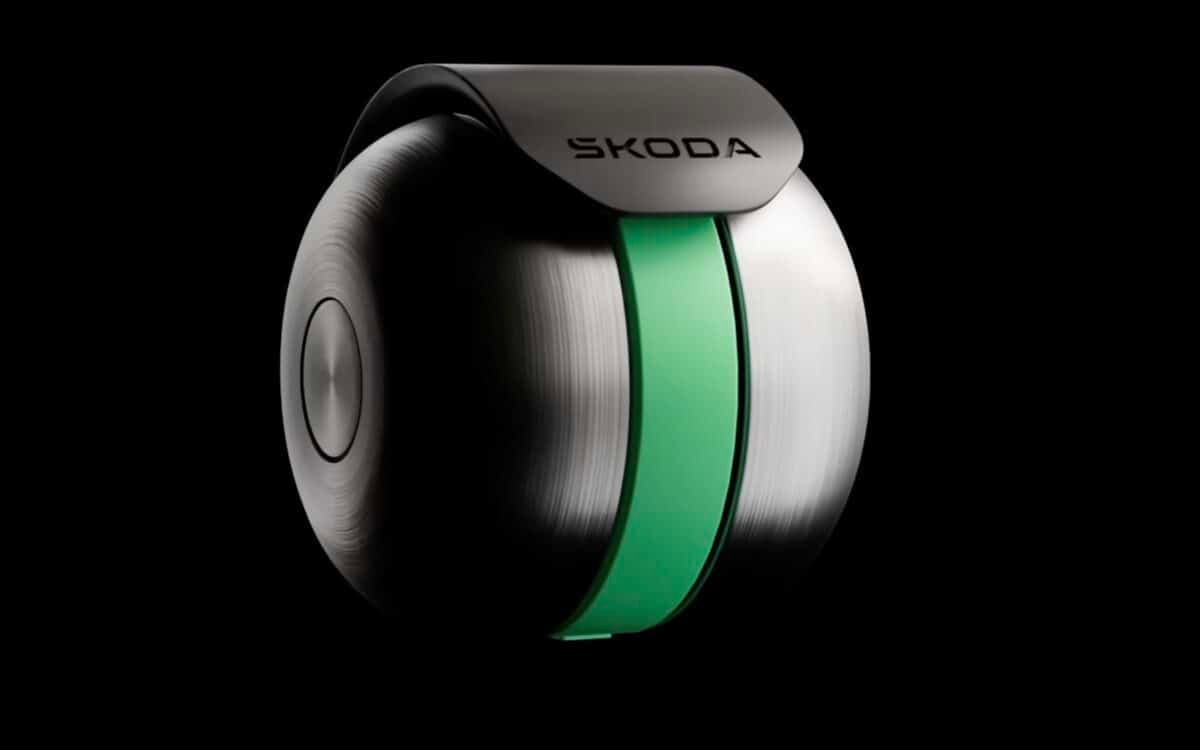
Škoda Auto, a Czech car company that’s supported the world of cycling since their founding, unveiled a specially engineered bicycle bell designed to remain audible even when pedestrians are wearing active noise canceling headphones. The company says the project aims to reduce collisions caused by distracted walkers in busy urban environments.
A Bell Designed Around Sound Science
The idea stemmed from research into how active noise cancellation works. The technology is highly effective at eliminating broad background sounds by generating an opposing sound wave. However, engineers found that certain frequencies are much harder for headphone processors to cancel.
After testing hundreds of sound signals across six leading headphone models, researchers identified a frequency around 750 Hz that consistently slipped through noise canceling systems. They referred to it as the “safety gap” and built a bicycle bell specifically tuned to that frequency.
Creating such a low frequency presented a significant engineering challenge because a traditional bell would need to be much larger. Instead designers reduced the thickness of the bell’s metal and added precision cuts to achieve the desired sound while maintaining a practical size. They also introduced a second frequency to improve reliability across different listening conditions.
Virtual Testing And Real World Trials
Škoda tested the bell using a virtual reality scenario that simulated a cyclist approaching a distracted pedestrian wearing noise canceling headphones. According to the company, participants heard the new bell approximately 22 meters earlier than a standard bicycle bell. That translated to roughly five additional seconds of warning, potentially providing enough time for a pedestrian to step aside and avoid a collision.
Following laboratory testing, Škoda partnered with one of the United Kingdom’s largest delivery services to evaluate the bell on London’s streets. Riders involved in the trials reported positive feedback, with demonstrations suggesting the bell could be both heard and felt by pedestrians wearing headphones.
Cycling Heritage Meets Modern Safety
Before becoming an automobile manufacturer, Škoda originally built bicycles and later motorcycles. Today it remains closely connected to cycling through its long standing support of the Tour de France and other cycling initiatives. They described the Duo Bell as a fully mechanical solution to a digital problem. Rather than relying on electronics or connected technology, it uses carefully engineered acoustics to improve rider visibility in increasingly crowded cities.
The company says it plans to continue working with partners to bring the bell to more bicycles across London and beyond. They also made their research publicly available, allowing others to study and potentially adopt the technology in an effort to improve cycling safety worldwide.