

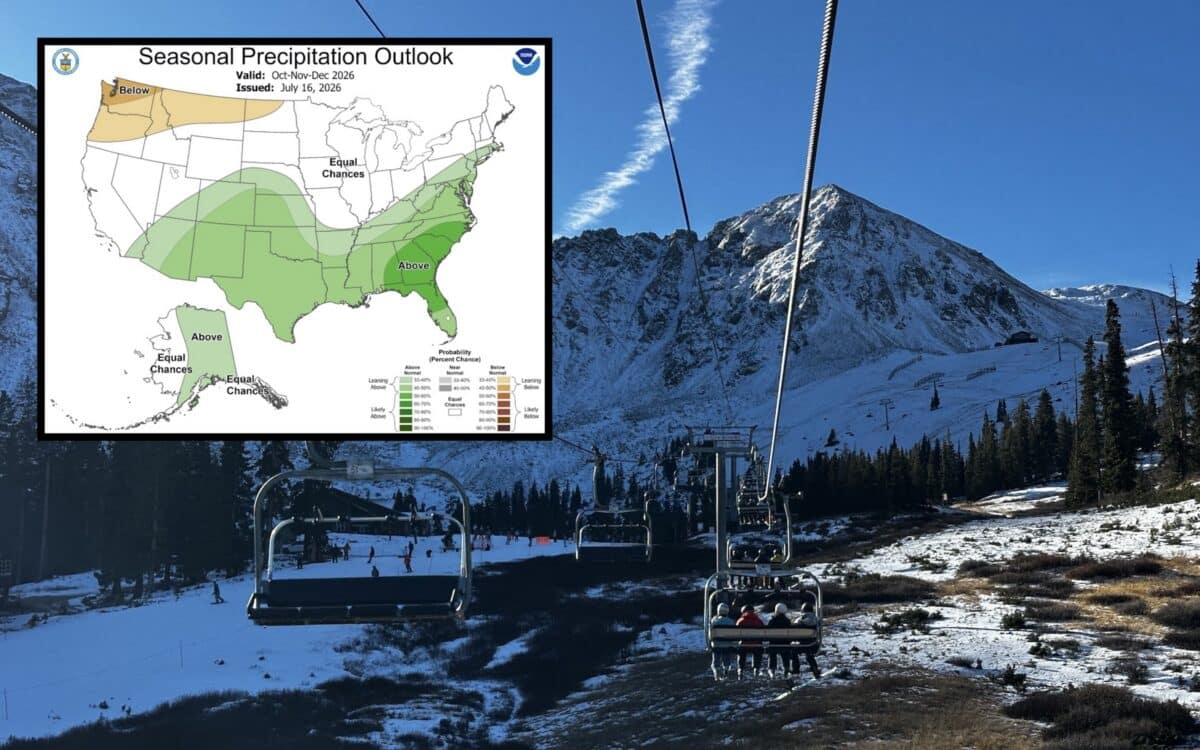
NOAA’s latest seasonal outlook suggests much of the United States will experience a warmer than normal fall as the country heads toward the start of the 2026 and 2027 winter season. This forecast from the Climate Prediction Center covers October through December and highlights widespread warmth across the Lower 48 along with a wetter pattern across much of the South and East.
While seasonal outlooks do not predict individual storms or snowfall events they provide an important look at the large scale climate patterns that can influence the opening months of ski season. This year’s forecast leans warm across most of the country with only a small portion of Texas showing no clear temperature signal.
Warmer Than Normal Conditions Favored Across Most Of The United States
The temperature outlook places nearly the entire Lower 48 in the above normal category. The strongest confidence is focused on the Pacific Northwest where western Washington and western Oregon have the highest probabilities of warmer than average conditions. Another area of elevated confidence stretches across the Northeast.
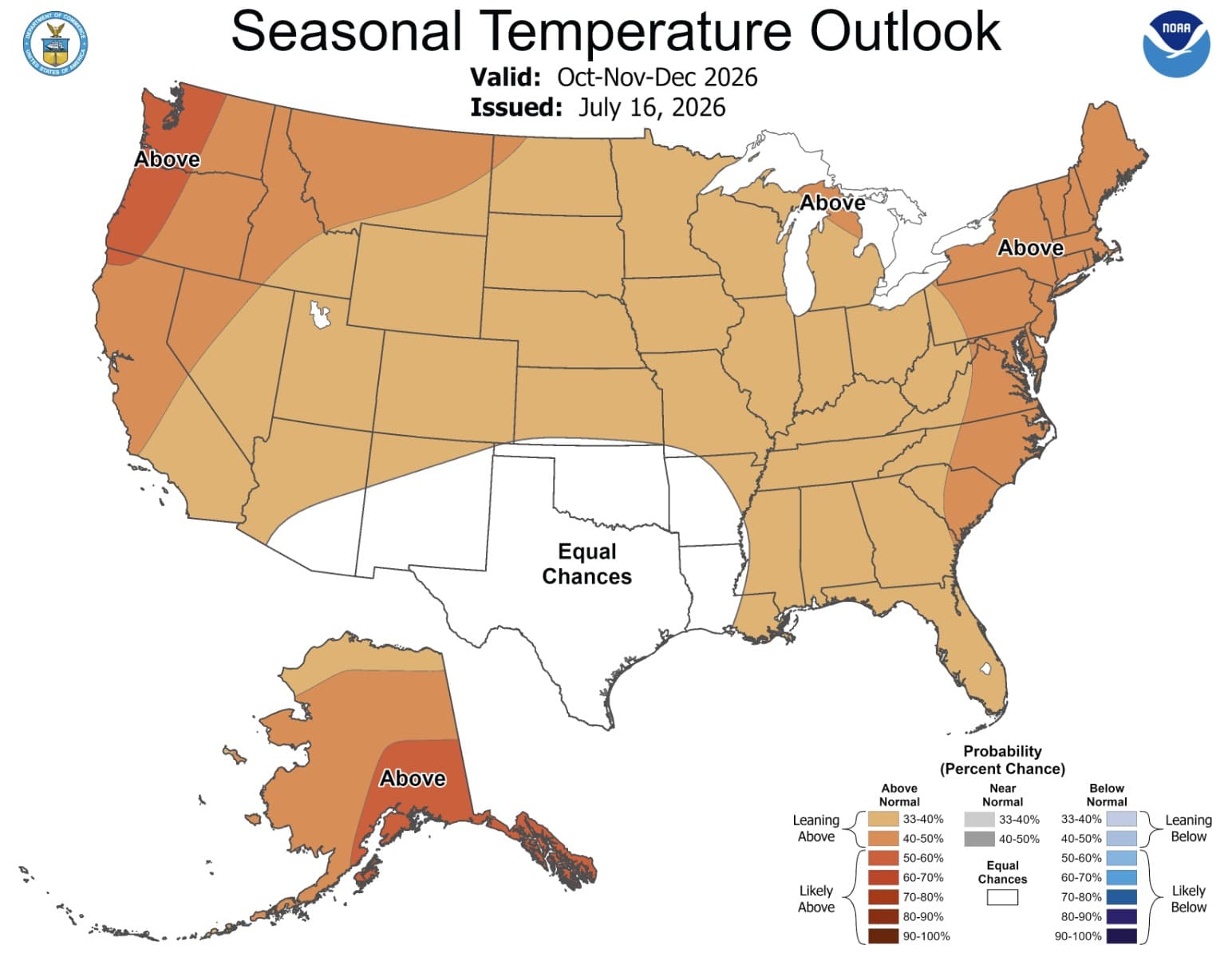
Alaska is also expected to experience a notably warm autumn with especially strong odds across southern portions of the state.
Across the Rockies Great Plains Midwest and Southeast the outlook still favors above normal temperatures although confidence is somewhat lower than in the regions with the strongest signals. Southern Texas and nearby areas remain in the equal chances category where there is no meaningful climate signal favoring above near or below normal temperatures. If this forecast winds up true many parts of the country could see a slower transition into winter with colder air arriving later than average.
Wetter Pattern Expected Across The South And East
The precipitation outlook looks a little different. NOAA favors above normal precipitation across a broad swath of the southern United States extending from parts of the Southwest through Texas and into the Southeast before reaching portions of the Mid Atlantic.
The highest probabilities for wetter than average conditions are centered over Georgia South Carolina northern Florida and surrounding areas where repeated storm systems could bring more frequent rainfall through the season.
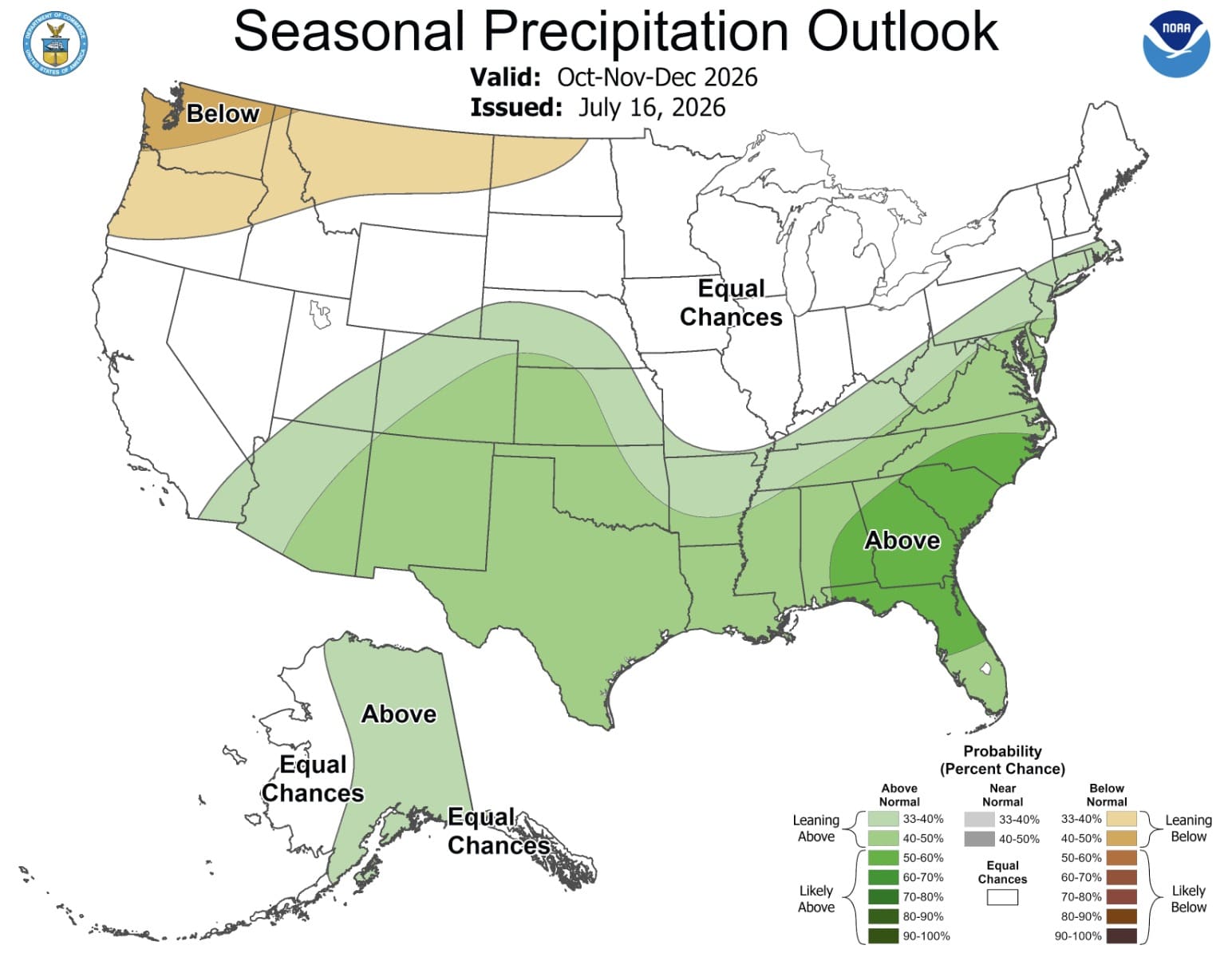
In contrast the Pacific Northwest stands out as the only region with a clear signal for below normal precipitation. Washington and northern Oregon are favored to finish the October through December period drier than average which could affect water supplies wildfire recovery and the timing of early season mountain snowfall.
Much of the northern Plains Upper Midwest and parts of the interior West remain in the equal chances category meaning there is no strong indication that precipitation totals will finish above or below normal.
What This Could Mean For Ski Season
Of course this forecast is best viewed as a look at the background climate rather than a prediction of snow conditions through the fall and early winter. Seasonal outlooks describe average conditions over three months and cannot determine when major snowstorms will arrive or how much snow will fall at specific mountains.
That said the widespread warm signal could make it more difficult for lower elevation ski areas to build an early season base through snowmaking especially during October and November. Resorts that depend on consistently cold overnight temperatures may have fewer opportunities to open terrain early if mild weather persists.
That said the outlook does not rule out significant snowstorms. Even during warmer than average seasons powerful cold fronts and atmospheric river events can produce impressive early season snowfall across the Rockies, Sierra Nevada, Cascades, and parts of the Northeast. In many cases a handful of well timed storms can dramatically improve snow conditions despite above average seasonal temperatures.
Shorter range weather patterns will ultimately determine which regions build a healthy snowpack and which areas struggle through the opening weeks of the 2026 and 2027 ski season.
