

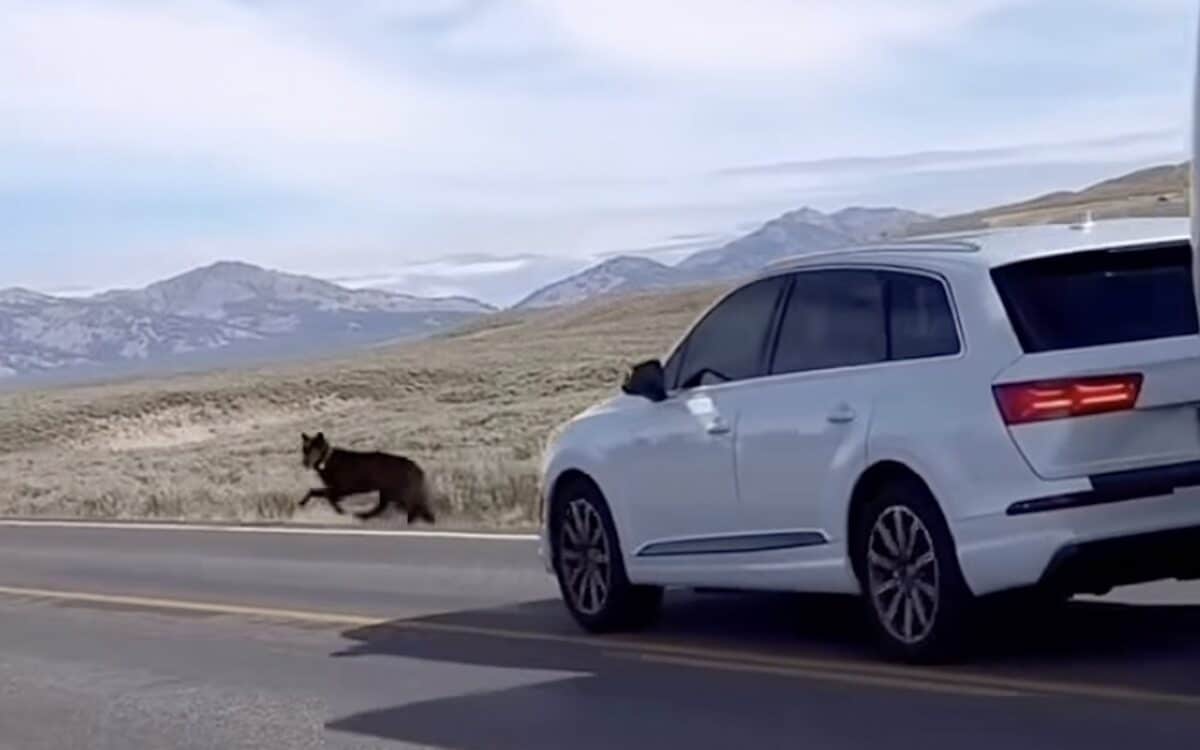
Unlike many other national parks across the country, Yellowstone National Park lacks a public transportation system. As such, visitors either need to book a tour through a dedicated guide company or must travel throughout the park in their own vehicle. With millions of people visiting the park during its busiest months, it’s safe to assume that many of the roads will be crowded with vehicles during the weekends. For pedestrians, other drivers, and wildlife, those vehicles can have deadly consequences.
Traffic-related accidents are the most common cause of injury and death in the park, and roadkill is a fairly common sight throughout the region. In an area known for its incredible wildlife viewing opportunities, that roadkill can mean some very rare animals dying to our vehicles. The park and its surrounding area has seen moose calves, elk, bears, bison, and much more die on the road, all likely preventable if visitors are sure to drive very carefully.
The case in the video below is a great example of a very close call with Yellowstone’s unique wildlife. A car towing a trailer can be clearly heard accelerating past cars parked alongside the road before slamming on its brakes to avoid hitting a wolf. The current wolf population in the park is just around 84, so one death means a lot. Why this driver was accelerating so much when there were cars parked clearly watching some animal is a bit of a mystery and a great reminder to slow down throughout the park.
Wolves were reintroduced to Yellowstone in 1995 after nearly 70 years of absence. Park biologists use radio collars, GPS tracking, remote cameras and DNA sampling to monitor pack behavior, genetics and health. The animals play a key role as apex predators, shaping elk populations and triggering trophic cascades throughout the ecosystem. The park also manages human-wolf interactions, protects den sites and works with neighboring states as wolves cross park boundaries.
If you’re driving through Yellowstone, slow down, follow the speed limit, be patient, drive carefully, and watch constantly for wildlife. If you’re going to pull off to watch wildlife, use pullouts and make sure all of your wheels are completely and safely off the road. If you encounter a wildlife jam, stay with your car. Keep plenty of space between yourself and all wildlife, at least 25 yards (75 feet) for most animals and 100 yards (300 feet) for wolves, bears, and mountain lions. Read more on wolf safety below.
Yellowstone National Park Wolf Safety Guidelines:
While wolves and cougars (mountain lions) are skilled predators, they are not normally a danger to people, and very few documented confrontations with humans have occured in Yellowstone. It’s still important, however, to know what to do if you encounter them.
Stay at least 100 yards away from wolves & cougars
Keep at least 100 yards (91 meters) from wolves and cougars at all times and never approach them to take a photo.
Stand your ground if a wolf is nearby
If you’re concerned about a wolf because it’s too close or not showing any fear of people, stand tall and hold your ground. If the wolf approaches you, wave your arms, yell, and flare your jacket. If that doesn’t discourage it, throw something at it or use bear spray. Group up with other people, continue waving and yelling, and tell a ranger as soon as possible.
Don’t handle wolf scat
Wolf scat may contain tapeworm eggs that can cause hydatid disease in humans.