

Over the past decade, an average of 339 negative human-bear encounters have been reported annually (many more go unreported) inside Great Smoky Mountain National Park and that does not include the surrounding towns and cities that abut the park. High bear activity can occur throughout the entire area in and around the park and visitors safety is not guaranteed.
Folks visiting nearby towns like Gatlinburg, Tennessee, known as a gateway to the roughly 520,000-acre Great Smoky Mountains National Park, can expect to see bears during their trip and should know how to prevent negative encounters. One key tip is to keep an extremely clean car and keep your vehicle locked at all times.
Black bears have a sense of smell that is thousands of times better than ours and can easily smell food through car doors, trunks, and windows. Coupled with their extreme olfactory senses is their learned ability to open car doors with their claws.
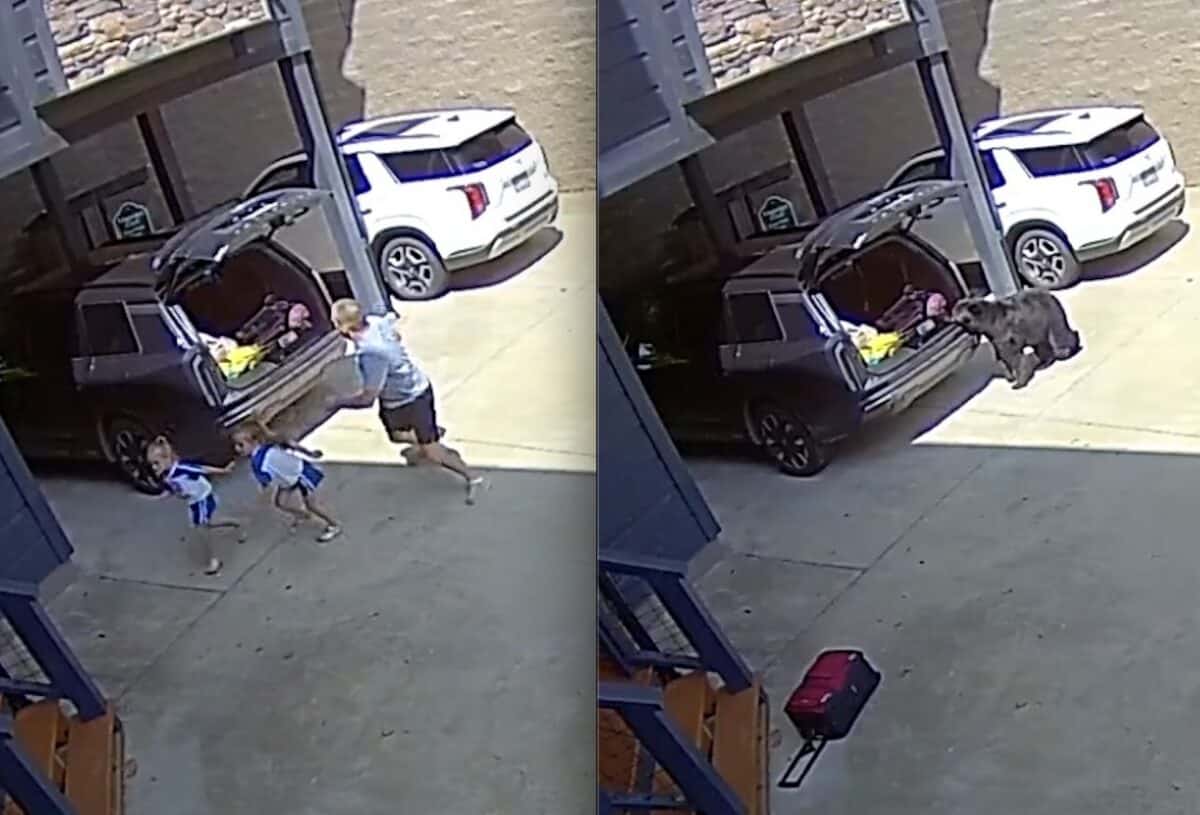
It would seem this family on vacation in Gatlinburg did not get the memo on keeping their vehicle clean and locked as evidenced by the below video. In it a father and his two young daughters open the rear hatch on their KIA Telluride and get the surprise of a lifetime when the come face to face with a black bear.
Thankfully the uninvited guest left the scene without incident and these folks only suffered what one would assume to be some damage to their family vehicle. Remember, if you are in bear country it is crucially important to keep your car extremely tidy. Even empty food wrappers are interesting enough for a bear to break in. Learn more about bear safety in Gatlinburg below.
Gatlinburg Black Bears:
An iconic symbol of the Smokies, the American Black Bear, is perhaps the most famous resident of Great Smoky Mountains National Park which provides the largest protected bear habitat in the East. Though populations are variable, biologists estimate approximately 1,500 bears live in the park. While seeing a bear is a wonderful experience, it’s important to always be “bear aware.” Please review the following tips and information so you know what to do if you encounter a bear in town or on the trail. Learn more on what to do if you see a bear.
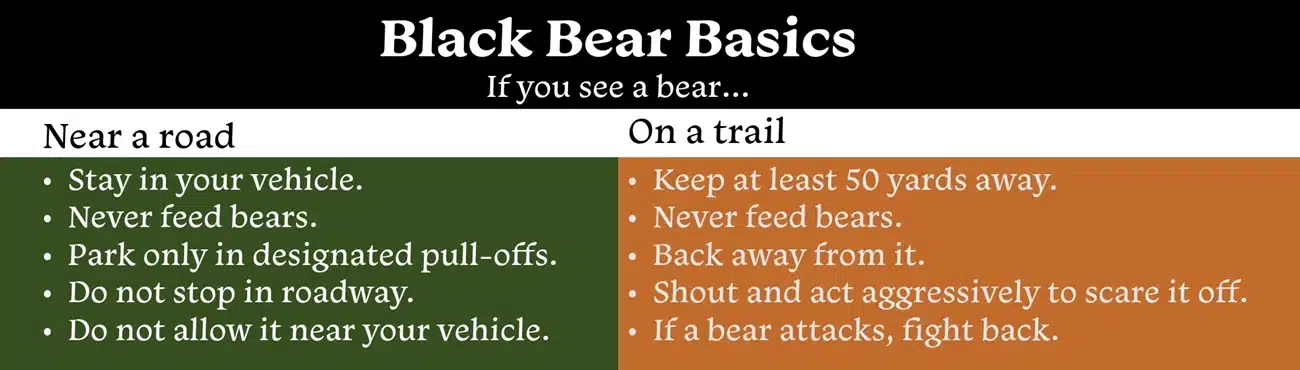
Black Bear Safety Tips
Bears are wild and their behavior can be unpredictable. Although extremely rare, attacks on humans have occurred, inflicting serious injuries and death. Treat bear encounters with extreme caution!
- Never approach a bear. Willfully approaching within 50 yards (150 feet), or any distance that disturbs or displaces a bear, is illegal. Violation of this federal regulation can result in fines and arrest.
- Do not allow a bear to approach you.
- If you see a bear, slowly back away from the bear. Do NOT turn and run.
- Make sure the bear is aware of your presence by yelling and making noises to frighten the bear and encourage it to leave.
- Bring children and pets indoors. Groups should stay together, especially children.
- Keep dogs leashed at all times. Don’t let your dog harass a bear. If you see a bear, move away quickly to minimize barking and avoid a confrontation. Dogs are NOT allowed on any trails in Great Smoky Mountains National Park with the exception of the Gatlinburg Trail located behind Sugarlands Visitor Center.
What Can You Do To Protect Bears?
- Do not approach within 50 yards or any distance that disturbs a bear. Use binoculars, telephoto lens, or a spotting scope to view animals.
- Put all trash and food scraps in bear-resistant containers or take it with you. Be sure to close and latch tightly.
- Do not feed or place food to attract bears.
- Do not leave grills or picnic tables unattended.
- Do not leave food in your car or in coolers outside the cabin. If you must store food in vehicles, keep it out of sight.
- Completely close and LOCK all doors and windows of vehicles and buildings. (Yes, bears can open them.)
- Do not feed wildlife. Feeding a bear guarantees its demise!
- Use the food storage cables to store your food and garbage when camping in the backcountry.
- If you see another visitor breaking the above rules, or you encounter a bear, please call (865) 436-1230 to report.
