

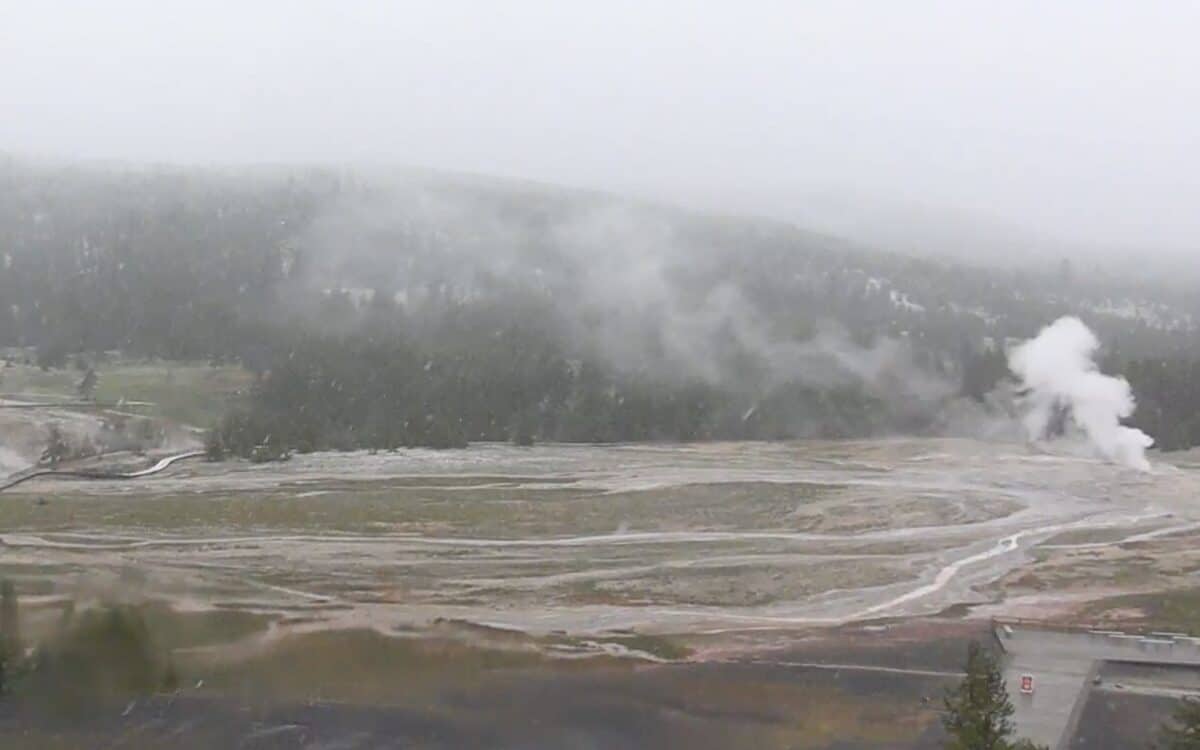
Whole swaths of the country are currently facing high heat, terrifying wildfire conditions, and other extreme summer weather conditions, but some parts of the Rocky Mountains are experiencing a different story. While the heaviest snowfall was expected in Montana and Idaho, parts of Yellowstone National Park saw enough snow to close some roads.
Winter storm alerts that blanketed high-elevation zones across southwestern Montana and central Idaho were set to expire today, marking the end of the late-June weather event that forecasters expected to deliver heavy wet snow to mountain passes and backcountry areas above 6,500 feet.
The National Weather Service issued warnings covering the Bitterroot and Sapphire Mountains, the Butte and Blackfoot region, western and eastern Lemhi County in Idaho, and northwest Beaverhead County in Montana. Accumulations of 4 to 8 inches were forecast across most affected zones, with up to 12 inches reported on the highest peaks. The Anaconda Pintler Mountains saw estimates as high as 16 inches.
The iconic Beartooth Highway, which runs through southwest Montana and northwest Wyoming before leading into Yellowstone’s Northeast Entrance, was closed at the Montana/Wyoming state line as of 7:45am local time thanks to extreme travel conditions. Beartooth Highway leads up to nearly 11,000 feet, so when winter weather returns, it tends to return with a force.
Entrances into Yellowstone National Park are still open, and visitors can still access Cooke City and the Northeast Entrance via WY 296 (Chief Joseph Scenic Byway). Traffic-related accidents are the most common cause of injury and death in Yellowstone, and snow on the road makes things that much more dangerous. If you’re visiting during one of these summer snow storms, slow down, obey all traffic signs, don’t park in the road, and leave plenty of space between your vehicle and all other vehicles.