

Over 4 million visitors pass through the gates of Yellowstone National Park every year to camp, hike, and enjoy the unmatched majesty of the park. While strolling the boardwalks surrounding the abundant hydrothermal features or having lunch at the Old Faithful Inn, a national historic landmark, top many to do lists for tourists, getting a glimpse at the parks incredible array of wildlife is one of its main draws.
Seeing a wolf pack or grizzly bear during a day trip is not uncommon but certainly not guaranteed, however you can pretty much count on laying eyes on largest land-dwelling mammal in North America, bison. Bison can be disarmingly docile in appearance despite their imposing stature and park visitors are often lulled into a false sense of security in their presence as they peacefully graze or rest but these massive animals (males weigh up to 2000lbs) can be extraordinarily unpredictable and dangerous when threatened or provoked. Yellowstone National Park staff have a tongue in cheek saying about bison safety: “don’t pet the fluffy cows” and while this may elicit giggles and bison safety is serious business as they responsible for more injuries to Yellowstone visitors than any other animal.
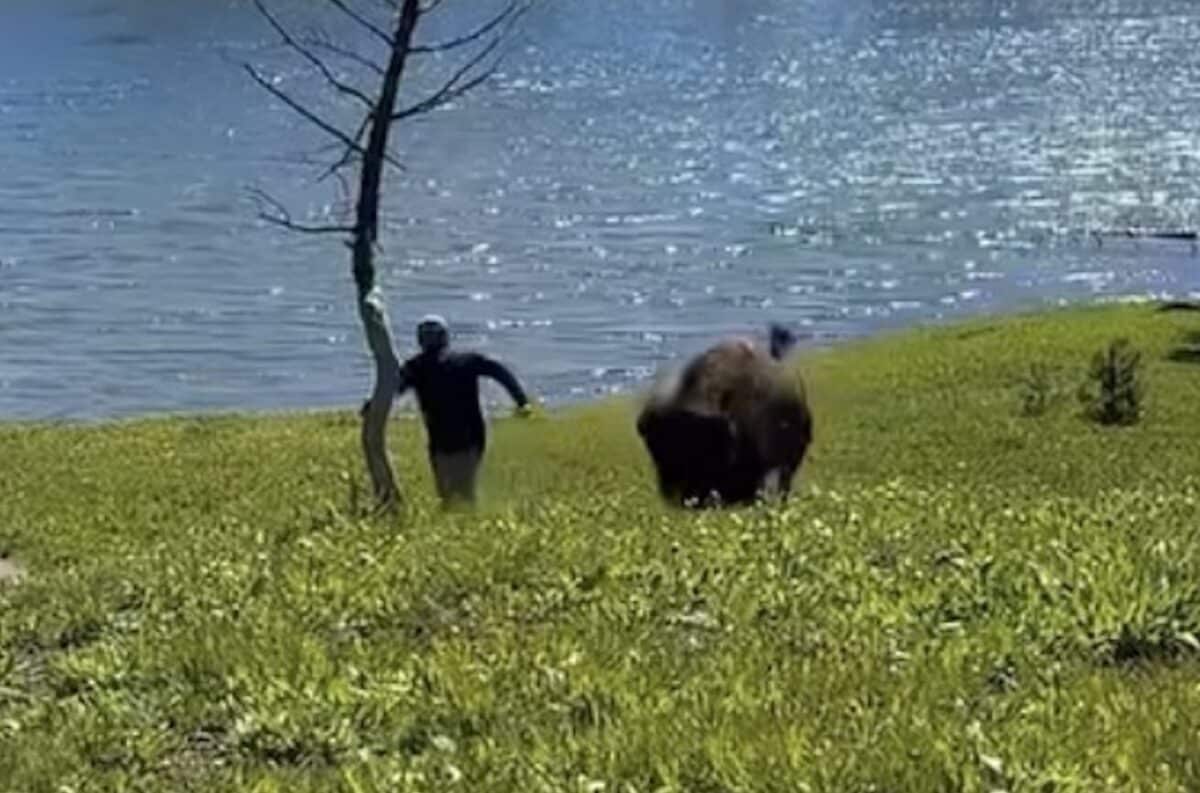
Despite abundant and clearly visible signage posted throughout the park discouraging visitor from approaching bison, instances of folks getting too close happen more than we would like to admit and the consequences can be severe. Idaho based photographer April Holm has been exploring Yellowstone National Park for over 30 years and has seen all manner of idiotic behavior but this is the closest she has ever witnessed a visitor to getting gored by a bison.
“Tourist toss event? We almost got to see the first bison goring in our 31 years in and out of the park. I wish I had of caught the first part, but I caught the second charge and the man didn’t learn from it and kept going. Yes I just didn’t understand why the first charge didn’t detour him and then the second charge didn’t and then he keeps on going out and around him. It’s like go back to your car until he passes.”
It may seem like commonsense but it is worth mentioning that best way to avoid getting gored by a bison is to never get close enough where it would even be a possibility. While maintaining a respectable distance is best practice, surprise encounters can happen like in the case of a hiker coming around a blind corner and there are some telltale signs if an charge is imminent. One absolutely clear indication that this bison is about to charge is the position of its tail. If a bison’s tail is hanging down it is likely not in a state of agitation. As the tail rises so goes its level of aggression. A fully raised tail signals a bison is highly stressed to a perceived danger and may act with according aggression. If you look closely at the above video you will see this bison is standing at attention before and after lunging at the man.
Remember folks, if you visit Yellowstone National Park it is incumbent upon you to stay safe around wildlife. Park rangers are out and about to remind people about the dangers of approaching wildlife but there will never be enough staff to patrol its 3,472 square miles, so its up to you to follow the rules and keep a safe distance. Learn more about bison safety at Yellowstone National Park below.

Yellowstone Bison Safety Guidelines:
Bison have injured more people in Yellowstone than any other animal. Bison are unpredictable and can run three times faster than humans. Always stay at least 25 yards (23 m) away from bison.
- Give bison space when they are near a campsite, trail, boardwalk, parking lot, or in a developed area. If need be, turn around and go the other way to avoid interacting with a wild animal in close proximity.
- Approaching bison threatens them, and they may respond by bluff charging, head bobbing, pawing, bellowing, or snorting. These are warning signs that you are too close and that a charge is imminent.
- Do not stand your ground. Immediately walk or run away from the animal. Spray bear spray as you are moving away if the animal follows you.

