


GLACIER NATIONAL PARK, Montana – Every U.S. National Park has its own unique landscape and wildlife, but they all tend to feature similar rules: respect the land, stay away from wildlife. Unfortunately there seems to be way to many people willing to ignore these rules, including these people that filmed their own behavior in Glacier National Park.
Glacier National Park is known for its stunning melting glaciers, alpine meadows, carved valleys, and spectacular lakes, with more than 700 miles of trails winding their way through the park and providing incredible routes for hikers and explorers. Visitors frequently encounter wildlife along the many paths, including a bountiful population of bears.
Both grizzly bears and black bears can be found throughout Glacier National Park and while grizzlies are the most famous, far more live black bears in the region. Both deserve plenty of respect, primarily by giving them at least 100 yards, or 300 feet, of space at all times. These folks failed to do that, actually making steps toward a black bear while it was attempting to cross a bridge.
The poster states in the caption that they got off the bridge and let the black bear cross after the moment captured on camera, but by that point they had already blatantly violated Glacier National Park rules. Intentionally approaching, viewing, or engaging in any activity within 100 yards of bears is prohibited in the park, and the woman in the video can be seen making a few steps toward the bear despite it clearly trying to retreat.
Additionally, if you encounter a bear and you can move away, it’s your responsibility to do so. Neither the woman in the video nor the person behind the camera attempt to move away, instead putting their effort into getting a good camera angle. Fortunately the bear didn’t get defensive, but this situation easily could have ended with serious injury or worse. If you’re planning a visit to Glacier National Park anytime soon, make sure you freshen up on bear safety beforehand.
Glacier National Park Bear Encounter Guidelines:
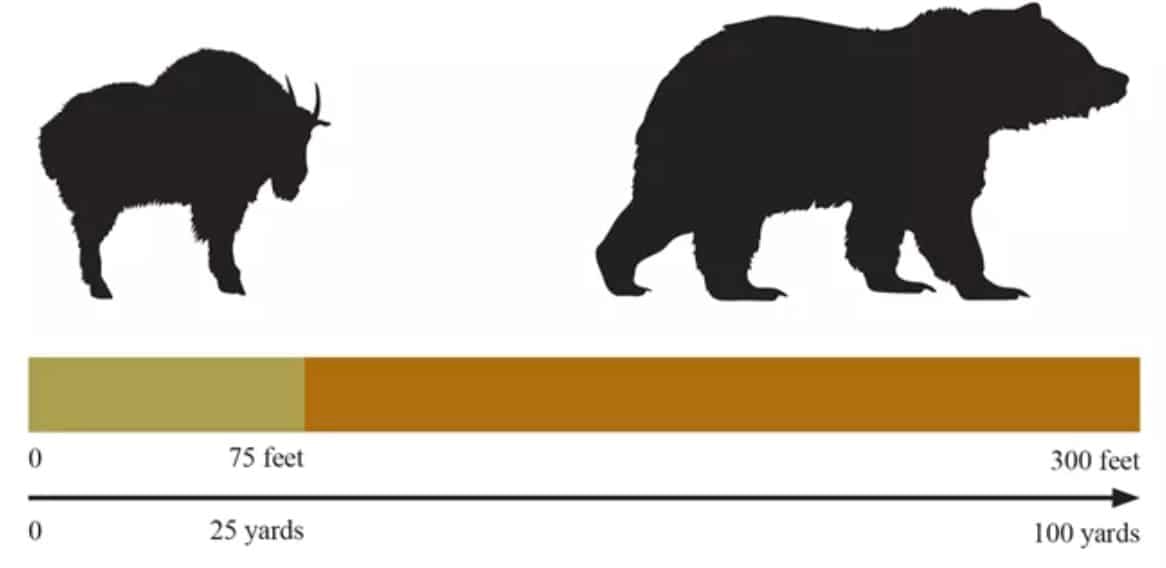
If you encounter a bear inside the minimum recommended safe distance (100 yards; 91 m), you can decrease your risk by following these guidelines:
- If a bear or other animal is moving in your direction on a trail, get out of its way and let it pass.
- If you can move away, do so. If moving away appears to agitate the bear, stop. In general, bears show agitation by swaying their heads, huffing, and clacking their teeth. Lowered head and laid-back ears also indicate aggression. Bears may stand on their hind legs or approach to get a better view, but these actions are not necessarily signs of aggression. The bear may not have identified you as a person and may be unable to smell or hear you from a distance. Help the bear recognize you as a friendly human.
- Talk quietly.
- Do not run! Back away slowly. Stop if it seems to agitate the bear.
- Use your peripheral vision. Bears may interpret direct eye contact as threatening.
- Continue to move away as the situation allows.
- If a bear appears intent on approaching you, your group, or your campsite in a non-defensive manner (not showing signs of agitation), gather your group together, make noise, and try to discourage the bear from further approaching. Prepare to deploy your bear spray. If you are preparing or consuming food, secure it. DO NOT LET THE BEAR GET YOUR FOOD!
- If a bear approaches in a defensive manner (appears agitated and/or charges), stop. Do not run. Talk quietly to the bear. Prepare to deploy your bear spray. If contact appears imminent and you do not have bear spray, protect your chest and abdomen by falling to the ground on your stomach, clasp your hands around the back of your neck, and leave your pack on for protection. If the bear attempts to roll you over, try to stay on your stomach. If the attack is defensive, the bear will leave once it recognizes you are not a threat. If the attack is prolonged, FIGHT BACK!
