

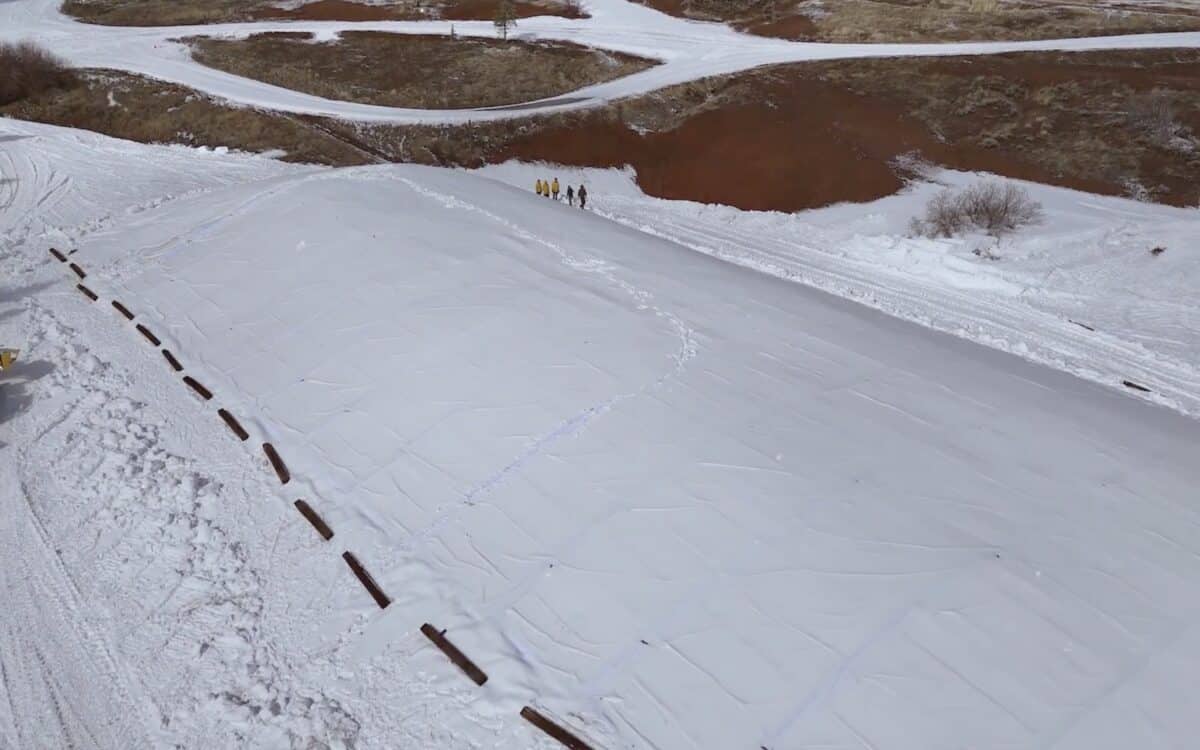
A Utah Nordic ski venue is taking an unusual approach to extend its ski season by preserving thousands of cubic feet of snow through the hottest months of the year. According to reporting from NPR Utah, the Soldier Hollow Nordic Center near Heber has created what officials describe as an artificial glacier that is expected to help the venue open significantly earlier this winter.
The project is being led by the Utah Olympic Legacy Foundation, which operates Soldier Hollow and several other former Olympic venues. The center hosted cross country skiing and biathlon during the 2002 Winter Olympics and is expected to do the same when the Winter Games return to Utah in 2034.
Hidden behind trees near the base lodge sits a massive pile of snow roughly the size of an ice skating rink. The snow is protected by layers of insulation, waterproof material, and a specialized white fabric designed to keep temperatures near freezing despite Utah’s summer heat.
“From a science standpoint, we basically made a glacier. And we protected the glacier with insulation on top, and then a geotech fabric that’s very similar to the thickness of a heavy wool blanket.” – Soldier Hollow Operations Manager Bill Pierce.
Designed For Utah’s Climate
Storing snow through the summer is already practiced in parts of Scandinavia and elsewhere around the world, where snow is commonly insulated with wood chips. Soldier Hollow instead takes a different approach using insulation and specialized covering materials that are apparently better suited to Utah’s hotter summers and stronger sunshine.
The approximately $300,000 pilot project required 18 days of snowmaking during the coldest part of last winter. Pierce said the stored snow represented roughly one third of the venue’s seasonal water use. Officials expect about 20 percent of the snow to melt during its first summer. They believe future years will perform even better once permanently frozen ground develops beneath the pile.
Preparing For The 2034 Winter Olympics
Foundation leaders say the project could become increasingly valuable as weather patterns become less predictable and preparations continue for the 2034 Winter Olympics. In addition to reducing reliance on favorable early season temperatures, stored snow could provide insurance against poor snowfall years while giving elite athletes and recreational skiers more reliable training opportunities.
The immediate benefit could arrive this fall. Pierce said enough snow should survive the summer to create a two kilometer ski loop as soon as temperatures cool enough for the stored snow to be uncovered.
“When I first got here, we opened either at Christmas or a week and a half before. Right now, our goal is we’ve been opening at Thanksgiving, and the goal now is to get to somewhere between the 5th and 15th of November.” – Bill Pierce