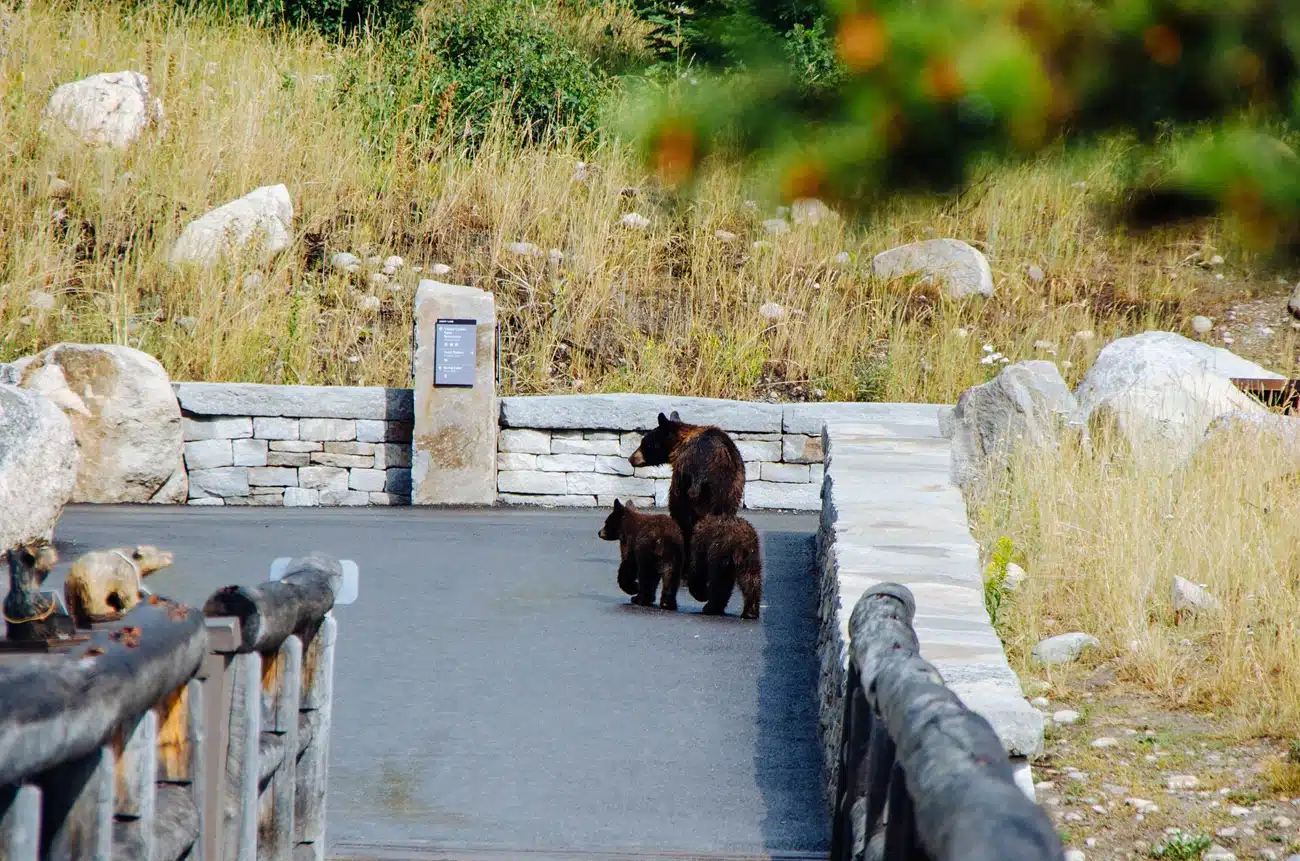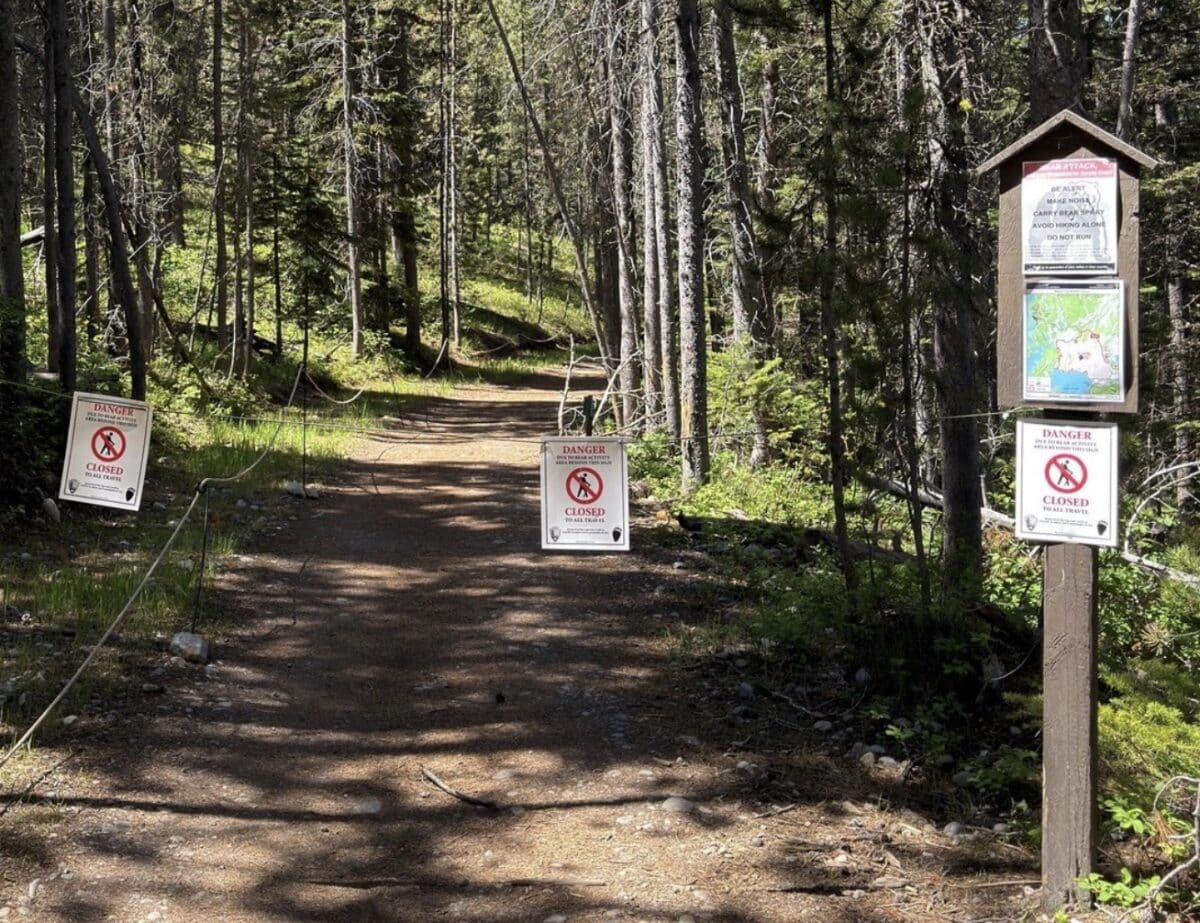
Due to recent bear activity Grand Teton National Park has temporarily closed the Hermitage Point Trail system, including the Swan Lake and Heron Pond Loop and park officials want to spread the word that these closures are serious business:
“If you encounter a wildlife closure sign in the park, it is not a suggestion—it is a hard closure.” -Grand Teton National Park
Several bears, both black bears and grizzly bears, are currently using the Hermitage Point area including mother bears with young cubs. The bears are actively foraging for natural food sources while also navigating around other bears. Recent encounters between Grand Teton visitors and bears in the area have created potentially dangerous situations for both people and wildlife. While wildlife encounters can occurr anywhere in the park, this area has been closed after park staff carefully considered both wildlife protection and visitor safety.
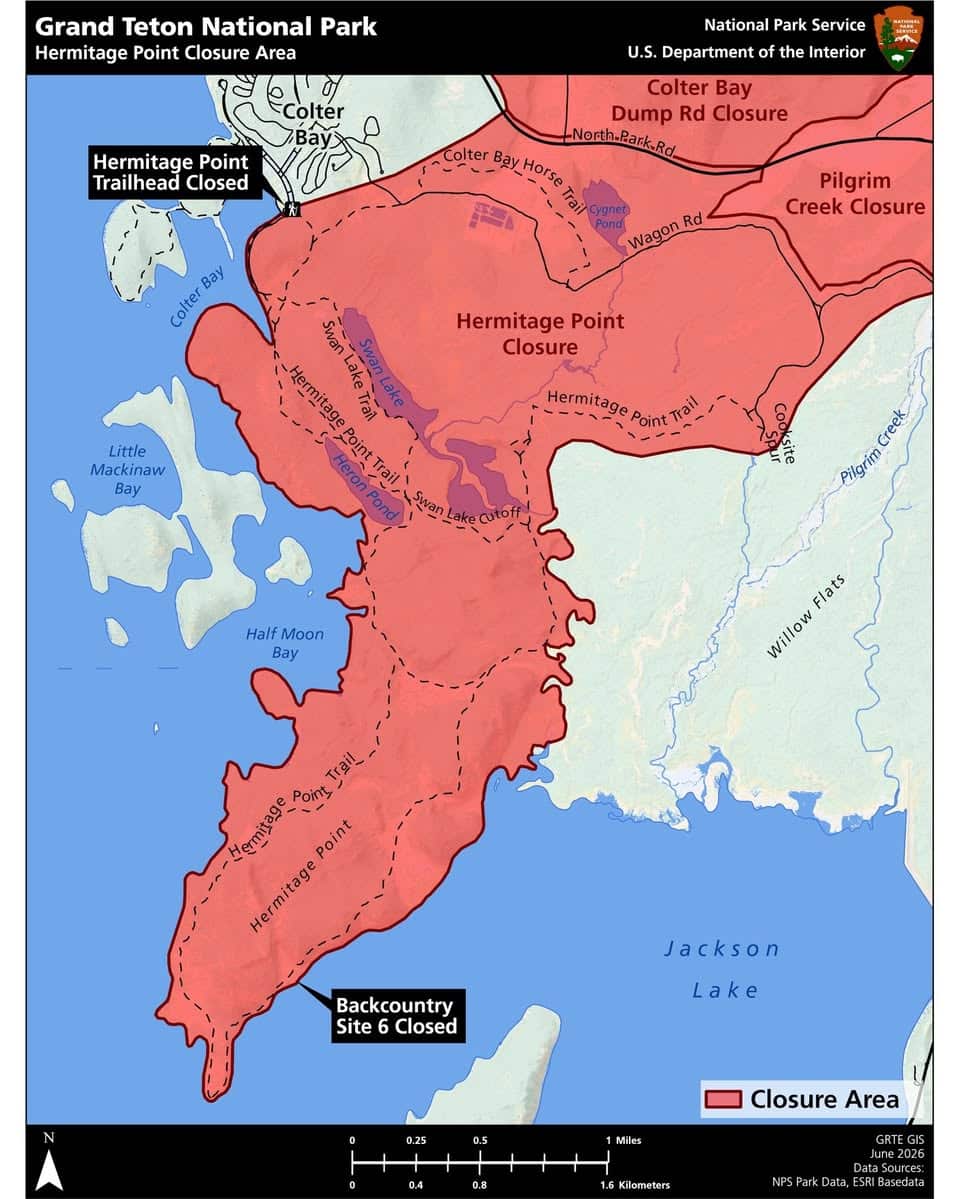
Some closures in Grand Teton happen annually to protect sensitive nesting or calving areas while others are temporary and allow wildlife to safely access important food sources, such as seasonal roots or animal carcasses. Temporary closures are actively monitored and lifted when conditions are deemed safe.
Here’s the quick bear safety checklist Grand Teton issued in conjunction with the recent trail closures. Find more comprehensive bear safety information below:
Hike in groups.
Be alert for bear signs.
Carry bear spray.
Know how to use it.
Respect all closures.
Never run. If you encounter a bear, back away slowly.
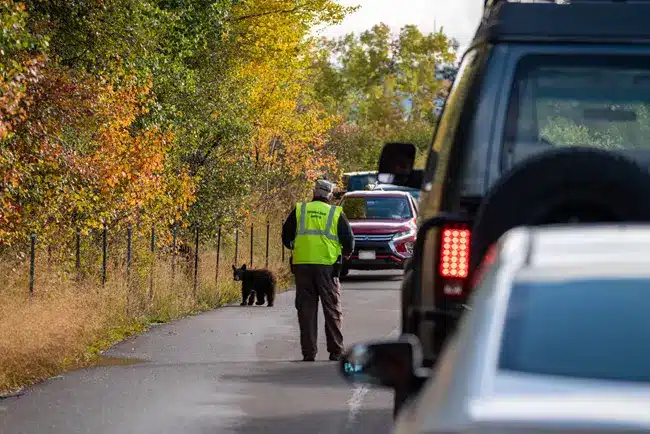
Bear Safety Guidelines For Grand Teton National Park:
Bears are active throughout Grand Teton, and an encounter can happen anytime and anywhere. Use caution, stay alert, and be prepared should you encounter a bear in the park.
Bear Encounters
Bear behavior is complex. Like people, bears react differently to each situation.
Bears may appear tolerant of people and then attack without warning. A bear’s body language can help you determine its mood. In general, bears show agitation by swaying their heads, huffing, and clacking their teeth. Lowered head and laid-back ears also indicate aggression.
Bears may stand on their hind legs or approach to get a better view, but these are not necessarily signs of aggression; the bear may not have identified you as a human yet.
If you encounter a bear:
- DO NOT RUN. Bears can easily out run any human. Running may elicit attacks from non-aggressive bears.
- If the bear is unaware of you, detour quickly and quietly.
- If the bear is aware but has not acted aggressively, back slowly away while talking in an even tone or not at all.
- Use your peripheral vision. Bears may interpret direct eye contact as threatening.
- Do not drop your pack – this teaches bears how to obtain human food. Your pack can also protect your body in the case of an attack.
- Do not climb trees – all black bears and some grizzly bears can also climb trees.
The vast majority of bear attacks have occurred when people surprised a bear. In this situation the bear may attack as a defensive maneuver. The bear may be protecting young or defending a carcass.
If a bear charges you:
- DO NOT RUN. Some bears will bluff their way out of a threatening situation by charging, then veering off or stopping suddenly.
- Bear experts generally recommend standing still until the bear stops and then slowly back away.
- If you have bear spray this is the time to use it!
- If the bear makes contact with you, drop to the ground and lie flat on your stomach with your legs spread apart slightly and play dead. Cover the back of your neck with your hands. Keep your pack on to protect your back. Do not move until you are certain the bear has left.
In rare cases, bears have attacked at night or after stalking people. These attacks are very serious: it may mean the bear sees you as prey. If you are attacked at night or if you feel you have been stalked and attacked as prey, fight back. Use your bear spray, shout, and try to intimidate the bear with a stick or rock. In this type of situation, do whatever it takes to let the bear know you are not easy prey.