

Despite being one of the most visited national parks in the world, Yellowstone National Park and its surrounding ecosystem continues to offer visitors an incredibly unique opportunity to experience a wide range of wildlife in their natural ecosystem. The park is home to near 300 species of birds, 16 species of fish, 5 species of amphibians, six6species of reptiles, and 67 species of mammals, including the largest land mammal in North America (American bison) and two species of bears.
With such a plentiful population of wildlife, it’s unsurprising to learn that these animals frequently interact. The iconic grizzly bears of the Greater Yellowstone Ecosystem are known to be highly opportunistic omnivores, feeding on bison, moose, elk and deer carcasses, small mammals, rodents, insects, elk calves, cutthroat trout, roots, pine nuts, grasses, and large mammals.
Skunks are also opportunistic omnivores, feeding on beetles, grasshoppers, moths, bees, snails, crayfish, fish, frogs, snakes, mice, squirrels, wild fruits, corn, nuts, bird’s eggs, and whatever else they can get their hands on. Despite being quite common across North America, they aren’t frequently seen inside Yellowstone National Park itself. Skunks tend to stick to elevations below 5,900 feet, and most of the national park sits above 7,000 feet.
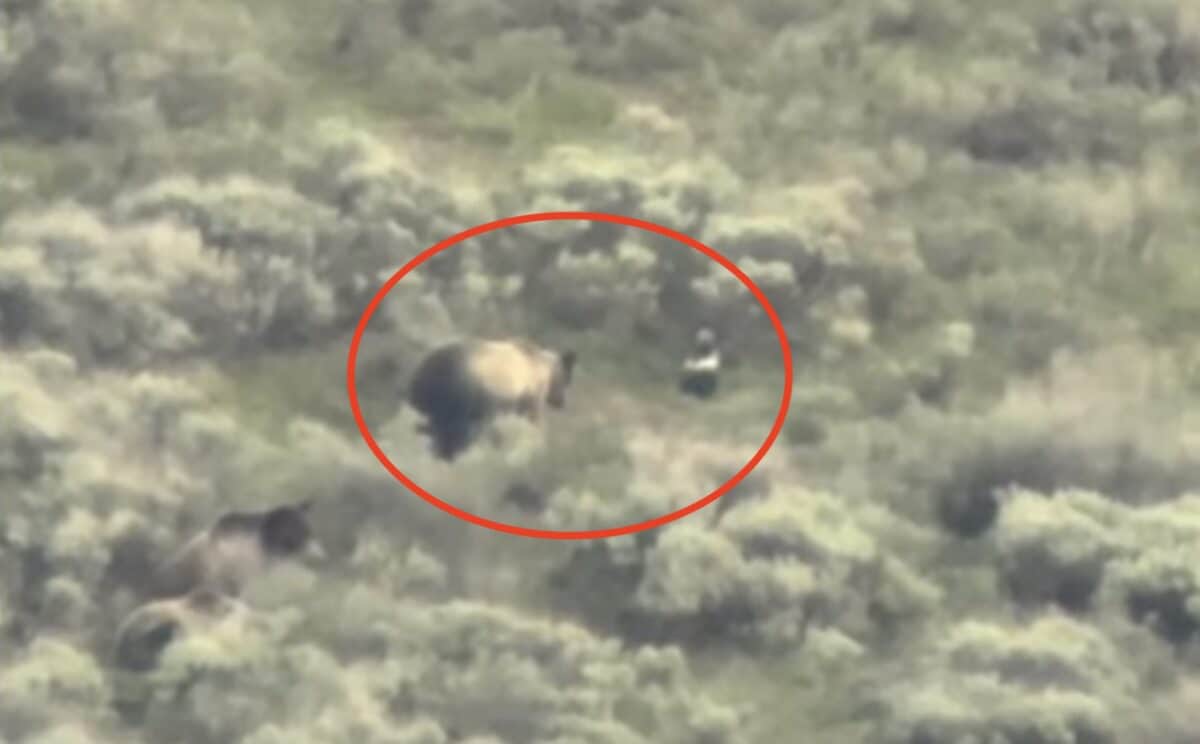
Despite their lack of interest in the higher altitudes, skunks do appear in the Greater Yellowstone Ecosystem. Thanks to their pungent defensive spray, skunks are generally quite effective at deterring predators and tend to be rather bold. The video below, filmed yesterday in the Yellowstone area, captures this boldness, showing a skunk standing up to a grizzly bear family. It doesn’t spray, but the simply act of facing the approaching predator allowed it to get away without any harm done.
Skunk spray can cause short-term stinging, burning, redness, and tearing, but it tends to be harmless in the long term. Unfortunately the idea of using tomato juice to remove the spray has been proven not to work, but using the right mixture of household chemicals can get the stench off both people and animals.
If you or your pet is sprayed, Poison Control encourages decontamination to remove the oil and eliminate the scent. Whether on skin or fur, mix 1 quart of 3% (household strength) hydrogen peroxide, ¼ cup of baking soda, and 1 teaspoonful of liquid dish detergent. Use it immediately after mixing, apply for 5 minutes, rinse, then repeat as necessary. Don’t apply this mixture to the eyes or mouth. Rinse the eyes gently with room temperature water for 15 minutes. If in the mouth, rinse with water and spit.