
A new study from UC Riverside has found that nest-material theft among Hawaiian forest songbirds is far more common than previously understood, and researchers say the behavior could accelerate population decline for species already under significant pressure.
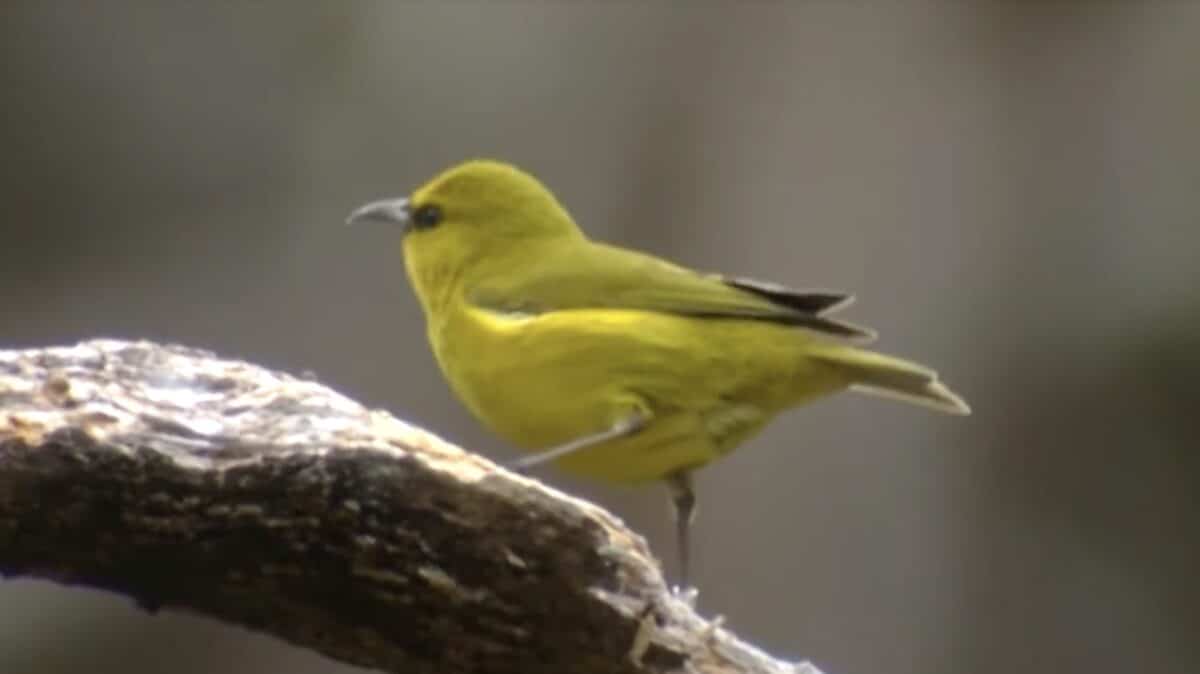
The research, published in The American Naturalist and led by UCR entomologist Erin Wilson Rankin, is the first study to track and quantify so-called kleptoparasitism in Hawaiian songbirds in the wild. Over six months, a trained team monitored more than 200 nests belonging to native canopy-nesting species, including the scarlet I’iwi, the crimson Apapane, and the yellow-green Hawai’i Amakihi.
The Apapane emerged as both the most frequent thief and the most common victim, likely because of its sheer abundance in the forest. Most thefts occurred between nests built at similar heights in the tree canopy, suggesting songbirds are stealing from nests they simply stumble upon while foraging.
While most targeted nests had already been abandoned, roughly 10 percent of thefts involved active nests that were still being built or contained eggs or chicks. About 5 percent of observed nests failed following a theft.
“We saw instances where nests failed, either because the nest structure was compromised or because the parents were disturbed and left.” – Wilson Rankin
Although 5 percent may seem minor, researchers say the finding raises serious concerns for birds already contending with habitat loss, avian malaria, and climate change. Native Hawaiian songbirds have been pushed to higher elevations by mosquito-borne diseases, making remaining forest habitats increasingly crowded and competitive.
Wilson Rankin noted the behavior could intensify if nesting materials or safe nesting sites become more scarce. The findings could also help conservationists better predict when and where theft is most likely to occur, informing future management strategies for vulnerable species.
The study was a collaboration between Wilson Rankin and her husband, UCR biologist David Rankin, who led the nest-finding fieldwork.