

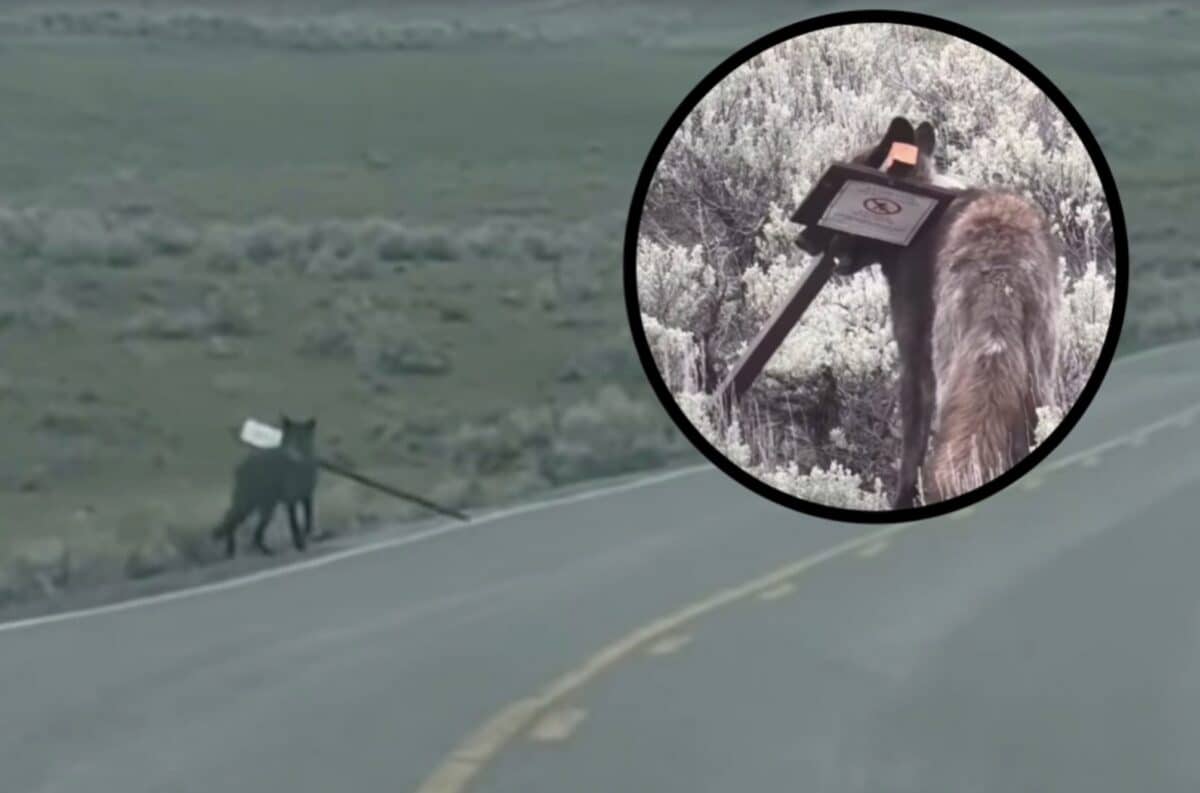
A wayward wolf puppy in Yellowstone National Park found an irresistible toy in his short time away from the adults and visitors were shocked when they realized what was in his mouth as he dragged it across a park road.
Six yearling puppies from the Junction Butte Pack became separated from their adult pack members, likely drawn to something extra smelly like an old carcass or a pond full of salamanders, and one young male was quite mischievous while away from the elders.
It should come as no great surprise that a young canine was enamored with a stick but in Yellowstone sometimes those sticks are quite important. Turns out the wolf pup made off with a closure sign placed by Yellowstone’s Bear Management team that was set up to warn visitors to stay out of an area due to an active carcass with grizzly bears on it.
Gray wolves were restored in 1995 and as of January 2025, at least 108 live primarily in the park. Wolves are highly social animals and live in packs. Worldwide, pack size will depend on the size and abundance of prey. In Yellowstone, average pack size is 11.8 individuals.
Research in Yellowstone since the wolf reintroduction program has highlighted the adaptive value of social living in wolves from cooperative care of offspring, group hunting of large prey, defense of territory and prey carcasses, and even survival benefits to infirm members of the pack.
Not sure if this young pup got a scolding for messing with the park signage once it got back into the fold but it certainly made for an entertaining sight for these folks driving through America’s oldest National Park on a beautiful spring day.
Yellowstone Wolf Numbers:
- In general, wolf numbers have fluctuated between 83 and 123 wolves since 2009.
Where to See:
- They inhabit most of the park, peak activity is at dawn and dusk.
- The northern range of Yellowstone is one of the best places in the world to watch wolves.
Size and Behavior:
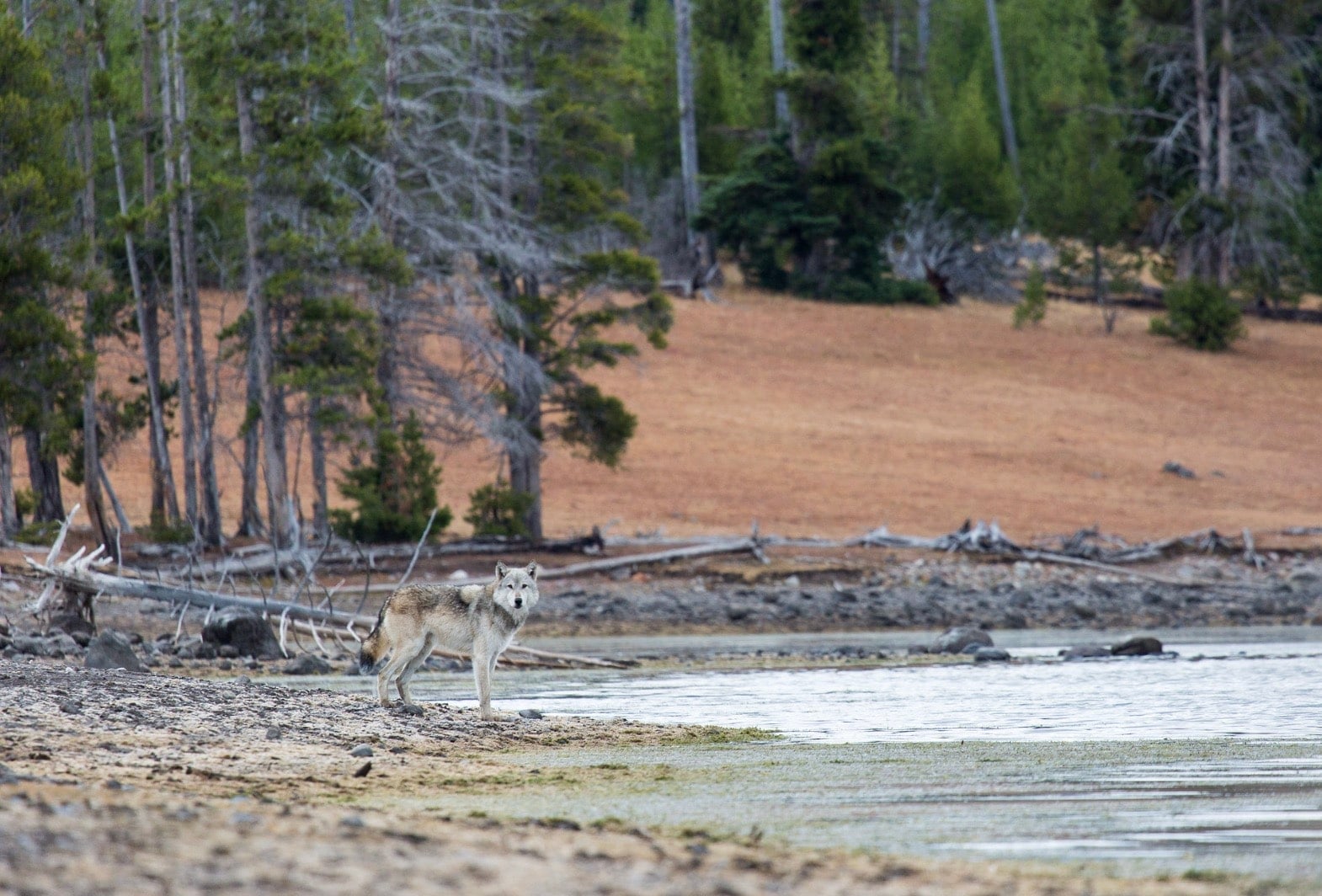
- 26–36 inches tall at the shoulder, four to six feet long from nose to tail tip.
- Males weigh 100–130 pounds, females weigh 80–110 pounds.
- Home range within the park is 185–310 square miles (300– 500 km2); varies with pack size, food availability, and season.
- Average lifespan in the park is four to five years. Average lifespan outside is two to three years. The oldest known wolf here was 12.5 years old.
- Two main color variations exist in Yellowstone in approximately equal proportions: black and gray.
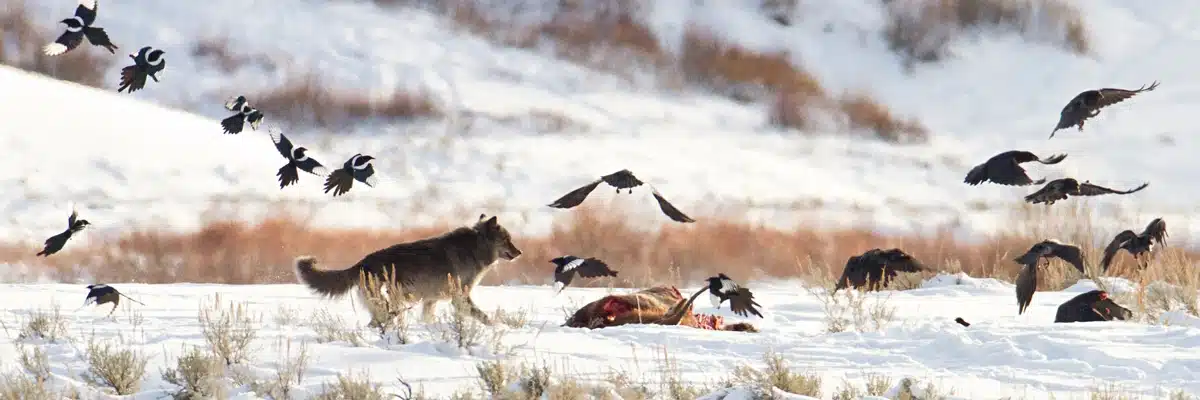
- Prey primarily on hoofed animals. In Yellowstone, 90% of winter diet is elk; summer prey consist of more deer and smaller mammals.
- Mate in February.
- Give birth to average of five pups in April after a gestation period of 63 days.
- Young emerge from den at 10–14 days; pack remains at the den for three to ten weeks unless disturbed.
- Leading cause of death for wolves within the park is death by other wolves.
- Leading cause of death for wolves outside the park is human-caused.
Your Safety in Wolf Country:
Wolves are not normally a danger to humans, unless humans habituate them by providing them with food. No wolf has attacked a human in Yellowstone, but a few attacks have occurred in other places.
Like coyotes, wolves can quickly learn to associate campgrounds, picnic areas, and roads with food. This can lead to aggressive behavior toward humans.
What You Can Do
- Never feed a wolf or any other wildlife. Do not leave food or garbage outside unattended. Make sure the door is shut on a garbage can or dumpster after you deposit a bag of trash.
- Treat wolves with the same respect you give any other wild animal. If you see a wolf, do not approach it.
- Never leave small children unattended.
- If you have a dog, keep it leashed.
- If you are concerned about a wolf—it’s too close, or is not showing sufficient fear of humans— do not run. Stop, stand tall, and watch what the wolf does. If it approaches, wave your arms, yell, flare your jacket. If it continues, throw something at it or use bear pepper spray. Group up with other people, and continue waving and yelling.
- Report the presence of wolves near developed areas or any wolf behaving strangely.
Wolves in Yellowstone occasionally become habituated to human or vehicle noise. Biologists successfully aversive-condition several wolves each year. Visitor education is important to help keep wolves wild and wary of humans. There have been no cases of people injured by wolves in Yellowstone; however, two have been killed (2009 and 2011) when their behavior could not be changed with aversive conditioning. Both wolves were likely fed by people.
