

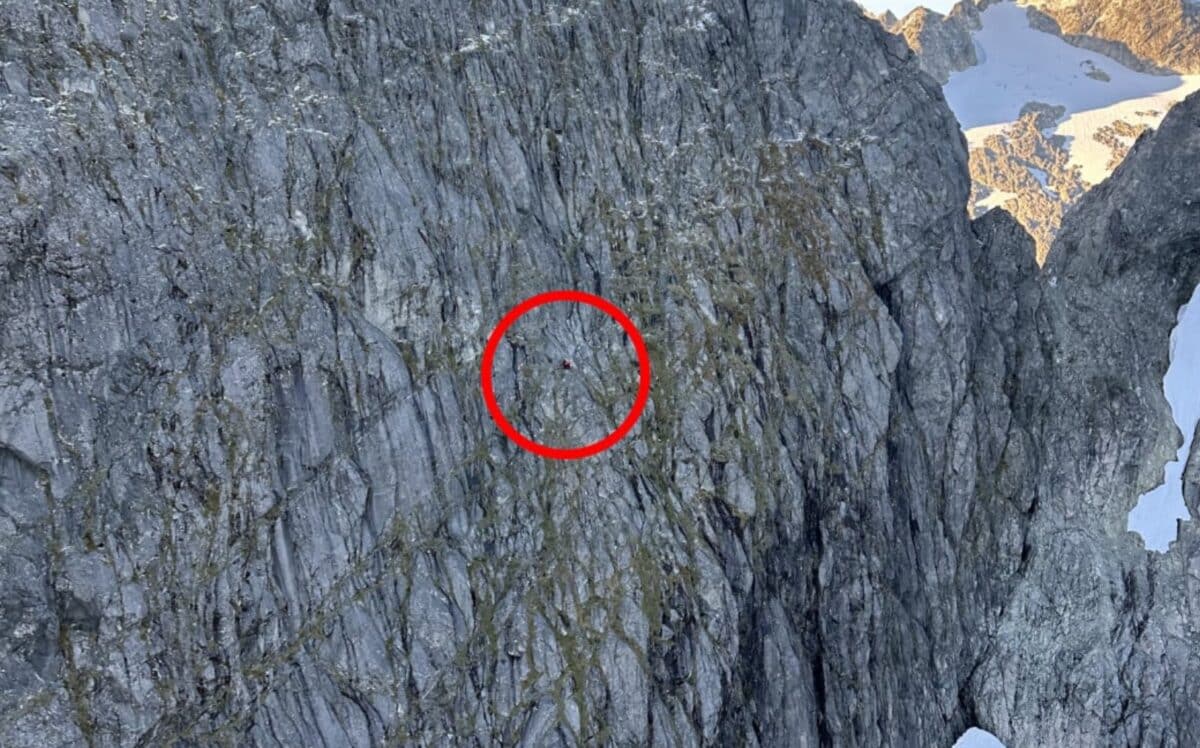
As severe weather rolled in, two climbers were forced to shelter in a bivouac and sleeping bags as they awaited rescue for three days on the side of a mountain in New Zealand. Two prior rescue attempts were executed on Wednesday, April 8th, and Thursday, April 9th, but ultimately failed due to poor weather.
The climbers had activated a personal locator beacon during the afternoon on Wednesday in the Sabre Peak area in Fiordland, New Zealand. A Southern Lakes Helicopter was dispatched but due to rain and low clouds the rescue attempt failed. The information was then passed to Police so they could start a search and rescue operation.
One of the climbers managed contacted his brother via satellite text messages on Thursday morning, and the brother then contacted the police. The texts confirmed that both climbers were uninjured but unable to move due to the severe weather. Their rescue attempt was again unsuccessful.
Finally, at 7 am on Friday, April 10th, the rescue team was able to locate the climbers on the wall and execute a long-line extraction. This miraculous rescue was life-saving as the climbers would not have survived another night on the mountain. Having run out of food and using sleeping bags that had been soaked by the weather, the pair was running out of time.
After making it to the helicopter, the climbers were cleared by on-board doctors, making this a huge success story for the rescue crew. The climbers had done everything right, but unfortunately, they were unable to control the weather.
By activating their beacon early on and staying in place, the climbers played an integral role in their survival. The helicopter team’s execution of a longline rescue in an unforgiving alpine environment was also crucial.
When heading out into the alpine or any remote area, climbers need to prepare for the worst and always carry locator beacons and satellite communication devices.