

By PowderMatt
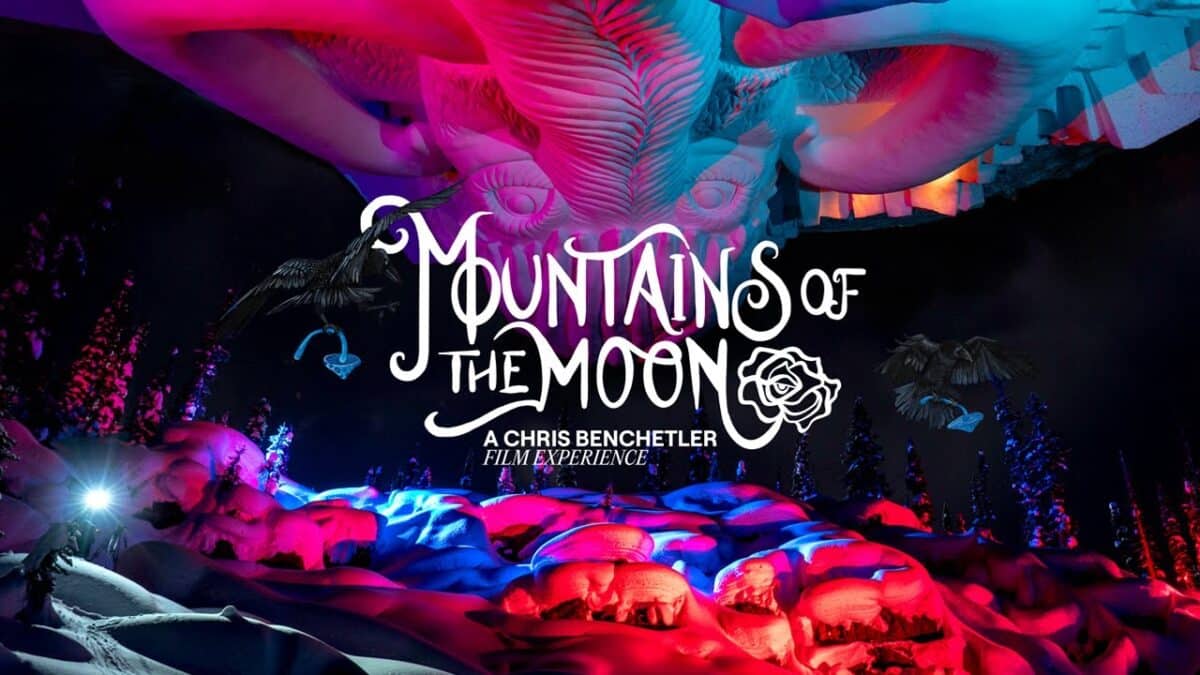
I caught up with world-famous artist and mountain athlete, Chris Benchetler, who launched recently a one-of-a-kind mountain art project that blends his crazy creative skills, athletic artistry, the magic of the mountain environment at night, together with the drumming by Mickey Hart, to celebrate the 60th anniversary of the Grateful Dead. This project was a massive undertaking, with so many moving parts that we thought it best to learn more about what motivates Chris and what has shaped him into one of the coolest mountain athletes and artists around.
Let’s get back to the beginning—how has nature influenced your art?
Chris Benchetler: Nature has always been my greatest muse. I’ve experienced a lifetime of stories, so intuition takes precedence over explanation. I create from a place of instinct, where I try to be a vessel for something larger, something that is deeper than words. When I paint, I don’t begin with a fully formed idea. I start with a spark of something that feels significant but undefined. I trust my instincts, allowing the process to unfold organically. One brushstroke leads to another, and, gradually, a larger picture emerges—one that I didn’t consciously plan but always sensed was there.
What role has mountaineering / climbing played in your skiing and art? Any memorable routes and experiences to share?
Chris Benchetler: Mountaineering and climbing have given me a completely different perspective on the mountains. The summits, knife ridges, or hanging from fingers and toes, 12 pitches up on a wall, you have no choice but to be fully present. That presence has influenced both my skiing and my art. Climbing sharpens the senses for my skiing—patience, failure, persistence, and respecting the environment—have definitely shaped me as an athlete and artist.
There are many memories that stand out from climbing and skiing, but I think the “epics” or the “failures” are always the ones that leave me with the most growth. Every anniversary, in September, my wife and I try to climb a wall, and it almost always covers the entire spectrum of emotions —exhaustion, tears, thunderstorms, triumph, testing our communication, and ultimately our ability to handle adversity. We use the mountains as our metaphor for life, climbing the peaks and valleys, and using them as our greatest teacher.
It is a powerful confluence – Nature, Art, Mountains – share more about this for you and how it has manifested in your work
Chris Benchetler: For me, these things are inseparable. Nature provides the inspiration, art is the medium, and the mountains are the setting where it all comes alive. Art gives me a way to reflect on my life experiences and translate what I feel, and the mountains give me the space to feel small and dream about a much bigger world that I am a part of. I aim to communicate what cannot be said. I juxtapose disparate elements to create something greater than the sum of its parts. My process involves layering colors, images, topics, experiences, and emotions. Through that process of composition, I hope to uncover a more profound union—to evoke a resonance that transcends the literal and touches something within us all.
More on your background – early days, early highlights
Chris Benchetler: Growing up in the Eastern Sierra, I was surrounded by inspiration from an early age. Pair that with supportive parents, allowing me space to explore my passions and vast landscapes, and then sprinkle on a lot of life challenges—it was a perfect recipe for exploring the depths of this human experience. An early highlight was losing my father. It gave me so much perspective and appreciation for what I really cared about in life. It led me to my deepest and most meaningful relationships. It helped me focus on my deepest passions and showed me how to manifest my own reality.
Tell us more about this mind-boggling outdoor film project and why it matters to you.
Chris Benchetler: Mountains of the Moon is the most ambitious project of my life. It’s more than just a film—it’s ultimately the convergence of all my ideas and emotions. The film was about capturing light, shadows, and contrast—painting landscapes with light and creating moments that cannot be replicated. It’s weaving together fragments of life, nature, and sport into a narrative that feels true, even if it defies conventional logic or story structure. This process of creation—trusting the unseen and following the sensate—is what being true to my vision as an artist is all about. Ultimately, my goal was to craft a visual experience that externalizes the fevered dreams swirling in my mind.
3 takeaways that you have gained from mountain time that you feel people should pay attention to
Chris Benchetler:
1. Presence is everything. The mountains teach you to slow down and live in the moment. Whether you’re climbing, skiing, or simply sitting at a summit, being present is the greatest gift you can give yourself.
2. Nature is our greatest teacher. The mountains show us resilience, patience, perseverance, and the power of adaptation. If we listen, we can learn how to move through life.
3. We’re all connected. The mountains don’t belong to anyone—they’re shared spaces that are bigger than us, and remind us of our responsibility to care for and respect them.
Anything else you would like to share?
Chris Benchetler: Mountains of the Moon is about dreaming big and honoring the spaces that inspire me. It’s equally a love letter to the Grateful Dead’s music, community, and legacy. If others encounter this work and find themselves tuning into the same wavelength, recognizing something familiar in the unfamiliar, then I’ve succeeded in sharing a piece of myself. It’s not about perfect clarity but about emotion—an echoing vibration from a strummed guitar that expresses a feeling others can feel as well.