

Southern Hemisphere — While the warm weather took hold in the Northern Hemisphere, cold temperatures returned during the past several months in the South. This means that it was ski season in several countries in the Southern Hemisphere.
While it was a surprising banner year in one country, it turned out to be a downer in the others. Although there are some holdouts, most ski resorts have now closed for the 2025 ski season. This means it’s a good time to review what happened this winter. Here’s a recap of what went down during the Southern Hemisphere’s 2025 ski season.
Argentina
After a solid 2024 ski season, 2025 was a very underwhelming one for Argentine ski resorts. While Chile saw some snowfall early on, a lack of snow at Argentine ski resorts led to delayed terrain openings. Dry conditions remained until August, especially in Bariloche.
While some snow helped end the bleeding in the later part of the season, the winter was regarded as below average for Argentine ski resorts. Out of all the ski resorts, the one that fared the best was Cerro Castor, the southermost ski resort on the planet.
Australia: Ironically, the best ski season in the Southern Hemisphere happened in a country that’s not typically known for its snowy winters. A slow start was followed by a cold, snowy period, which helped ski resorts open terrain quickly. While some rain did fall this winter, it wasn’t enough to close a substantial number of terrain or lifts during the core season.
Most major ski resorts remain open into September, which is notable given that many closed earlier than anticipated last winter. Many major ski resorts wrapped up their season on October 5th. Visitation was strong, as Falls Creek told ABC Australia in early September that its visitation for the 2025 season was 197,729 guests, a 36% increase compared to the prior winter.
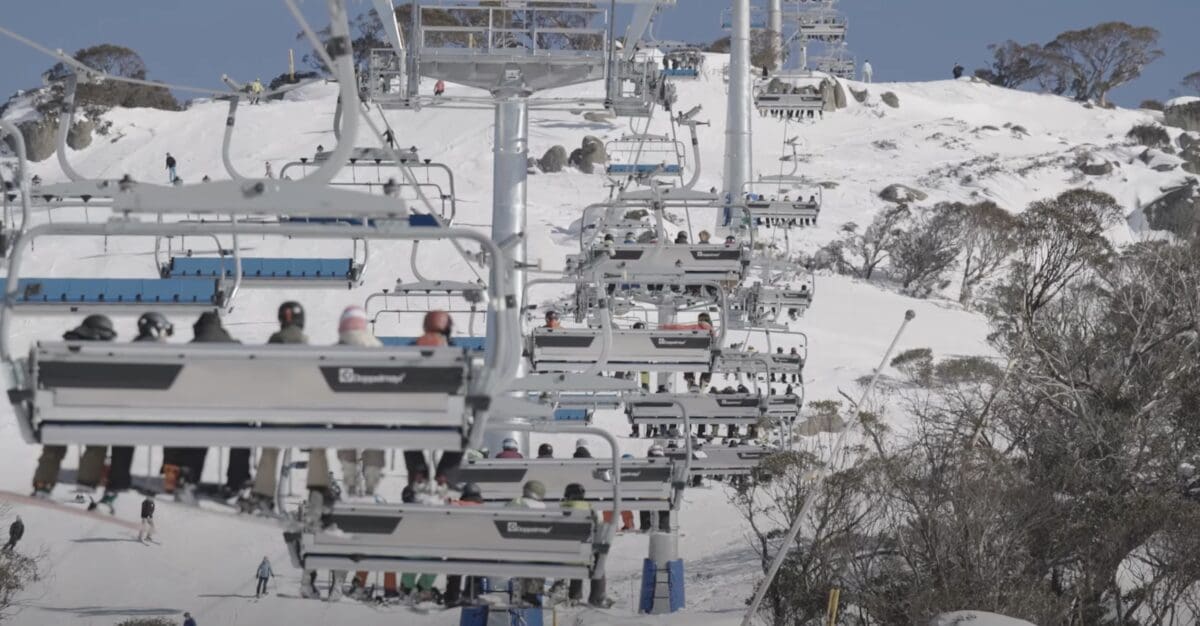
The most exciting upgrade at Australian ski resorts this past winter was the new Mt. Perisher 6 chairlift. Perisher Ski Resort replaced a few of its fixed-grip lifts with a detachable high-speed six-pack chairlift. It replaced the Mt. Perisher Triple Chair and Mt. Perisher Double Chair. The Mt. Perisher 6 has a ride time of around 5.5 minutes, a drastic improvement over the Triple Chair’s 10-minute journey.
Chile
Like last year, heavy snowfall in June led to early openings. However, a dryer July meant it wasn’t as successful as last winter. Chile did see some snowy stretches in August and September, but it was generally regarded as a below-average winter.
The big Chilean ski industry development regarded Mountain Capital Partners (MCP), which already owns La Parva and Valle Nevado in the country. In July, Mountain Capital Partners announced plans to take a controlling stake in a company that owns El Colorado, Parque Farellones, Pillán (Villarrica), and Volcán Osorno. If approved, MCP would own a large number of ski resorts in the country, including the Tres Valles.
Some of the notable ski resort improvements included the addition of night skiing and snow tubing at Nevados de Chillan, and lift refurbishment and snowmaking upgrades at Valle Nevado.
New Zealand
The ski season seemed to begin with great promise. In May, Mt. Hutt received multiple feet of snowfall and was aiming to open early. However, that snow ended up melting, leading to a delayed opening date.
Despite that, some snow in early June allowed some ski fields to open early, giving them hope for a good season. Unfortunately, a very dry July and August led to a very underwhelming season. This dryness led to some ski fields cancelling their season. While two of them did open thanks to natural snowfall, the season was regarded as one of the worst in recent memory for the Kiwis. The major ski resorts were able to hold on thanks to snowmaking and late-season snowfall, but small ski area operations were more spotty.
Some of the most notable additions at ski resorts included the Soho Basin expansion at Cardrona, along with a new rope tow opening terrain for the first time in three decades at Mt. Lyford.
Lesotho
The only ski resort that still operates in Africa’s Southern Hemisphere is Afriski. While it’s situated in a not very snowy climate, this small ski resort offers limited terrain thanks to its snowmaking system. They did get some snow early in the season, but it was generally dry for the rest of the way. Afriski’s season began on June 1st and concluded on August 30th.
For additional insight into this winter in the Southern Hemisphere, check out Ski Area Management’s article on it.
Image/Video Credits: Perisher Ski Resort, Cerro Castor, Mt. Lyford Ski Area, Valle Nevado, Afriski Mountain Resort
