

The next great North American ski boom may already be taking shape.
It isn’t necessarily arriving in the form of dozens of brand-new ski resorts. Instead, established mountains are pushing into new terrain, replacing aging chairlifts, building gondolas, creating new base areas and laying out ambitious expansion plans that could reshape where—and how—we ski over the next decade.
The scale of that pipeline is striking.
According to Skiresort.info’s database of planned North American ski lifts, there are currently 166 planned lift-project entries across North America, including 114 in the United States and 52 in Canada. The database covers everything from relatively near-term replacements to lifts buried deep inside long-range resort master plans.
Even more telling: a separate tracker for the 2026-27 season alone lists 55 new lifts across North America, including 40 in the United States.
Unofficial Networks has already been following many of these projects individually. Put them all on one map, however, and a larger trend becomes obvious:
Ski resort investment is becoming heavily concentrated in a handful of mountain regions.
Where The Most Future Lift Projects Are Planned
Based on the current Skiresort.info database, these are some of the biggest concentrations:
| State/Province | Planned Lift Entries |
|---|---|
| British Columbia | 35 |
| Colorado | 31 |
| Utah | 26 |
| Maine | 8 |
| New Hampshire | 8 |
| Alberta | 8 |
| Quebec | 8 |
| Montana | 5 |
| Wyoming | 5 |
| Washington | 5 |
| California | 4 |
| Nevada | 3 |
| Alaska | 3 |
| Vermont | 2 |
| Oregon | 2 |
| New York | 2 |
| Idaho | 1 |
The numbers require some context. These are project listings, not guaranteed construction starts. A lift included in a 10- or 20-year master plan can appear alongside a chair that is already entering permitting. Cross-border or connector projects can also appear more than once.
Still, as a measure of where resort operators are trying to grow, the pattern is hard to miss.
Colorado: 31 Planned Lift Projects
No U.S. state currently has a deeper listed pipeline than Colorado.
Skiresort.info tracks 31 planned lift entries in the state, spread among 12 resorts.
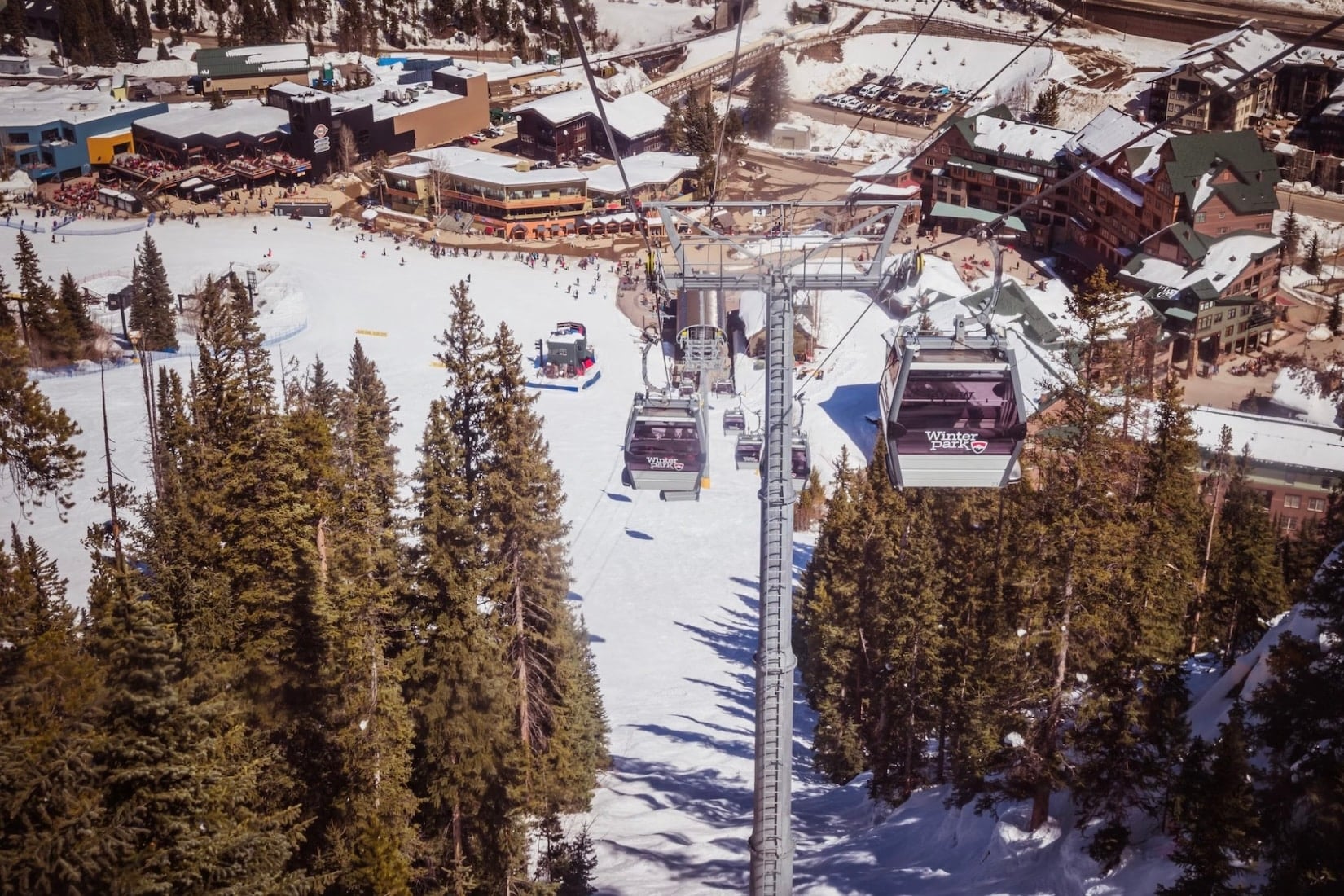
Winter Park is responsible for a significant chunk of them.
The resort’s enormous long-term vision includes a town-to-mountain gondola network, the replacement of Gemini, an expansion onto Vasquez Mountain, new lifts around Discovery Park and Cooper Creek, and numerous other mountain-access projects.
Winter Park says some pieces of its development program could begin as early as 2026, subject to approvals. Read our breakdown of Winter Park’s huge expansion plan. The resort’s official Winter Park Unlocked master plan lays out just how extensive that vision could eventually become.
And Winter Park isn’t alone.
Telluride has multiple future lift concepts. Snowmass continues cycling through major lift upgrades. Copper, Keystone, Aspen Mountain, Powderhorn and Silverton all appear in the pipeline.
At Purgatory, meanwhile, the future is already becoming reality. Crews are completing the new Colorado Couloir chairlift, which will improve mountain access and serve new steep terrain. See the latest Colorado Couloir construction update.
Colorado isn’t just replacing old lifts. In several cases, it is reconfiguring entire mountains.
Utah: 26 Projects—and Possibly The Most Dramatic Transformation
Colorado has more listed projects.
But Utah may have the more transformative ski-development story.
Skiresort.info currently lists 26 future lift entries in Utah.
Southern Utah is a major reason.
Brian Head and the neighboring Aspen Meadows development have laid out an enormous long-term vision. Aspen Meadows alone could eventually add more than 850 acres and multiple lifts to Brian Head’s footprint, while a separate expansion proposal on Forest Service land is working its way through federal environmental review. Unofficial Networks recently covered construction beginning at Aspen Meadows.
The federal government published a Draft Environmental Impact Statement for the Brian Head expansion on July 31, 2026. View the federal Brian Head EIS listing.
Farther north, Park City continues pursuing major lift replacements. Powder Mountain is opening more than 1,000 acres of lift-served public terrain in its DMI expansion. Sundance is adding more than 100 acres and its new Electric Horseman high-speed quad. Read about Sundance’s newest terrain expansion.
And then there is Deer Valley.
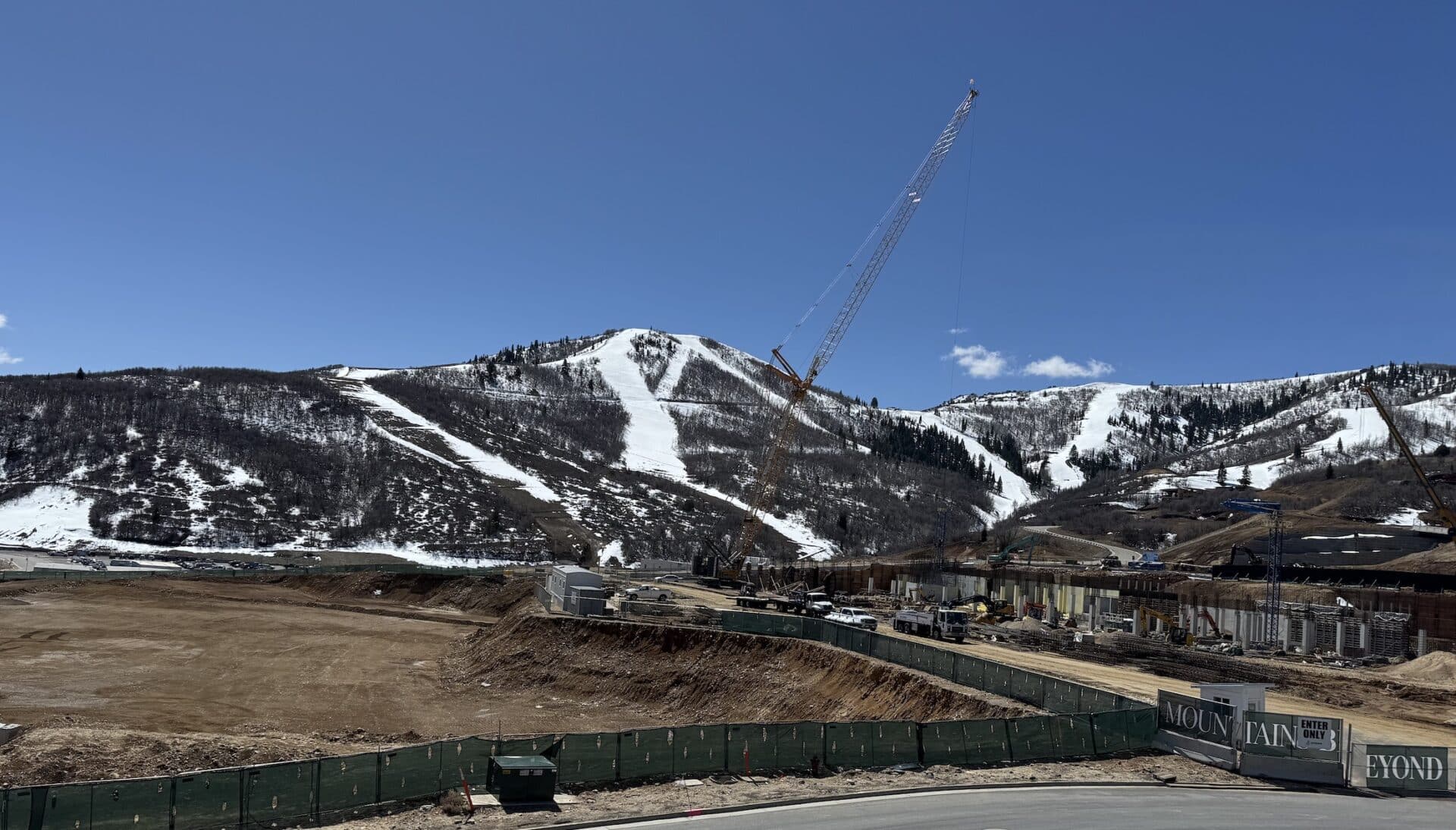
Deer Valley’s historic Expanded Excellence project has moved so quickly that much of its development is no longer really “future” infrastructure. Since December 2024, the resort says it has added 11 new chairlifts, with 4,500 skiable acres planned to be available for the 2026-27 season. See Deer Valley’s official Expanded Excellence project. Unofficial Networks also broke down the next phase here.
In other words, the 26-project pipeline actually understates how much lift construction Utah has already absorbed.
British Columbia Is The Biggest Single Hotspot
Here’s perhaps the most surprising number in the entire dataset:
British Columbia has 35 planned lift entries—more than Colorado or Utah.
That means B.C. alone accounts for a huge share of Canada’s 52-project pipeline.
Some of the province’s investment is already visible.
At Whistler Blackcomb, crews are replacing the nearly four-decade-old Showcase T-Bar with a fixed-grip quad designed to improve high-alpine access on Blackcomb. Unofficial Networks documented the construction progress this summer.
British Columbia’s unusually large pipeline is another reminder that this isn’t solely an American ski-industry story.
If today’s master plans are an indication, western Canada could be one of the most active lift-development regions on the continent for years.
New England Is Quietly Building Too
The West gets most of the attention, but the numbers reveal a second story:
New England has a surprisingly deep pipeline.
Maine and New Hampshire each have eight planned lift entries. By comparison, Vermont currently has only two listed.
Maine’s list is driven by major resorts including Sunday River, Sugarloaf and Saddleback.
New Hampshire includes several projects at Loon, along with a proposed new Cannon Mountain tram and the long-discussed redevelopment of The Balsams.
And Loon is expanding beyond lifts, too.
The resort recently announced its 272-acre Black Ridge expansion, which is expected to make Loon the largest ski resort in New Hampshire when it opens. Read more about Loon’s massive Black Ridge expansion.
That matters because the future of Eastern skiing isn’t simply about getting bigger.
For many New England mountains, investment means reliability: replacing aging lift infrastructure, improving snowmaking, moving more skiers efficiently and modernizing resorts that have been operating for generations.
Montana And Wyoming: Fewer Projects, Big Consequences
Montana has five listed projects, including future work at Big Sky, Montana Snowbowl and Great Divide. Wyoming also has five—and remarkably, all five are listed at Grand Targhee.
The raw numbers don’t fully capture the investment that has already taken place.
Big Sky has spent years executing its massive Big Sky 2025 vision, dramatically modernizing its lift system and mountain infrastructure. Big Sky’s official development plan shows the scale of that transformation.
These markets may not have Colorado-sized project counts, but a single well-placed lift can fundamentally alter how a mountain skis.
Idaho Shows Why The Numbers Need Context
Idaho is one of the best examples of why “planned lifts” should not be confused with “total ski investment.”
The future-project database currently shows only one planned Idaho lift, at Lookout Pass.
Yet Sun Valley is replacing two major chairlifts in 2026: Christmas Express and Lookout Express. The latter is being upgraded to a high-speed six-pack. Read our full report on Sun Valley’s two new chairlifts.
Those projects have moved from “planned” into active construction, meaning they naturally disappear from some future-project counts.
So Idaho isn’t standing still. It is simply further along with some of its current investments.
California, Washington And The Rest Of The West Coast
California currently has four planned entries, including projects at Mammoth Mountain, Heavenly and Homewood. Washington has five, while Oregon has two.
Again, active construction makes the real picture broader.
Mt. Bachelor is already working on its Northwest chairlift project in Oregon, while Lee Canyon near Las Vegas is building an entirely new terrain pod and chairlift in the Wild West Bowl. See the Lee Canyon expansion taking shape.
The West Coast isn’t experiencing the sheer concentration seen in Colorado or Utah, but there is still a steady pattern of strategic upgrades—especially at resorts attempting to improve circulation, unlock overlooked terrain or modernize aging infrastructure.
The Future Ski Boom Is Mostly Happening At Resorts That Already Exist
Perhaps the biggest takeaway from all 166 projects is what isn’t happening.
North America isn’t suddenly building dozens of entirely new ski resorts.
Instead, the biggest operators and destination mountains are trying to make existing ski areas larger, faster and more interconnected.
New lifts increasingly serve one of four purposes:
- Opening entirely new skiable terrain
- Replacing old lifts with higher-capacity detachable chairs or gondolas
- Connecting previously separated parts of a resort
- Building access infrastructure around new villages, lodging and real-estate development
That’s a different kind of ski boom than America saw in the middle of the 20th century.
But it may ultimately change the skiing experience just as much.
Colorado and Utah together account for 57 of the 114 U.S. planned lift entries—exactly half of the national total. British Columbia has more projects listed than either state individually. And Maine and New Hampshire are showing that major resort investment isn’t limited to the Rockies.
Unofficial Networks has already tracked the industry’s recent capital-investment surge, including more than 70 significant resort projects heading into 2026. See our previous breakdown of ski resort capital investments.
The next few years could make that wave look like only the beginning.
One Important Caveat
A master plan is not a construction schedule.
Some of the 166 projects have permits, financing and relatively clear timelines. Others remain conceptual. Environmental review, local approval, changing ownership, economics and construction costs can delay or kill a proposed lift entirely.
So don’t expect 166 new chairs and gondolas to suddenly appear next winter.
Instead, think of the list as a map of ambition.
And right now, that map points overwhelmingly toward British Columbia, Colorado and Utah—with New England quietly emerging as another region worth watching.