

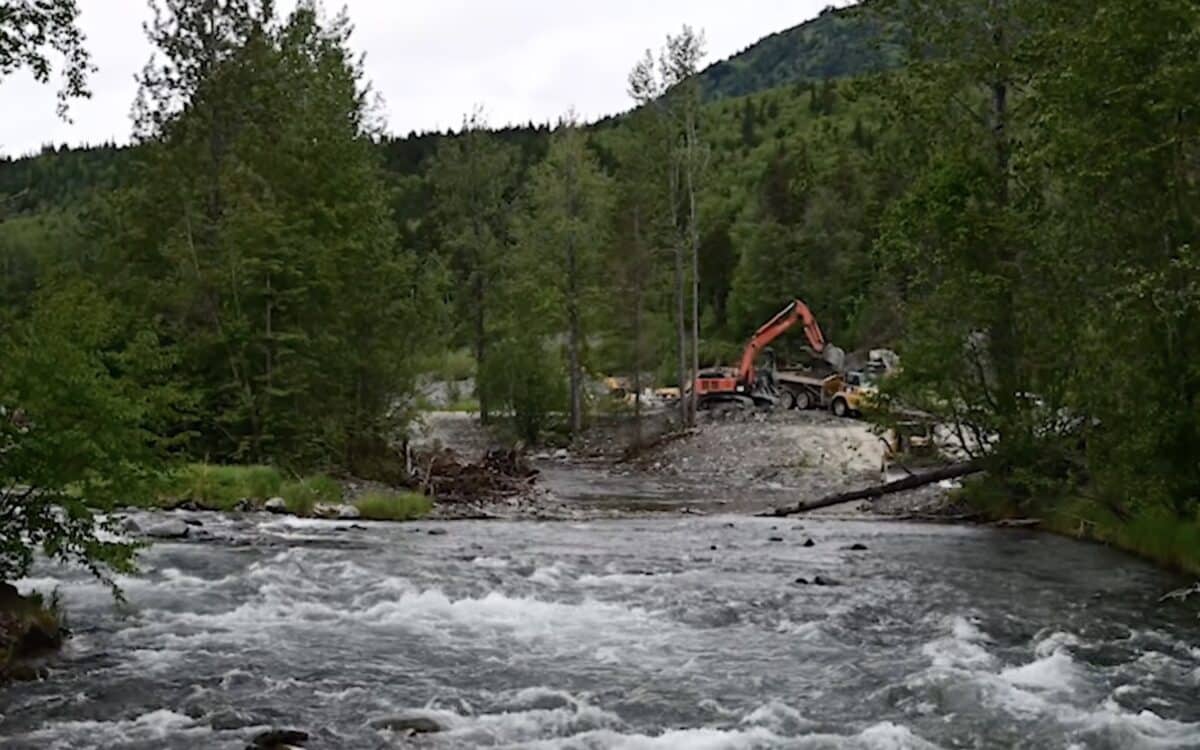
A century after historic mining practices reshaped Resurrection Creek near Anchorage, Alaska, a major restoration effort is bringing the damaged waterway closer to its natural condition. The project has transformed a two-mile stretch of the creek that was once straightened by massive gravel tailings into a healthier river system designed to support salmon, wildlife, and surrounding communities.
The Resurrection Creek Restoration Project began in 2022 through a partnership between Trout Unlimited, Kinross Alaska, Hope Mining Company, the National Forest Foundation, the National Oceanic and Atmospheric Administration, and the Forest Service. The unusual collaboration united conservation groups, mining companies, and federal agencies around a shared goal of restoring one of Alaska’s important salmon habitats.
Salmon Drive Historic Restoration Partnership
Salmon have been the central force behind the project. The fish hold cultural, economic, and recreational importance throughout Alaska, connecting communities that depend on healthy waterways. A previous restoration effort completed by the Forest Service in 2006 repaired a 1.5-mile section of Resurrection Creek upstream. After the work was finished, salmon returned to spawn, and fish counts increased by more than 1,000 percent over the following decade.
The success of that project highlighted the potential for additional restoration. However, funding challenges delayed work on the remaining damaged areas until new partners joined together to complete the effort.
Rebuilding the Natural Design of a River
Historic mining operations removed much of the creek’s natural structure and left behind gravel piles that forced the water into a single channel. The altered stream lacked the mix of riffles, pools, and glides that salmon need throughout their life cycle. Forest Service engineers, hydrologists, fish biologists, and construction crews spent four years reshaping the creek. The team moved hundreds of tons of gravel per mile to create new stream channels, floodplain connections, and habitats for salmon eggs and young fish.
The project covered a 2.3-mile construction area across approximately 75 acres of floodplain. Managing the work required careful coordination of heavy machinery, environmental goals, and ongoing land use.
A New Future for Resurrection Creek
As construction concludes, the restored river is already showing signs of improvement. The redesigned channel can better handle floodwaters, provide improved habitat, and support returning salmon. For the restoration teams involved, seeing water flow through newly created channels marks the payoff of years of planning and work. The project stands as an example of how damaged ecosystems can recover through cooperation, engineering, and commitment to restoration.
