

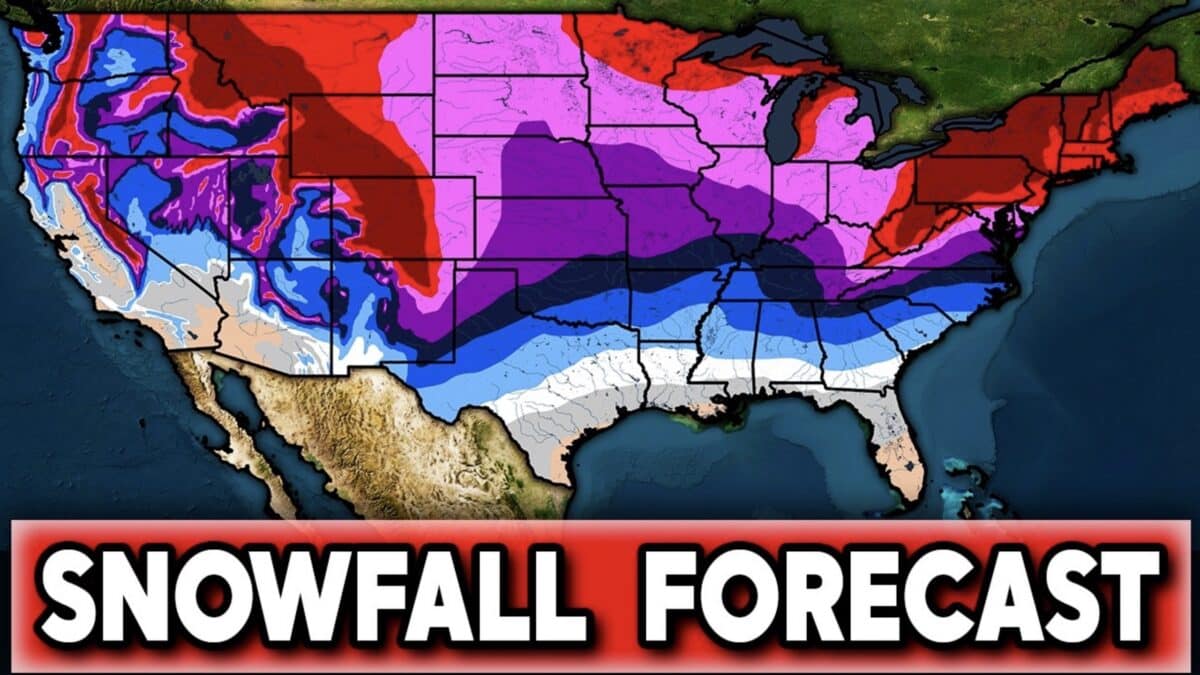
Direct Weather has released its latest snowfall forecast for the 2026-2027 winter season, breaking down how snowfall chances could compare with average annual totals across the United States. The outlook comes as a strong El Niño is expected to influence the weather pattern across North America this winter.
The forecast compares typical annual snowfall with Direct Weather’s expected snowfall chances for the upcoming season. While seasonal forecasts can change as winter approaches, the current outlook points toward a major divide between the northern and southern parts of the country.
Pacific Northwest And Northern Rockies
The Pacific Northwest and northern Rockies could be among the less active regions this winter. Direct Weather expects warmer than average temperatures and below average precipitation across much of the area.
That combination could result in below average snowfall chances for Washington, Oregon, Idaho, western Montana, and surrounding areas. Higher elevations will still receive substantial snow, with many mountain locations averaging well over 48 inches annually and some receiving more than 72 inches.
However the forecast expects the overall storm track to be less active across the northern tier.
Sierra Nevada And Southwest
The Sierra Nevada stands out as one of the strongest snowfall signals in the forecast. Direct Weather expects above average precipitation across California, Nevada, Arizona, and surrounding portions of the Southwest.
The forecast calls for particularly high confidence in above average snowfall across the Sierra Nevada. Some of the highest elevation areas already average more than 72 inches of snow each year, meaning an above average season could produce significant totals.
The Sierra Nevada looks to have the potential for a massive to potentially historic winter based on the current snowfall outlook.
Southern Rockies And Southern Plains
Southern Colorado, New Mexico, Arizona, and parts of the southern Plains are also expected to benefit from the active southern storm track.
Direct Weather forecasts colder than average temperatures and above average precipitation across much of the Southwest and south central United States. That combination could increase snowfall chances across the higher elevations of the southern Rockies.
The forecast also shows above average snowfall chances extending into parts of Oklahoma, Texas, Arkansas, and the southern Plains, although many lower elevation areas in this region typically receive relatively little snow.
Great Lakes And Northern Midwest
The Great Lakes and northern Midwest face a different setup. Direct Weather expects warmer temperatures and below average precipitation across much of the northern Plains and upper Midwest.
Snowfall chances are therefore expected to remain below average across portions of Minnesota, Wisconsin, Iowa, and surrounding states. However, lake effect snow could still produce significant localized snowfall, particularly around the Great Lakes.
Areas directly exposed to lake effect bands can average more than 72 inches of snow annually despite relatively modest snowfall totals elsewhere in the region.
Appalachians And Northeast
The forecast becomes considerably more favorable for snow farther east. Direct Weather expects above average snowfall chances from the southern Appalachians through the Mid Atlantic and into New England.
The forecast also calls for frequent Nor’easters along the East Coast. These storms can produce major snowfall on their western and northern sides depending on the exact storm track.
Higher elevations across Pennsylvania, New York, Vermont, New Hampshire, Maine, and the broader Appalachian region already average substantial snowfall. Direct Weather expects many of these areas to have an elevated chance of exceeding their typical seasonal snowfall during the 2026-2027 winter.
The snowfall forecast remains an early seasonal outlook. Additional changes are possible as the winter pattern develops, but the current forecast points toward the Sierra Nevada, southern Rockies, Appalachians, and eastern United States as key regions to watch for above average snowfall this winter.
