

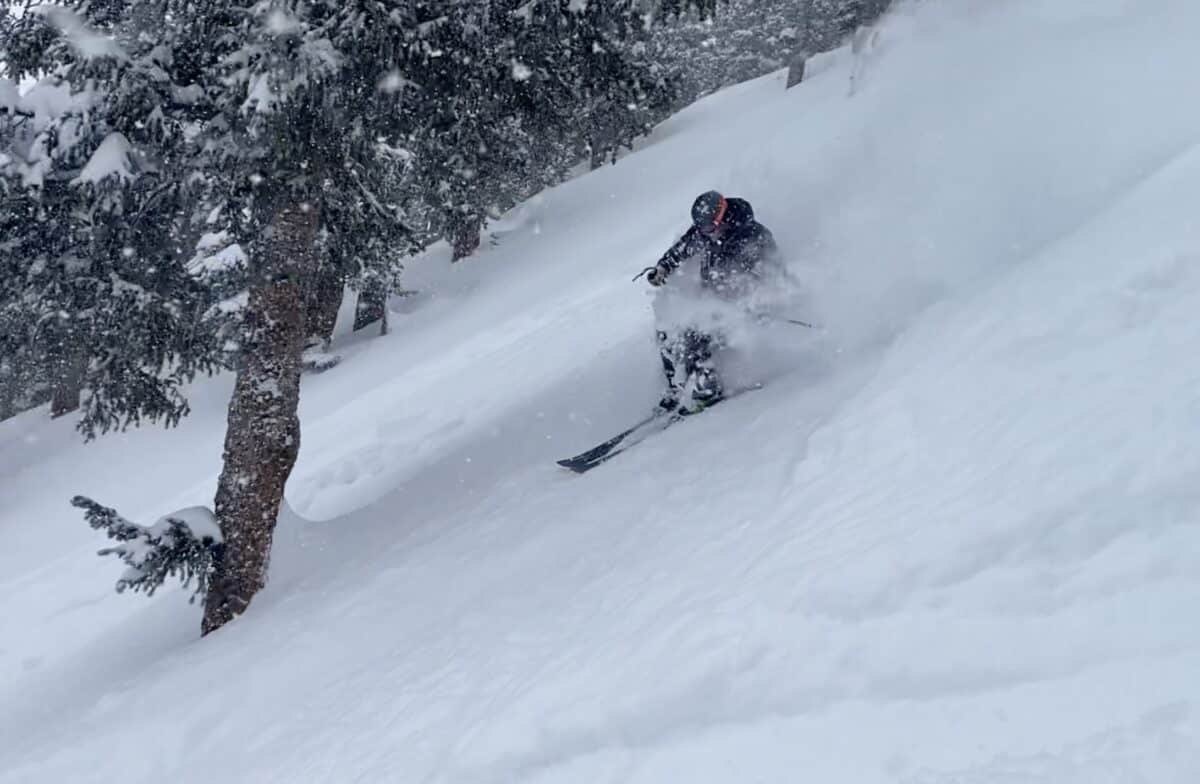
Every winter, skiers hear the same two terms: El Niño and La Niña.
But most people do not care about complicated ocean temperatures or atmospheric science. They want to know one thing:
Where is it most likely to snow?
The basic answer is fairly simple.
La Niña usually favors the Pacific Northwest, British Columbia and the northern Rockies.
El Niño often improves the odds in California, the Southwest and parts of the southern Rockies.
That does not mean every winter follows the script. It means certain regions have historically done better under one pattern than the other.
According to NOAA’s Climate Prediction Center, these patterns can shift North America’s winter storm track north or south, changing which mountain regions have the best chance of seeing frequent storms.
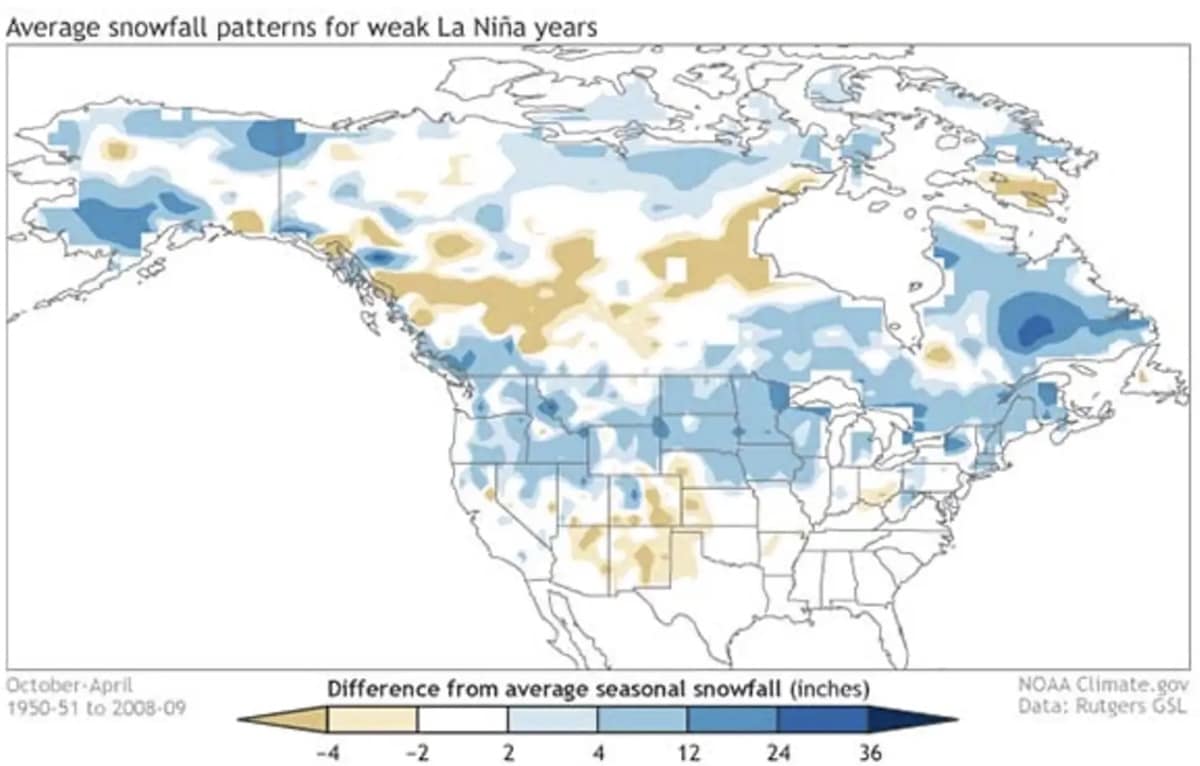
Where La Niña Tends To Bring More Snow
La Niña usually pushes the main winter storm track farther north.
That often gives northern ski regions more frequent storms, colder temperatures and lower snow levels.
British Columbia
British Columbia is one of the clearest potential winners during La Niña.
Pacific storms frequently move into the province, bringing snow to the Coast Mountains and interior British Columbia.
Ski areas around Whistler, Revelstoke, Fernie and other parts of western Canada are often well positioned when the northern storm track becomes active.
Washington and Oregon
The Cascade Mountains can do very well during La Niña.
Washington and Oregon often receive frequent Pacific storms, while colder temperatures improve the chances that precipitation falls as snow rather than rain.
This can be especially important at lower-elevation ski areas.
The National Weather Service’s Inland Northwest office reports that La Niña winters in the region often bring cooler-than-normal temperatures, above-normal precipitation and above-normal snowfall.
Northern Idaho and Montana
La Niña often favors the northern U.S. Rockies, including northern Idaho and Montana.
Storms arriving from the Pacific Northwest and western Canada can deliver steady snowfall throughout the season.
Resorts such as Whitefish, Schweitzer and Lookout Pass are often well positioned during this kind of northern storm pattern.
The Canadian Rockies
The Canadian Rockies can also benefit from La Niña, especially when cold air and Pacific moisture reach Alberta and eastern British Columbia.
Snowfall can vary considerably from one range to another, but La Niña generally offers better odds than El Niño across this region.
The Great Lakes
La Niña can bring more cold-air outbreaks across the northern United States.
When that cold air crosses the relatively warmer Great Lakes, it can produce lake-effect snow in parts of Michigan, Wisconsin, Ontario and western New York.
The exact location depends heavily on wind direction, but La Niña can help create the cold conditions needed for lake-effect snow.
Alaska
Parts of Alaska can experience a colder and more active storm pattern during La Niña.
Southern Alaska and the coastal mountains may benefit when storms repeatedly move through the Gulf of Alaska.
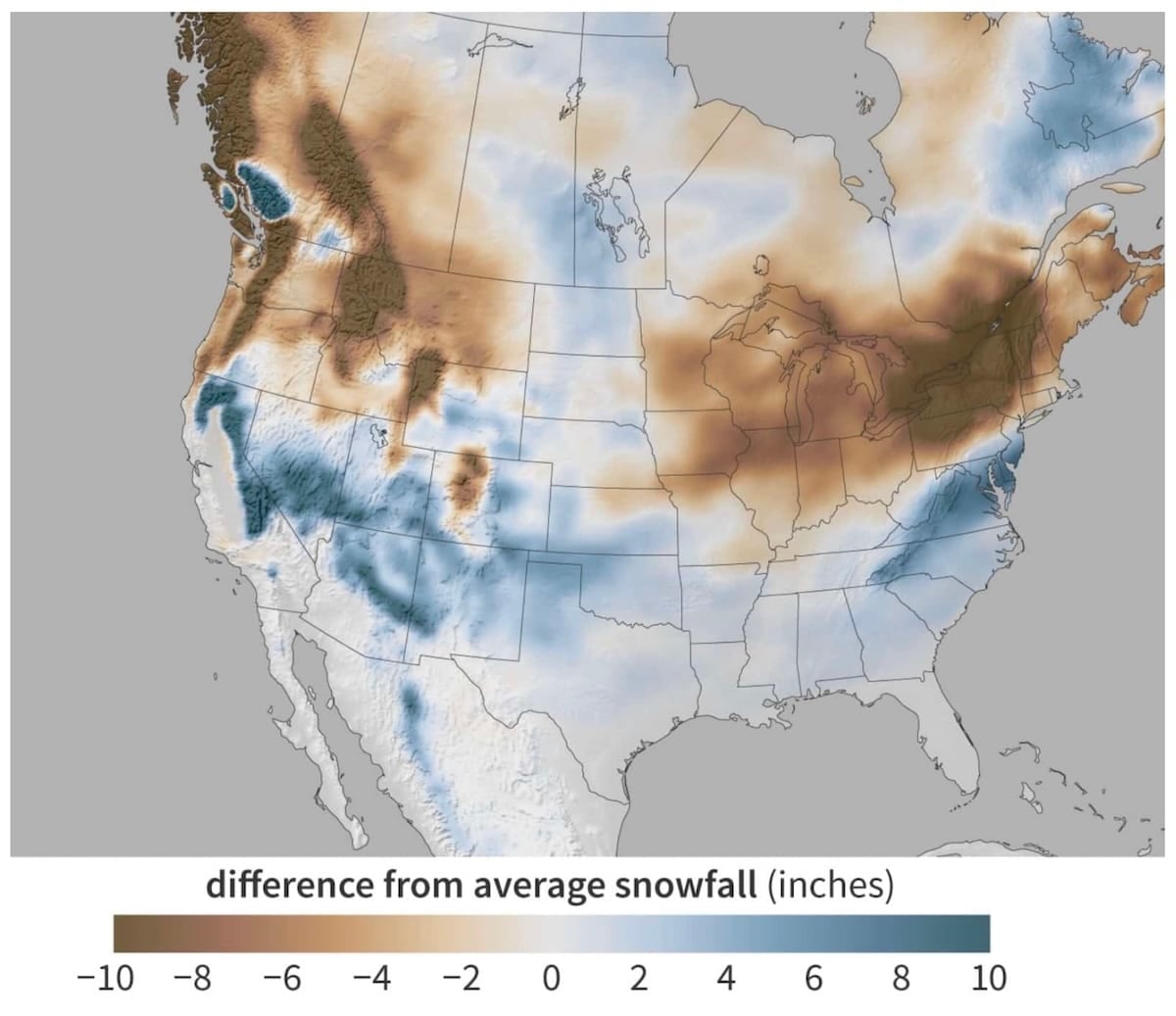
Where El Niño Tends To Bring More Snow
El Niño commonly moves the winter storm track farther south.
That can improve the chances of major storms across California, Arizona, New Mexico and portions of the southern Rockies.
California and the Sierra Nevada
California receives more El Niño attention than almost any other ski region.
During some El Niño winters, Pacific storms slam into the Sierra Nevada and produce enormous high-elevation snowfall totals.
A few powerful atmospheric rivers can completely transform the season.
The major question is always temperature. Warm storms may produce heavy rain at lower elevations while dumping several feet of snow near the Sierra crest.
“I remember California winters that looked nearly hopeless until one storm cycle changed everything,” said one long time Tahoe skier. “The Sierra can go from dry to buried remarkably fast.”
El Niño does not guarantee a huge California winter, but it generally offers better odds than La Niña.
A NOAA analysis of strong El Niño winters found that wetter-than-normal conditions have historically occurred along much of the West Coast and the southern tier of the United States.
Arizona and New Mexico
Arizona and New Mexico are often left dry during La Niña because the main storm track stays farther north.
El Niño can bring more storms through the Southwest, improving the chances of snowfall in the higher mountains.
Ski areas in northern Arizona and New Mexico are generally more interested in El Niño than La Niña.
Southern Utah
Southern Utah can benefit when El Niño directs storms through California and the Southwest.
Brian Head and other southern Utah mountains may receive more opportunities for snow while northern Utah remains outside the center of the storm track.
Southern Colorado
The San Juan Mountains of southwestern Colorado can perform well during El Niño.
Storms following the southern route may favor areas around Wolf Creek, Telluride, Purgatory and Silverton.
This does not mean all of Colorado benefits equally.
“The mistake people make is talking about Colorado or the Rockies as though every mountain gets the same weather,” Konrad said. “A pattern that buries the San Juans can leave northern Colorado waiting for snow.”
Utah and Colorado Sit in the Middle
Utah and Colorado are difficult to place neatly into one category.
Northern Utah and northwestern Colorado may benefit from La Niña storms passing through the northern Rockies.
Southern Utah and southwestern Colorado may have better odds during El Niño.
That is why a statewide winter forecast can be misleading. Two ski areas in the same state may have completely different seasons.
Northern Utah and Colorado
These areas may benefit more from La Niña:
- Northern Utah
- Northwestern Colorado
- Mountains closer to the northern storm track
Southern Utah and Colorado
These areas may benefit more from El Niño:
- Southern Utah
- The San Juan Mountains
- Southwestern Colorado
What About the Northeast?
The Northeast does not have a simple El Niño or La Niña answer.
El Niño can provide moisture for large coastal storms. But cold air must already be in place for that moisture to fall as snow rather than rain.
La Niña can bring colder air, but storms may travel west of the major East Coast cities. That can leave coastal areas with rain while northern New England receives snow.
NOAA’s historical analysis of El Niño snowfall found that El Niño frequently reduces seasonal snowfall around the Great Lakes, northern Rockies, Pacific Northwest and portions of interior New England.
For the Northeast, however, the exact path of each storm often matters more than the broad seasonal pattern.
El Niño vs. La Niña Snowfall Cheat Sheet
| Region | Pattern that usually offers better snow odds |
|---|---|
| British Columbia | La Niña |
| Washington and Oregon | La Niña |
| Northern Idaho | La Niña |
| Montana | La Niña |
| Canadian Rockies | La Niña |
| Alaska | Often La Niña |
| Great Lakes snowbelts | Often La Niña |
| Sierra Nevada | El Niño |
| Arizona | El Niño |
| New Mexico | El Niño |
| Southern Utah | Often El Niño |
| Southern Colorado | Often El Niño |
| Northern Utah | Mixed, sometimes La Niña |
| Northern Colorado | Mixed |
| Northeast | Highly variable |
The Simple Version
Here is the easiest way to remember it.
La Niña usually favors:
- British Columbia
- Washington
- Oregon
- Northern Idaho
- Montana
- The Canadian Rockies
- Parts of Alaska
- The Great Lakes snowbelts
El Niño usually favors:
- California
- Arizona
- New Mexico
- Southern Utah
- Southwestern Colorado
The hardest regions to predict:
- Northern Utah
- Northern Colorado
- The Northeast
NOAA has also published a detailed review of La Niña and North American snowfall, showing that the strongest snowfall signals tend to favor northwestern and north-central portions of the continent.
Neither Pattern Guarantees Snow
El Niño and La Niña only change the odds.
A La Niña winter can still be disappointing in Washington. An El Niño winter can still be dry in California.
Snowfall also depends on atmospheric rivers, short-term jet-stream changes, storm temperatures, elevation and the exact direction each storm takes.
A handful of major storms can rescue a poor season. A warm storm can deliver rain at the base and deep snow near the summit. One mountain can be buried while another a few hours away gets almost nothing.
“ENSO can tell you which regions might have the advantage, but it cannot tell you where the best skiing will be three months from now,” Konrad said. “The best strategy has always been to stay flexible and follow the snow.”
That is the most important takeaway.
La Niña generally favors the north. El Niño generally favors the south. But the best snow still goes to the mountains sitting beneath the actual storm track.
Readers can follow current conditions and official updates through NOAA’s El Niño and La Niña page and the Climate Prediction Center’s ENSO discussion.