

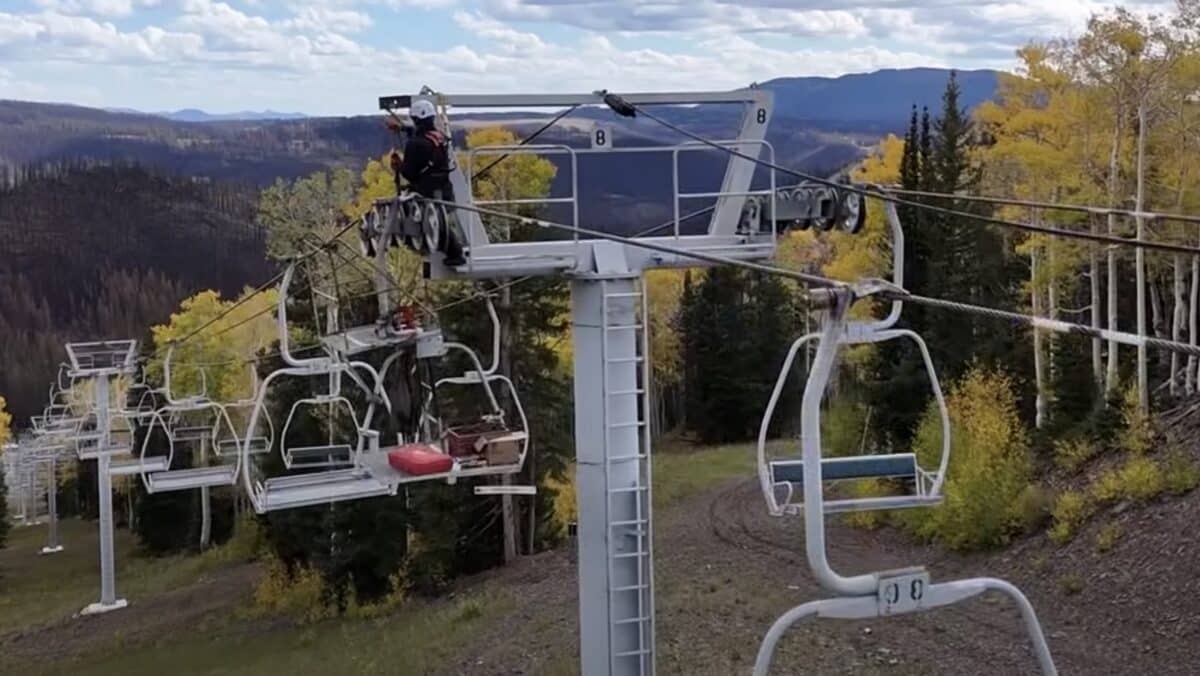
One of the Utah ski resorts hit hardest by this summer’s wildfires now has a target for getting skiers and snowboarders back on the mountain.
Eagle Point Resort in southern Utah is aiming to reopen in November 2027. Ski Utah spoke with resort owner Shane Gadbaw who confirmed the target would bring lift-served skiing back to Eagle Point roughly 17 months after the Cottonwood Fire tore through the resort and surrounding community in June 2026.
The resort announced in August that it would remain closed for the entire 2026-27 ski season because of extensive damage to its chairlifts, terrain and infrastructure, but at that point had not committed to a specific reopening date. More recently, crews have been clearing the destroyed Canyonside Lodge site and continuing assessments of damaged lifts, giving the resort a clearer picture of the work required before skiing can return.
Half The Ski Terrain Was Impacted
The Cottonwood Fire reached Eagle Point on June 23 after rapidly spreading through Beaver Canyon.
The damage was extensive. According to Eagle Point’s initial assessment following the fire, approximately 300 of the resort’s 600 skiable acres were affected, Canyonside Lodge and the Tushar Ridge Warming Station were destroyed, and four of the mountain’s five chairlifts sustained damage. The fire also destroyed 145 homes and condominiums in the surrounding Eagle Point community.
The scale of the damage became clearer when resort officials were finally able to return to the mountain and inspect the ski area after the fire.
Not everything was lost. Skyline Lodge survived, along with the Monarch Lift, much of the resort’s north-side terrain, its communications infrastructure and significant portions of the snowmaking system.
The Monarch Lift was later determined to have escaped the fire without damage. Eagle Point’s latest recovery update says the Canyonside Lift and Tushar Peaks surface lift suffered the most severe damage, while Skyline and Lookout also require substantial repairs.
Work is expected to include replacement haul ropes, communication lines, structural components and vegetation clearing around lift corridors. Engineering reviews, permitting and procurement are also underway as the resort works toward rebuilding the damaged lift network.
Eagle Point says the lift damage identified so far remains within the scope of its insurance coverage.
The Flooding After The Wildfires
Heavy monsoon rainfall later fell across the freshly burned mountainsides, sending flash floods and debris flows through Beaver Canyon. Sections of State Route 153, the primary paved road connecting Beaver to Eagle Point, were severely damaged or completely washed away.
The highway damage became another major obstacle for the resort after flash flooding forced an indefinite closure of the access road.
The Utah Department of Transportation has since begun a major reconstruction effort in Beaver Canyon. Eagle Point says UDOT is working toward restoring limited access to the mountain while longer-term reconstruction continues.
Rocky Mountain Power has also completed repairs to the electrical grid serving the Eagle Point area, restoring another piece of infrastructure needed for the resort’s eventual return.
Eagle Point Plans To Rebuild Differently
Gadbaw told Ski Utah that the resort does not want to simply recreate everything exactly as it existed before the fire.
Instead, Eagle Point is using the rebuilding process as an opportunity to rethink portions of the mountain and create a more resilient resort. The recovery effort outlined by Ski Utah includes not only repairing ski infrastructure but also restoring burned forest and addressing long-term wildfire risk across the resort’s private land.
Eagle Point is evaluating forest restoration work across roughly 2,000 acres, with projects focused on watershed recovery, forest health and reducing the severity of future fires.
The BeaverTUF nonprofit has also been established to support recovery work that is not fully covered by insurance or government assistance and to help provide matching funds for larger state and federal grants.
The rebuilding process will take time. Chairlift components still need to be repaired or replaced, burned terrain needs additional restoration, access through Beaver Canyon must continue improving, and the mountain will eventually need to return to normal winter operating condition.
If recovery work continues according to plan, skiers and snowboarders could return to the Tushar Mountains in November 2027.
