
Colorado’s Great Sand Dunes National Park is one of the most unique National Park experiences you can find in the United States. The park features North America’s tallest dunes, sitting at the center of a landscape filled with grasslands, wetlands, forests, alpine lakes, and tundra.
Day trips to the park can include hiking, tubing in Medano Creek (when it’s there), and sand sledding/sand boarding, with stores offering rentals on the way to the park. If you plan far enough ahead, though, getting a backpacking permit and spending the night in the dunes is easily the coolest thing you can do.
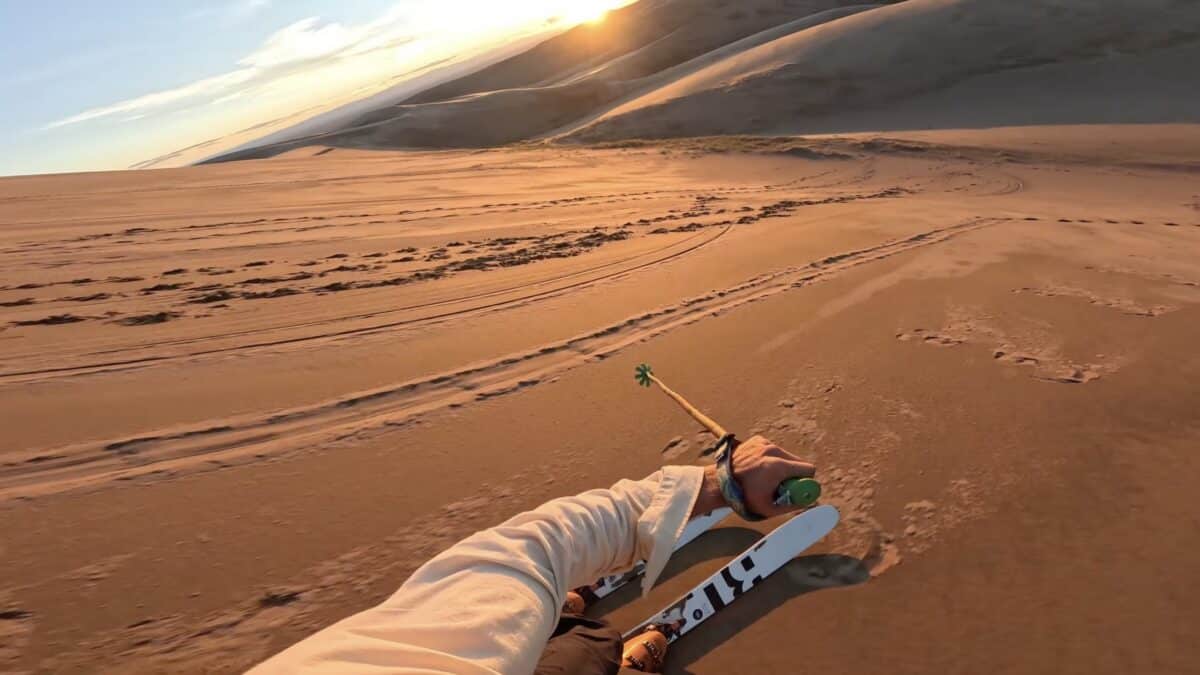
Sean Davenport recently combined backpacking with sand skiing, creating what might be the coolest overnight trip out there. He got into the park early enough to get quite a few ski laps in before sunset, exploring the area and setting up camp far from any other hikers or campers.
Sand Boarding in Great Sand Dunes National Park
The National Park Service recommends using boards and sleds specifically designed for sand. These have slick bases and require special wax to slide properly. Snowboards, skis, and snow sleds generally only work when the sand is very wet. Cardboard, saucers, and soft plastic items typically drag through the sand rather than slide.
The park does not rent equipment, so visitors should arrange rentals before arriving. Several retailers around the San Luis Valley offer sandboards and sleds. Sandboarding and sledding are permitted throughout the dunefield away from vegetation. From the main parking area, visitors must hike at least 0.7 miles to reach the smaller slopes, while the first high ridge is about 1.25 miles away.
The NPS recommends early morning or evening during summer due to extreme heat and thunderstorms. Injuries are also more common when sand is firm after rain or melting snow.
Backpacking in Great Sand Dunes National Park
Backpackers visiting Great Sand Dunes National Park and Preserve must obtain a permit through Recreation.gov before heading into the backcountry. Permits cost $6 and are non-refundable, while free in-person permits are no longer available. Each permit allows up to six people and two vehicles, with no on-site changes permitted.
Dunes Backcountry campers must hike beyond the first high ridgeline before setting up camp, while Sand Ramp Trail campers must stay within 50 feet of designated campsite markers. Campfires are prohibited except at the Sand Creek campsite fire ring, and campers must pack out trash and toilet paper.
Pets, hammocks, and glass containers are prohibited. Food and scented items must be properly secured, while human waste must be buried at least six inches deep and 200 feet from water and trails.
Backpackers should also prepare for extreme heat, strong winds, seasonal water sources, and afternoon thunderstorms. The National Park Service recommends carrying about one gallon of water per person per night.