

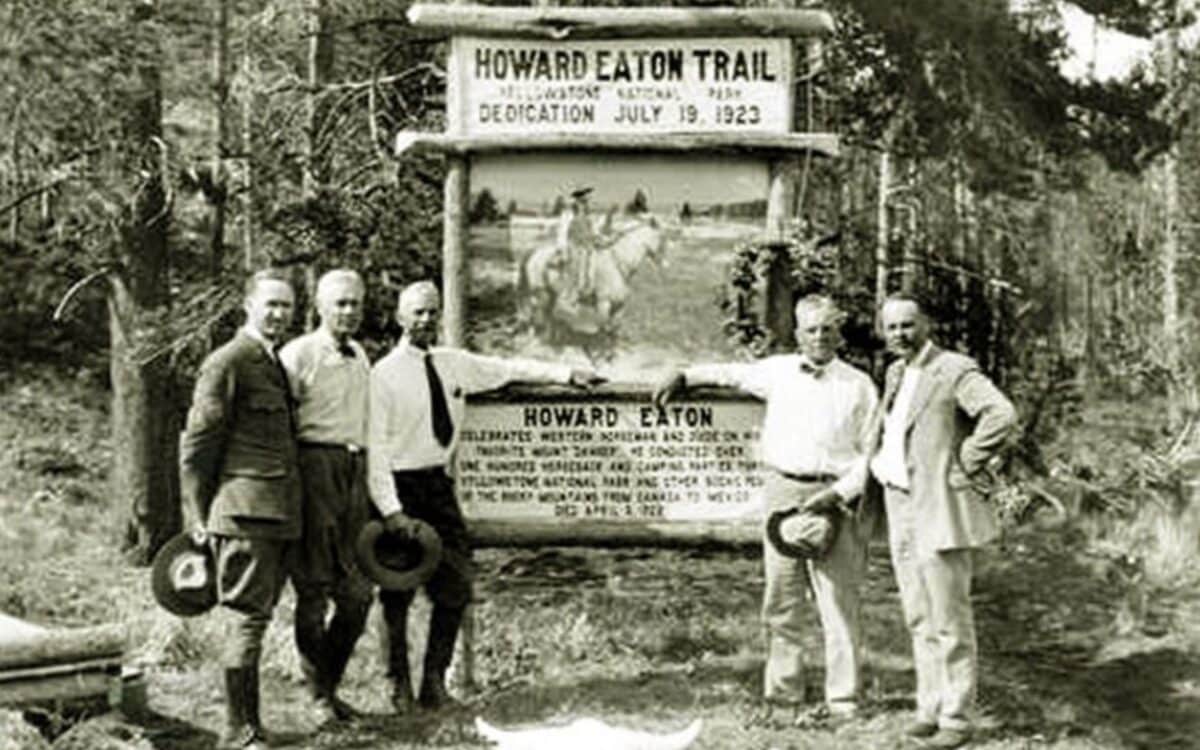
Yellowstone National Park is home to a historic trail system that has shifted, shrunk and been rebuilt multiple times over the past century, yet it still carries the name of a man who never designed a single mile of it.
The Howard Eaton Trail was created in 1923, just after the death of its namesake, a dude ranching pioneer whose Yellowstone tours had made him a well known figure in the early 1900s. Superintendent Horace Albright and trail mapper Alice Morris pieced the route together from existing trails, bridle paths and abandoned roads rather than building it from the ground up.

For much of its early life, the trail closely followed the Grand Loop Road, which had carried stagecoach and wagon traffic since the early 1900s and opened to vehicles in 1915. That proximity to the road caused rapid wear, and by the 1930s the Civilian Conservation Corps rebuilt large stretches further from traffic, with easier grades designed for horses.
Another major renovation came in the late 1950s, after which the trail again crossed paths with the main road more frequently. The route continued to serve hikers and horseback riders for nearly 50 years until 1970, when budget cuts forced the Park Service to abandon significant portions of it. Some of those disconnected segments were given entirely new names.
Today only three sections still carry the Howard Eaton name, a four mile stretch near Golden Gate, a nine mile section by Old Faithful and a 14 mile piece near Fishing Bridge. The trail’s long history of rerouting and abandonment mirrors the broader shift in how visitors have moved through Yellowstone, from horse drawn wagons to automobiles.