

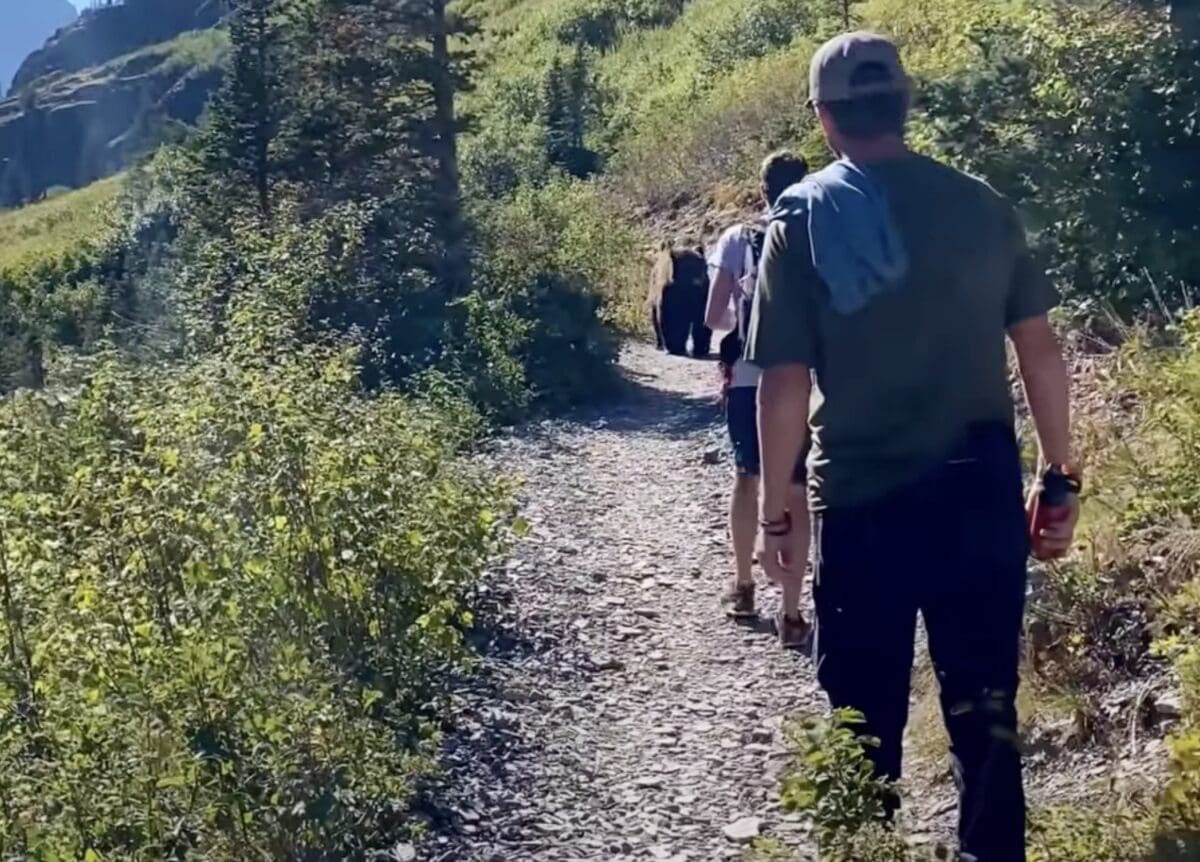
This family of three came upon a lone hiker from France in a dire situation on Grinnell Glacier trail in Glacier National Park. The man was without bear spray and face to face with an advancing grizzly bear. Luckily the dad had a can of bear spray and the mom remained calm while issuing verbal commands that kept the group moving backwards while maintaining a visual on the grizzly.
“While hiking on the Grinnell Glacier trail in Glacier National Park, Montana, I, my husband, and our daughter encountered a young man who was face-to-face with a large bear. The young man had no bear spray and was hiking alone. We yelled at the bear to try and get him to leave.
With no clearing on either side to step off the trail, the bear continued toward us as we slowly backed away to give him room. Eventually, the bear found a clearing in the brush and went up and around the trail. We immediately cleared the area. The young man was shaken and very thankful that we came along. We learned that he was visiting from France and I asked him if he had bear spray and he said he had left it in the car. We then offered to let him finish the rest of the hike with us, which he did.
In hindsight, we have considered if we should have deployed our bear spray but we were concerned that we might have enraged the bear or accidentally sprayed the young man causing him to stumble or move rapidly, which in turn would have very likely ended in tragedy. It was a very scary situation but one that we hope will also be used to educate others on the importance of hiking in groups, making noise, and carrying bear spray anytime you are in bear country.”
Great reminder that if your hiking around an area where you might come across a grizzly to always carry bear spray and be absolutely sure you know how to properly use it. Learn more about bear safety at Glacier National Park below.
Glacier National Park Bear Safety:
Keeping a Safe Distance
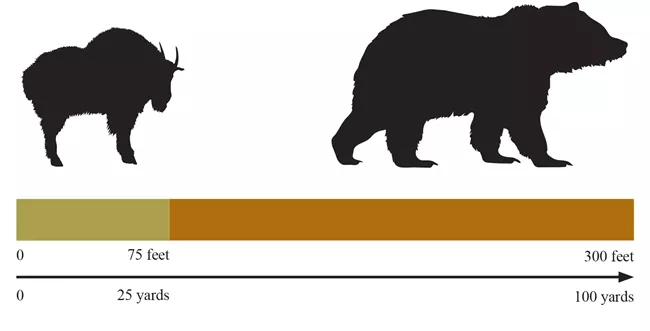
Intentionally approaching, viewing, or engaging in any activity within 100 yards (91 m) of bears or wolves is prohibited. Maintain 25 yards (23 m) from any other wildlife. If you’re causing the behavior of the animal to change, you’re too close. Use binoculars or a telephoto lens to improve your view. Keep the wildlife’s line of travel or escape route clear and move away if an animal approaches you.
Never intentionally get close to a bear. Individual bears have their own personal space requirements, which vary depending on their mood. Each will react differently, and their behavior cannot be predicted. All bears are dangerous and should be respected.
Hiking in Bear Country
Make Noise
Bears usually move out of the way if they hear people approaching. Bear bells are not adequate or effective. Calling out and clapping at regular intervals are better ways to make your presence known. Do your best never to surprise a bear.
Hike in Groups
Hiking in groups significantly decreases your chances of having a negative bear encounter. There have not been any reported attacks on groups of four or more in Glacier. If you’re a solo hiker looking for company, check the Ranger-led Activity page for guided hikes.
Don’t Run on Trails
Joggers and runners risk surprising a bear on the trail. Trail running is strongly discouraged.
Carry Bear Spray
Bear spray is an inexpensive way to deter bear attacks and has been shown to be the most effective deterrent. Be sure you know how to use it and that you are carrying it in an accessible place. Check the Ranger-led Activity page for summer demonstrations.
Be Aware of Surroundings
Some environmental conditions make it hard for bears to see, hear, or smell approaching hikers. Be particularly careful by streams, against the wind, or in dense vegetation. A blind corner or a rise in the trail also requires special attention. Look for scat and tracks. Bears spend a lot of time eating, so be extra alert when hiking in obvious feeding areas like berry patches, cow parsnip thickets, or fields of glacier lilies. Always keep children close. Avoid hiking very early in the morning, very late in the day, or after dark.
Secure Food and Garbage
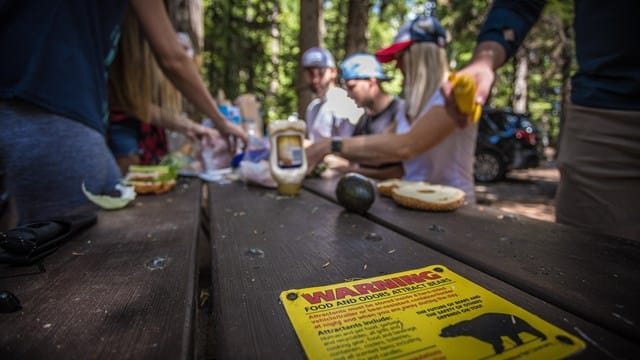
Never leave food, garbage, or anything used to prepare, consume, store, or transport food unattended. This includes your backpack or day pack. Secure all food and odorous items safely and pack out all garbage. Other scented items include toiletries, feminine products, sunscreen, etc.
While in Camp
Glacier’s campgrounds and developed areas can remain unattractive to bears if each visitor manages food and trash properly. Following park regulations will help keep the “wild” in wildlife and ensure your safety as well.
- Keep a clean camp. Never improperly store or leave food unattended.
- All edible items, food containers (empty or not), cookware (clean or not), and trash (including feminine hygiene products) must be stored in a vehicle or designated food locker or hung when not in use, both day and night.
- Do not throw any food or garbage into pit toilets.
- Monitor your campsite for signs of bears and for careless campers nearby. Notify park staff of any potential problems.
Bear Encounters
If you encounter a bear inside the minimum recommended safe distance (100 yards; 91 m), you can decrease your risk by following these guidelines:
- If a bear or other animal is moving in your direction on a trail, get out of its way and let it pass.
- If you can move away, do so. If moving away appears to agitate the bear, stop. In general, bears show agitation by swaying their heads, huffing, and clacking their teeth. Lowered head and laid-back ears also indicate aggression. Bears may stand on their hind legs or approach to get a better view, but these actions are not necessarily signs of aggression. The bear may not have identified you as a person and may be unable to smell or hear you from a distance. Help the bear recognize you as a friendly human.
- Talk quietly.
- Do not run! Back away slowly. Stop if it seems to agitate the bear.
- Use your peripheral vision. Bears may interpret direct eye contact as threatening.
- Continue to move away as the situation allows.
- If a bear appears intent on approaching you, your group, or your campsite in a non-defensive manner (not showing signs of agitation), gather your group together, make noise, and try to discourage the bear from further approaching. Prepare to deploy your bear spray. If you are preparing or consuming food, secure it. DO NOT LET THE BEAR GET YOUR FOOD!
- If a bear approaches in a defensive manner (appears agitated and/or charges), stop. Do not run. Talk quietly to the bear. Prepare to deploy your bear spray. If contact appears imminent and you do not have bear spray, protect your chest and abdomen by falling to the ground on your stomach, clasp your hands around the back of your neck, and leave your pack on for protection. If the bear attempts to roll you over, try to stay on your stomach. If the attack is defensive, the bear will leave once it recognizes you are not a threat. If the attack is prolonged, FIGHT BACK!
Bear Spray
This aerosol pepper spray temporarily incapacitates bears. It is an effective, non-toxic, and non-lethal means of deterring aggressive bears. Under no circumstances should bear spray create a false sense of security or serve as a substitute for practicing standard safety precautions.
Bear spray is intended to be sprayed into the face of an oncoming bear. Factors influencing effectiveness include distance, wind, rain, temperature extremes, and product shelf life. It is not intended to act as a repellent. Do not spray gear or your camp with bear spray. Pre-sprayed objects may instead attract bears.
Be aware that you may not be able to cross the US/Canada border with some brands of bear spray. Canadian Customs will allow USEPA-approved bear spray to cross. The bear spray cannister must have USEPA printed on the label.
