

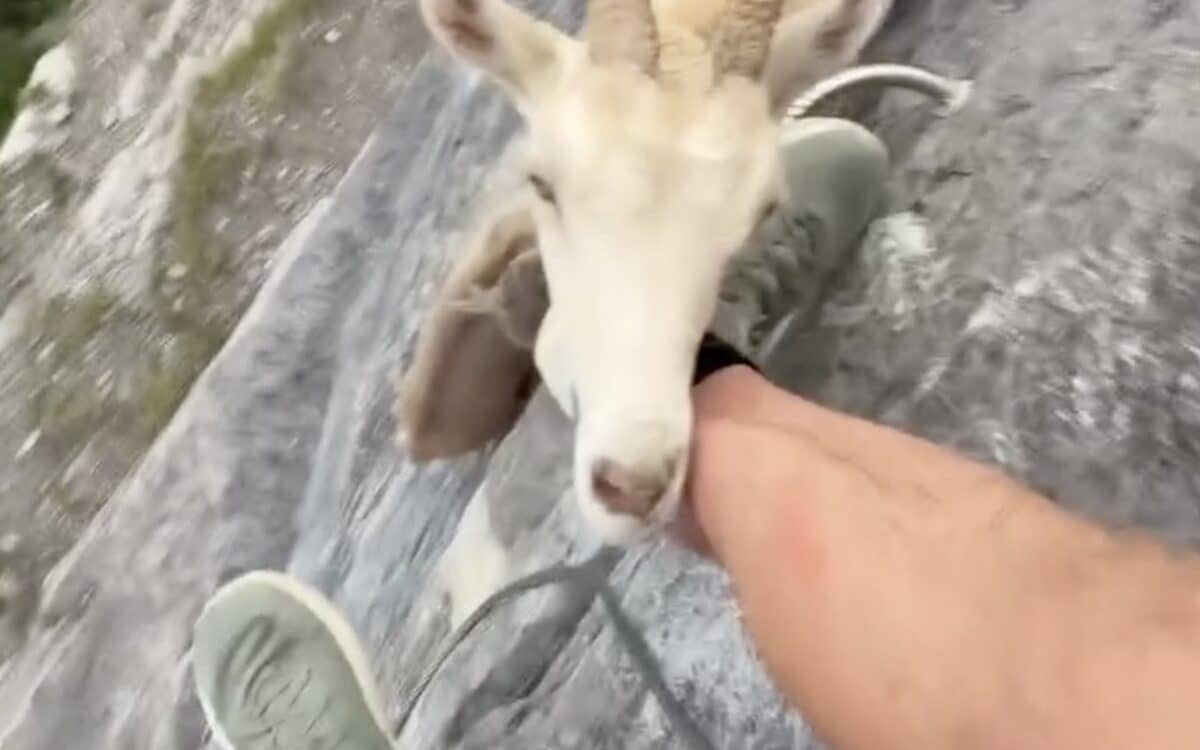
The Alpine ibex is an icon of the European Alps, making their homes in the high altitudes above treeline. Their largest population groups live in Switzerland, but they can be found in France, Germany, Austria, Italy, and beyond. More than 40,000 live throughout the mountains, and encounters with hikers, climbers, and other recreators aren’t uncommon these days.
Female ibex form small herds of 10-20 animals including the youth. The males tend to stay solitary until the fall when their rut begins. Both male and female ibex grow horns, though male horns generally grow much larger than females.
The animals primarily feed on grasses, flowers, and shrubs, seeking out lush meadows in the summer. Like many plant eating herbivores, they’ve been known to seek out salt to supplement their nutrition. Usually that salt comes from rocks, but occasionally it means licking a sweaty climber for that tasty perspiration. Jake Baggaley, for example, was mid-climb on a Via Ferrata in Chamonix, France, when a couple of ibex decided to take advantage of his sweaty leg.
Ibex often seem very comfortable around humans, leading to common encounters. Generally they aren’t aggressive toward people either, but like any animal they should always be given plenty of space and should never be approached. There have been cases of the animals attacking people, like this one in Spain where a 64-year-old Dutch tourist was knocked off a cliff, but they’re rare. As long as you leave them alone, don’t approach them, and don’t corner them, Alpine ibex are usually harmless.