

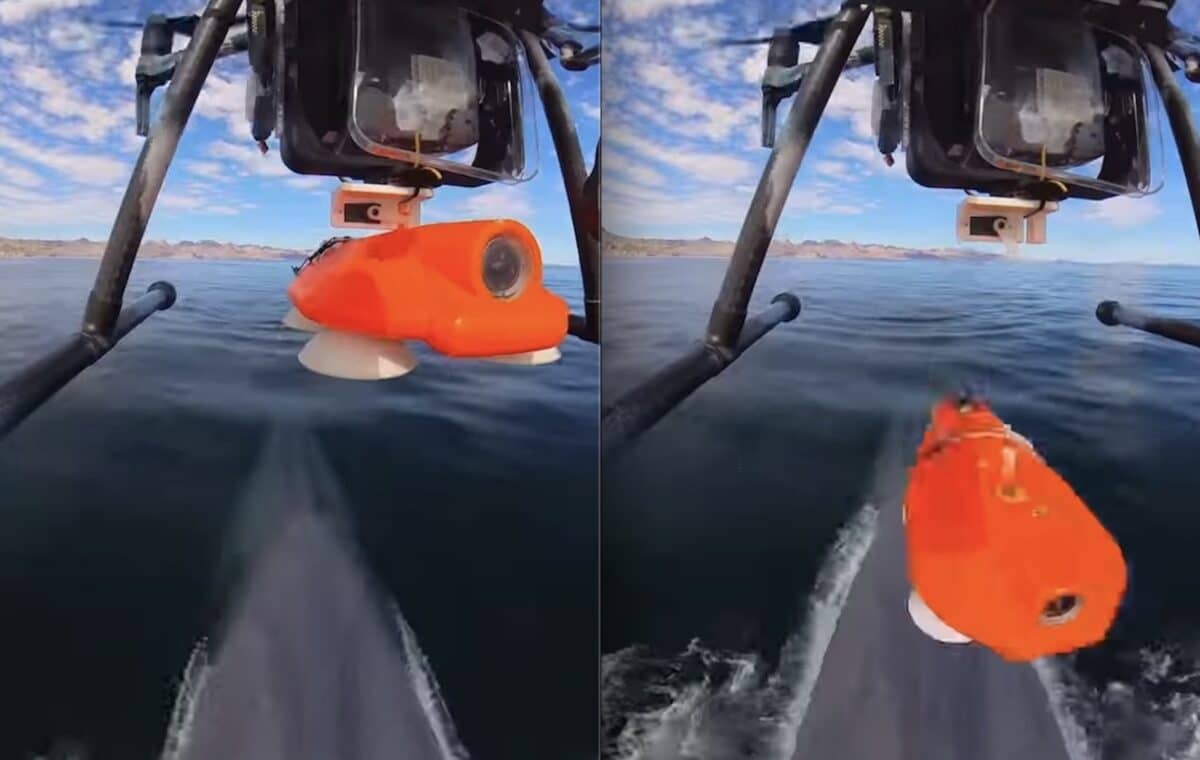
The blue whale is the largest animal in the planet, typically weighing between 100,000 and 300,000 pounds. However the ocean is incredibly vast, and finding one of these massive creatures in the enormous expanses can be incredibly difficult. To track and learn more about whales, scientists use telemetry tags like they would with most other animals, but you can’t easily capture and release these animals.
Since a catch and release technique isn’t generally an option, experts use a couple of different methods to tag the whales. They’ve used large poles, attaching the trackers off the side of a boat, or, more recently, they’ve been using large drones to safely place suction cup tags on their backs.
According to NOAA, researchers studying whales have switched to using the aerial drones as their primary method for deploying suction-cup tags, a change that has improved both data quality and animal welfare. The tags record dive depth, body orientation, and underwater sound, providing detailed behavioral information that would be difficult to gather through other means.
The drone-based approach keeps research vessels at a greater distance from whales, reducing disturbance while increasing tagging precision. The traditional long-reach pole system remains available as a backup when high winds or rough sea conditions ground the drones.
Scientist and filmmaker Lizzie Daly, who shared the featured footage of the blue whale, explained that the tracker is only attached for a round 24 hours or so. Specific equipment on the device includes a camera, hydrophone, GPS, depth sensor, accelerometer, magnetometer, and a temperature sensor.
Scientists involved are hoping to identify feeding events and understand the whale’s hunting strategies while mapping movement and energy expenditure. Plus the information will show how whales respond to human activities like shipping and noise pollution.