


Every year millions of visitors wander through Yellowstone National Park‘s thermal basins, geyser fields, and wildlife corridors with questions on their minds. Two area experts, geophysicist Michael Poland of the U.S. Geological Survey and interpretive ranger Mindy Dottellis, have compiled the most common ones rangers hear on the ground. The single most-asked question across the entire park, unsurprisingly, is in search of the nearest bathroom, but things get interesting beyond there.
Visitors pretty consistently want to know about water temperatures and acidity in thermal areas. Norris Geyser Basin is the hottest in the park, with temperatures recorded at 237°C (458.6°F) nearly 330 meters (1082.68 feet) underground during 1960s research drilling. Mammoth Hot Springs sits at the cooler end of the spectrum, topping out around 73°C (163.4°F), and it never erupts. Most thermal areas trend either acidic or neutral. Mud pots and sulfur-smelling vents signal acidic conditions, while colorful hot springs and active geysers indicate neutral pH.
Norris Geyser Basin is an outlier in the pH regard, hosting both neutral and acidic features in close proximity. Steamboat Geyser, the tallest geyser in the world, has a neutral pH, while nearby Echinus Geyser holds the distinction of being the largest acidic geyser in the world. The acidity, roughly comparable to orange juice, is not dangerous on contact. Instead the water temperature is the far greater hazard.
Visitors at Norris Geyser Basin also commonly ask to see the “Norris Geyser,” unaware that no such feature exists. The basin is named for Philetus W. Norris, the park’s second superintendent. The blue color of the water in that area comes primarily from high silica content.
Questions surrounding how the park’s boardwalks are built and maintained are also fairly frequent. It is a more complex undertaking than it might appear, requiring geologists to survey thermal activity to identify safe construction zones. Boardwalk paths are sometimes relocated entirely when hydrothermal activity shifts in unexpected ways.

At Old Faithful, eruption predictions are a frequent topic. Shorter eruptions lasting under three minutes typically precede a roughly 72-minute quiet interval, while longer eruptions signal a wait closer to 103 minutes. Predictions carry a margin of about 12 to 15 minutes and cannot be forecasted more than one eruption ahead.
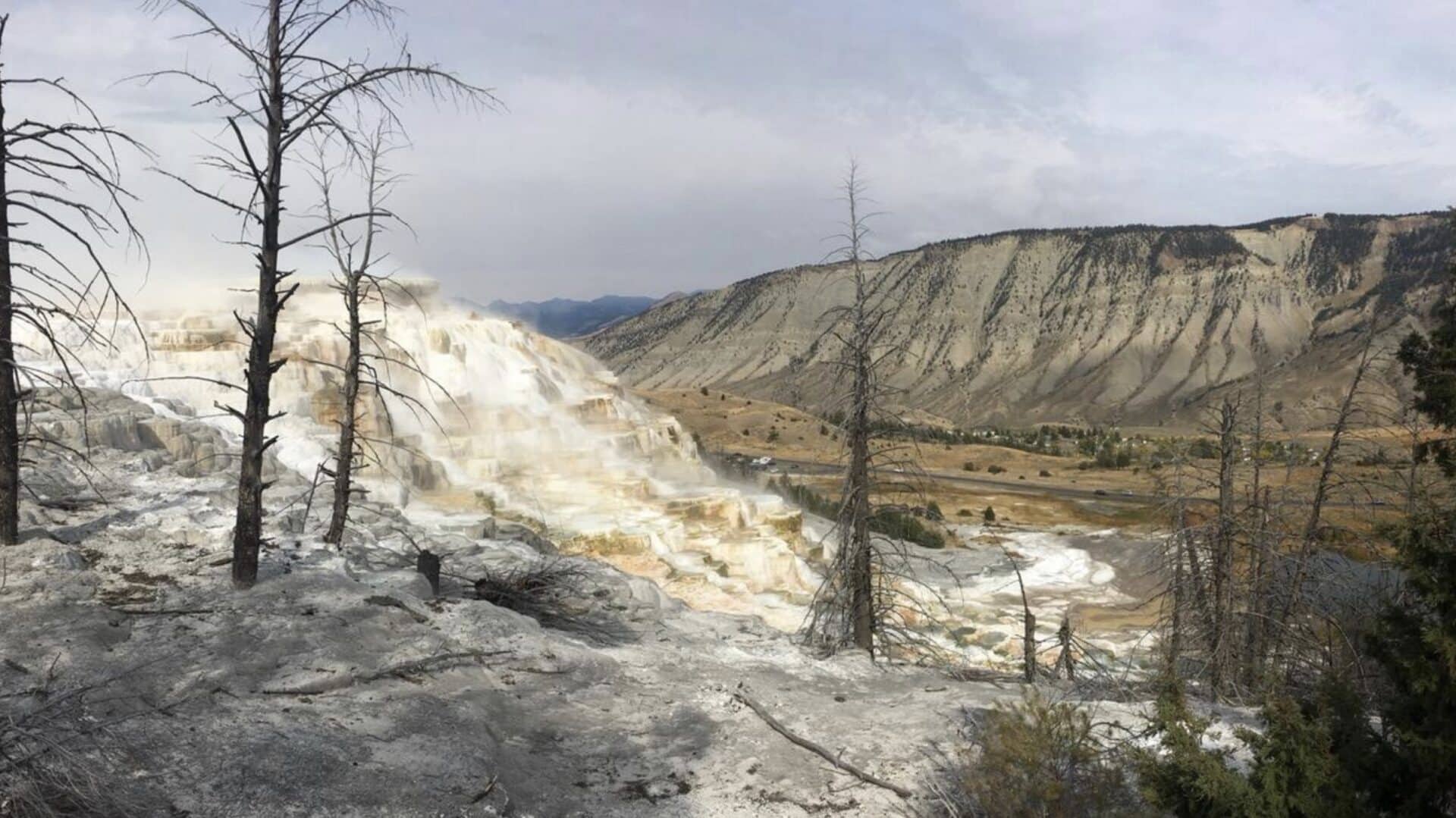
Mammoth Hot Springs frequently brings up questions about the dramatic travertine terraces that define the landscape. The formations develop when hot water interacts with ancient marine sediments underground, carrying calcium carbonate to the surface. As the water releases carbon dioxide, travertine precipitates out and builds up over time into the layered structures visitors see today.
Wildlife behavior near thermal features is another recurring curiosity. Animals generally avoid the hottest water but do occasionally fall in. Interestingly, the wildlife that spends significant time in thermal zones tends to have shorter lifespans than others in the park.
Researchers have been looking into the wild world of Yellowstone for more than 150 years, but there are still plenty of mysteries floating around the area. Work continues across plenty of fields, including archaeology and zoology. Who knows what these professionals will find next.