Despite Yellowstone National Park spanning a vast 2.2 million acres (slightly larger than the state of Delaware) it seems visitors always find a way to crowd the local wildlife. Visiting Yellowstone offers truly unparalleled opportunities to observe wildlife in an intact ecosystem but should only be done at a respectful distance.
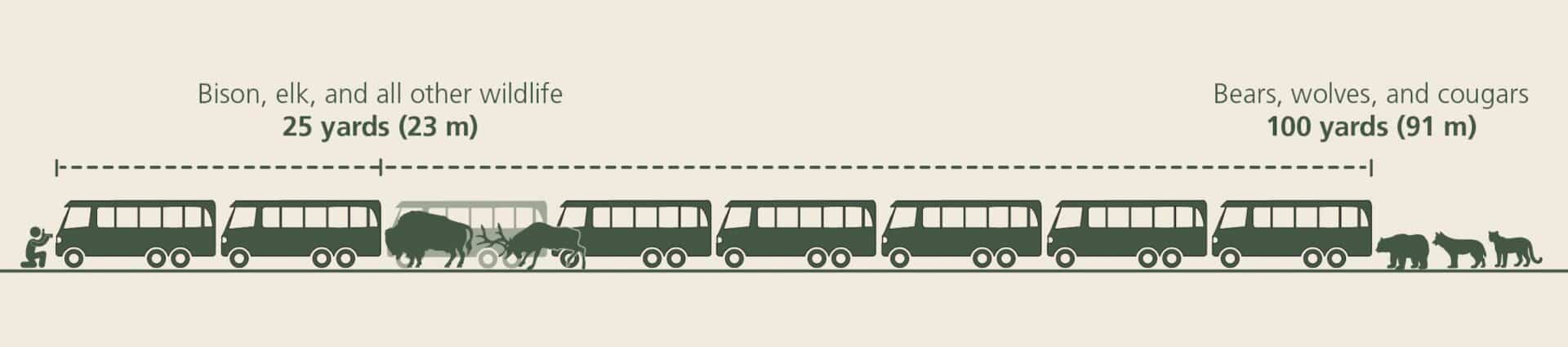
Bison are the largest land-dwelling mammals in North America with bulls weighing up to 2,000 pounds and standing 6 feet tall and Yellowstone is home to the largest public bison herd in the country. Although bison may appear lumbering and docile, they are in fact extremely dangerous and responsible for more injuries to Yellowstone visitors than any other animal. They are unpredictable, especially when their personal space is violated and can run three times faster than humans so tourists are required to always maintain a safe distance away from bison (25 yards minimum). Disregarding this simple rule can have dire consequences.
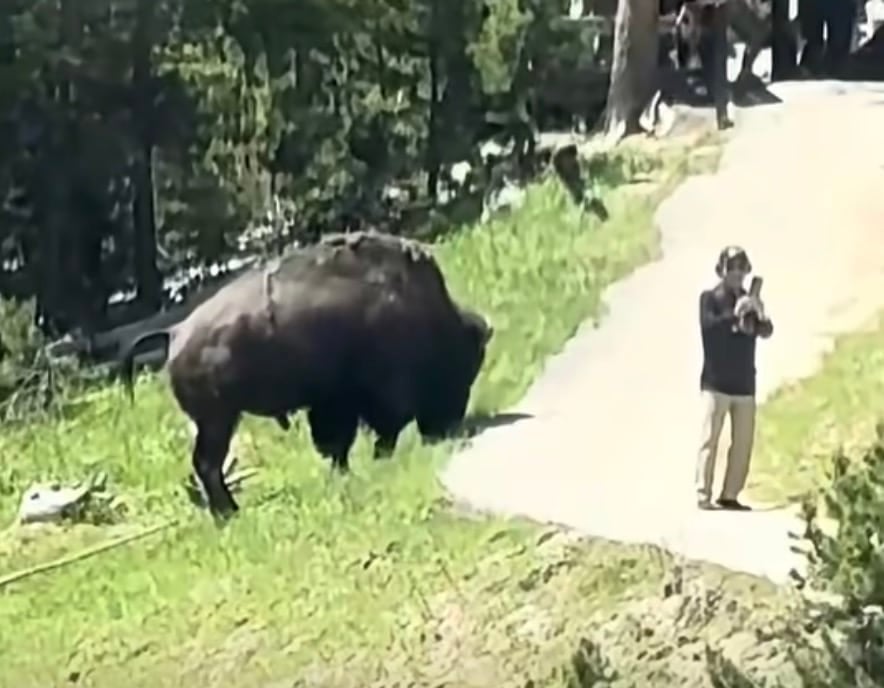
The following videos were taken on a footpath in Yellowstone and shows exactly what not to do when encountering bison. Instead of keeping a respectable distance and allowing the bison to graze in peace, these tourists decided to tempt fate for some intimate photos with the massive animal:
Reckless acts of self-documentation may be contagious because after the first man turned his back on the bison for selfie, another group followed suit and got their own snaps well within 25 yard exclusion zone defined by Yellowstone National Park’s wildlife safety guidelines:
Yellowstone Bison Safety Guidelines:
Bison may appear tranquil, but these large animals have injured more people in Yellowstone than any other animal. They can run 3x faster than humans, making it very important to give them plenty of space.
-Keep at least 25 yards (23 meters) from bison at all times and never approach a bison to take a photo. If need be, turn around and go the other way if a bison walks within 25 yards.
-If approached too closely, bison may respond by bluff charging, head bobbing while staring at you, pawing, bellowing, or raising its tail. These are warning signs that you are too close and that a charge is imminent—do not stand your ground! Immediately walk or run away from the animal. If the bison follows you, spray bear spray as you are moving away, and seek cover behind nearby trees or cars.
-Plan extra time when driving through Yellowstone—the speed limit is 45 mph, unless posted otherwise, and you’re likely to encounter a “bison jam”. If bison are on the road, be patient, drive slowly, and stay in your vehicle. Wait for bison to move along; do not honk your horn or drive aggressively toward them. The size and dark coloration of bison means you should be especially careful when driving at night or anytime visibility is poor.