
Yellowstone National Park draws millions of visitors annually, captivating them with breathtaking scenery from the dramatic Grand Canyon of the Yellowstone to remarkable hydrothermal features found nowhere else on Earth. Yet for many, the park’s greatest draw is the opportunity to witness wildlife thriving within one of the world’s most intact ecosystems.
At the heart of that wildlife experience is the bison. Yellowstone is home to the largest population on public land in the United States and holds the unique distinction of being the only place in the country where these iconic animals have roamed continuously since prehistoric times. Today two primary breeding herds together number anywhere from 3,500 to nearly 6,000 animals, wandering freely across the park’s sweeping landscapes.
Reddish-brown calves are typically born in late April and May following a 9 to 9 ½ month gestation period. Despite being well protected by their mothers and others, they’re generally able to keep up with the movement of the herd within just 2 to 3 hours after birth. That speed, which allows them to escape from predators like bears and wolves, can reach up to 30 miles per hour. The calf in the below video decided to show off it’s top speed, sprinting around the calmly grazing herd for no apparent reason beyond play.
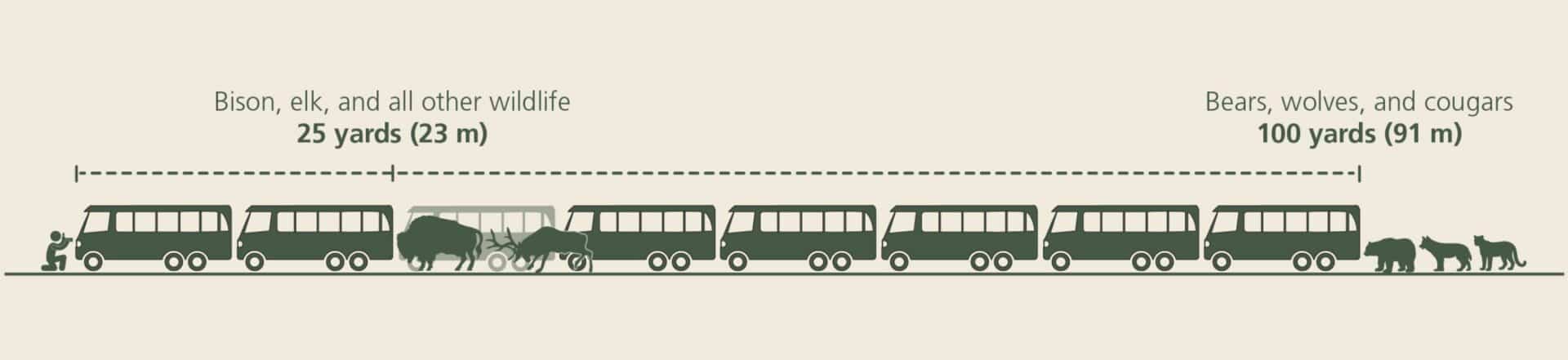
Bison calves are adorable, but it’s vital that they be left alone and given plenty of space. Bison have injured more people in Yellowstone than any other animal, and members of the herd will fiercely protect their calves if deemed necessary. They should be given at least 25 yards of space at all times, and should never be approached for a photo. Read more on bison safety in Yellowstone National Park below.
Yellowstone National Park Bison Safety Guidelines:
Bison may appear tranquil, but these large animals have injured more people in Yellowstone than any other animal. They can run 3x faster than humans, making it very important to give them plenty of space.
Stay at least 25 yards away from bison
Keep at least 25 yards (23 meters) from bison at all times and never approach a bison to take a photo. If need be, turn around and go the other way if a bison walks within 25 yards.
Run away if a bison charges
If approached too closely, bison may respond by bluff charging, head bobbing while staring at you, pawing, bellowing, or raising its tail. These are warning signs that you are too close and that a charge is imminent—do not stand your ground! Immediately walk or run away from the animal. If the bison follows you, spray bear spray as you are moving away, and seek cover behind nearby trees or cars.
Drive carefully around bison
Plan extra time when driving through Yellowstone—the speed limit is 45 mph, unless posted otherwise, and you’re likely to encounter a “bison jam”. If bison are on the road, be patient, drive slowly, and stay in your vehicle. Wait for bison to move along; do not honk your horn or drive aggressively toward them.
The size and dark coloration of bison means you should be especially careful when driving at night or anytime visibility is poor.