

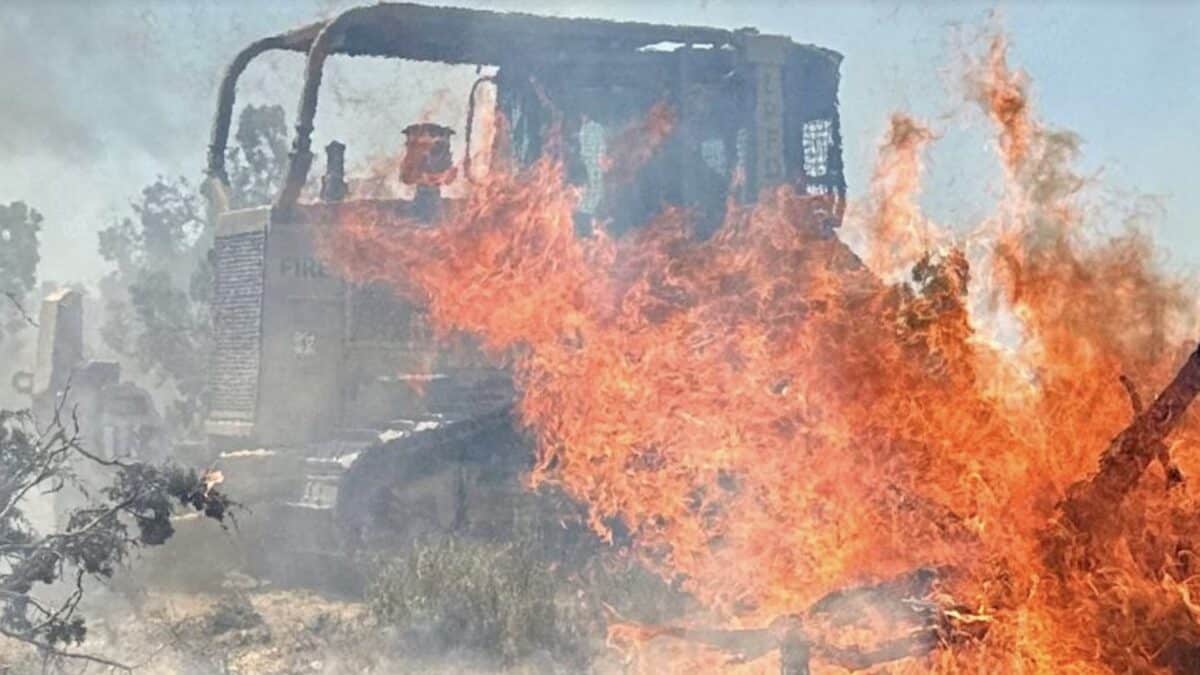
When a wildfire breaks out, the response is a coordinated effort involving hand crews, smokejumpers, helicopters, airtankers, and heavy equipment. Among the most critical tools in that arsenal is the bulldozer.
Dan Quinn has spent 10 years as a heavy equipment operator on the Plumas National Forest, fighting wildfires across the country four to five months out of the year. He describes the work as essentially the same as a hand crew, just faster and at a larger scale.
“Just like a hand crew attempts to head off a fire by cutting fire line with their chainsaws and hand tools, we fight fire the same way with the dozer.” – Dan Quinn
The National Forest Service operates roughly 160 pieces of heavy equipment nationwide, including bulldozers and tractor plows, with about 200 operators positioned to respond to wildfires. One key advantage dozers have over hand crews is their ability to get significantly closer to active flames. Most are equipped with enclosed, climate-controlled cabs that filter incoming air and shield operators from intense heat.
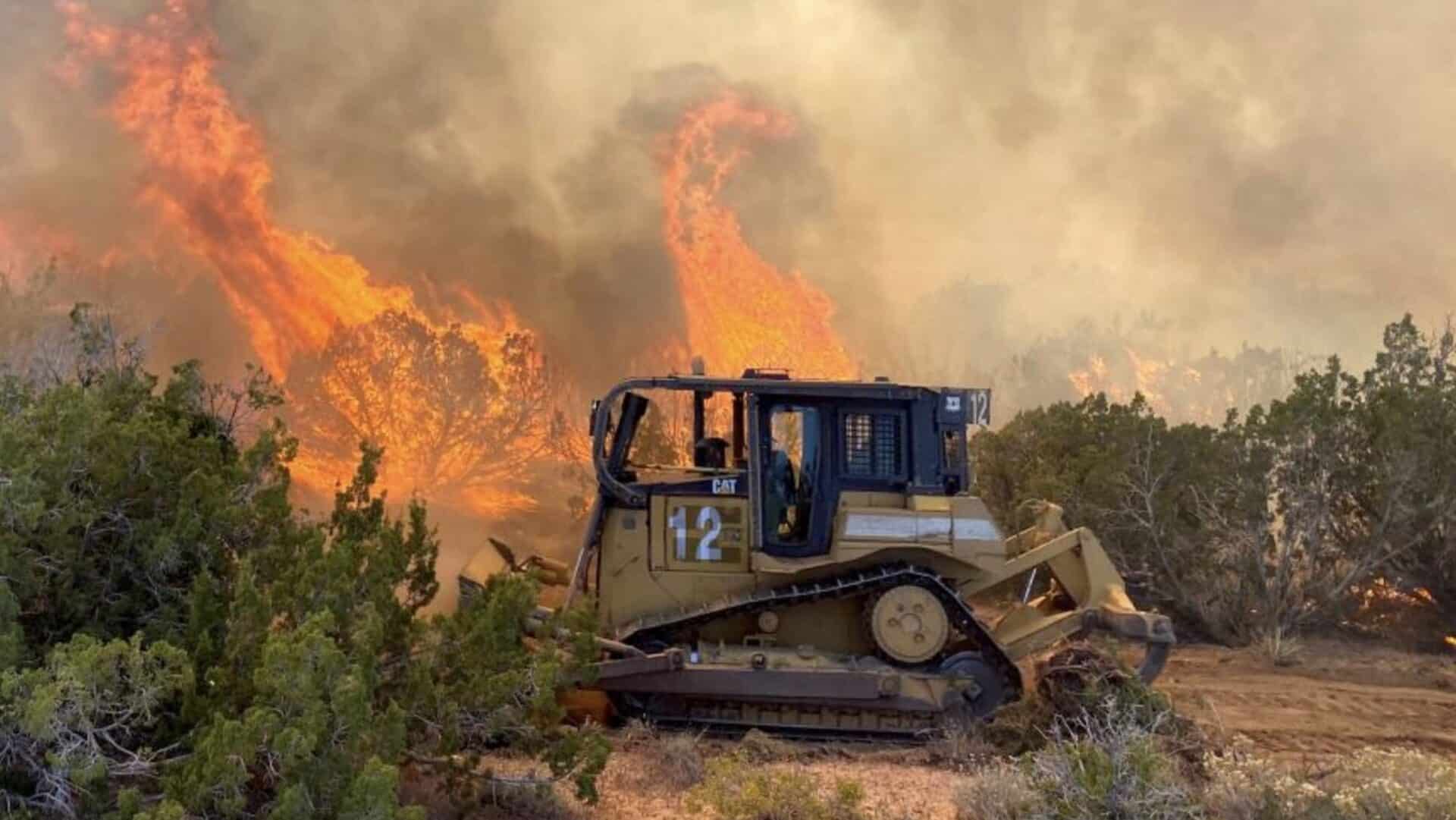
Bulldozers are also better suited to working in old burn scars, where standing dead trees called snags pose a serious hazard to anyone on foot. A falling snag that might bounce off a dozer’s cab could kill a person on the ground.
Beyond fire suppression, heavy equipment operators work year-round to reduce wildfire risk before fires ignite. In California alone, 70 full-time operators have treated nearly 130,000 acres of hazardous fuels this year. One current project in the San Emigdio Mountains targets roughly 2,000 acres near Frazier Park, a community of approximately 5,000 residents.
Operator James Crawford says the goal is to thin dense vegetation that acts as ladder fuel, allowing fire to climb from the forest floor into the tree canopy. Crown fires are among the most dangerous and difficult to control. After the fire is out, the same operators return to repair roads and restore the landscape as close to its original condition as possible.