

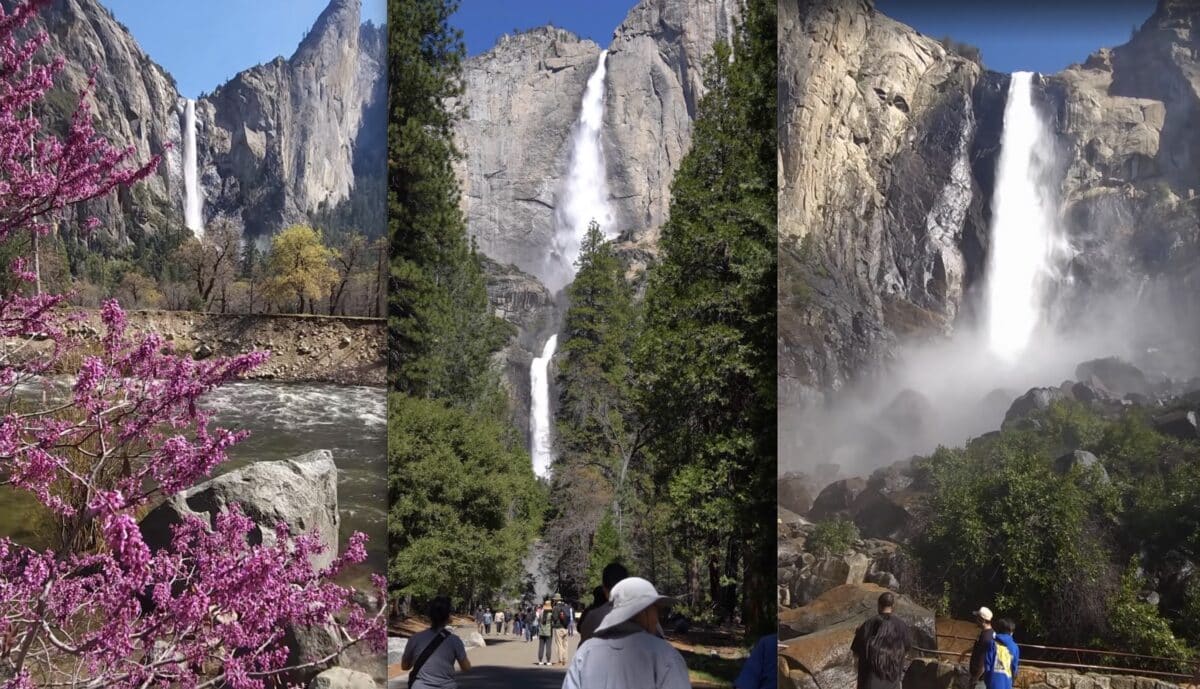
Yosemite Valley, California — Heads up to all outdoor lovers, the falls are flowing in Yosemite Valley! Yosemite National Park is world renown for seemingly endless supply of stunning waterfalls and right now they’re putting on a show.
As warmer temperatures melt the high elevation snowpack of the Sierra Nevada mountain range, even the smallest creeks are rushing with water. Many tumble right over the glacially carved cliffs that frame Yosemite Valley, creating waterfalls as they continue to flow into the Merced River.
In spring, Yosemite Falls and Bridalveil Fall become a torrent of rushing water while dozens of smaller ephemeral (or seasonal) falls appear along the Valley rim. These falls typically reach peak runoff in April or May. By August, most will have slowed to a mere trickle.
Yosemite offers waterfall hikes for every fitness level (learn more below). No matter which trail you choose, be prepared for mist and wet surfaces, especially near the base of any fall. Remember to wear shoes or boots with good traction and remain on designated trails only. Rocks around waterfalls are dangerously slick (even when they appear dry) so pay attention to signage and use common sense. River and creek currents around the falls are powerful and ice-cold. A single slip could cost a trip to the emergency room or worse.
As you approach a waterfall during high flow, you’ll have a powerful experience complete with misty wind and booming water. But, the waterfalls at low flow have their own beauty and serenity. Be sure to stay on trails—the rock is extremely slick (even when dry) and the ciurrent in the river or creek is very powerful. Yosemite is home to so many waterfalls primarily as a result of glaciers. Rivers cut deep canyons, which glaciers later widened, steepened, and further deepened. Without glaciers, these same creeks and rivers would still exist, but would form shorter cascades as they tumbled down slopes (instead of cliffs).
Here a few of the more famous falls inside the park:
Yosemite Falls

2,425 feet / 740 m
Flows: approximately November through July, with peak flow in May.
Look for the ice cone at the base of the upper fall during winter and for roaring runoff April through June. Yosemite Falls, one of the world’s tallest, is actually made up of three separate falls: Upper Yosemite Fall (1,430 feet), the middle cascades (675 feet), and Lower Yosemite Fall (320 feet).
You can see Yosemite Falls from numerous places around Yosemite Valley, especially around Yosemite Village and Yosemite Valley Lodge. A one-mile loop trail leads to the base of Lower Yosemite Fall (the eastern side of the loop, from the shuttle stop to the base of the waterfall, is wheelchair accessible).
It’s also possible to hike to the top of Yosemite Falls as a strenuous, all-day hike (see a list of Valley day hikes).
- Check out the Yosemite Falls webcam for a current view of the waterfall!
- View a 10-minute episode of Yosemite Nature Notes about Yosemite Falls.
Sentinel Falls
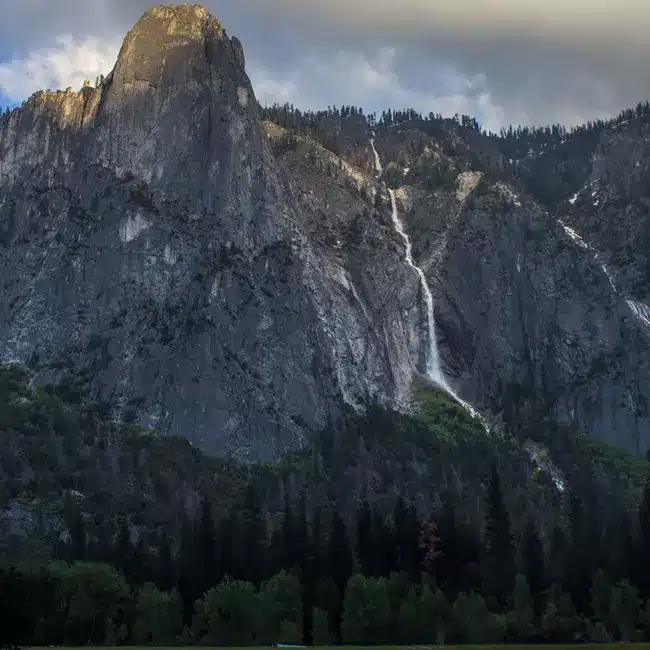
About 2,000 feet / 610 m
Flows: approximately March through June, with peak flow in May.
This waterfall is located on the south side of Yosemite Valley, just west of Sentinel Rock. It is comprised of multiple cascades, which range in height from 50 to 500 feet.
You can see this waterfall from areas along Southside Drive near the Sentinel Beach Picnic Area, and near the Four Mile Trailhead. Alternatively, you can view it from across Yosemite Valley near Leidig Meadow, or while hiking the Yosemite Falls Trail.
Horsetail Fall
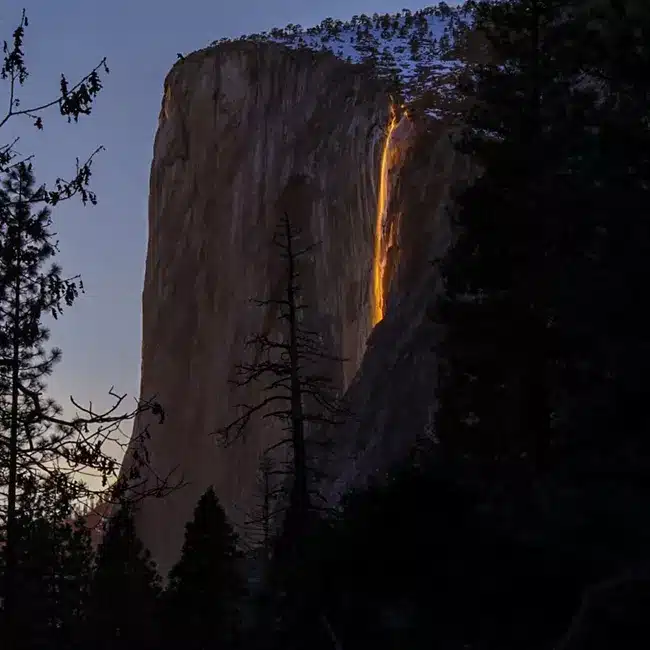
1,000 feet
Flows: approximately December through April.
Horsetail Fall is famous for appearing to be on fire when it reflects the orange glow of sunset in mid- to late February. It falls off of the east side of El Capitan and is best seen from just east of El Capitan.
To see Horsetail Fall, park at the El Capitan picnic area (on Northside Drive west of Yosemite Valley Lodge) or in turnouts just east of the picnic area. You can see the waterfall from the road. Some restrictions may be in place for Horsetail Fall viewing in February.
Bridalveil Fall

620 feet / 190 m
Flows: all year, with peak flow in May.
This is often the first waterfall visitors see when entering Yosemite Valley. In spring, it thunders; during the rest of the year, look for its characteristic light, swaying flow.
You can see Bridalveil Fall from near the tunnels on the Wawona Road (continuation of Highway 41) or Big Oak Flat Road (continuation of Highway 120) and from a signed parking lot on your way into Yosemite Valley. You can walk to the base via any of a few short trails (one of which is wheelchair accessible) in just a few minutes.
