

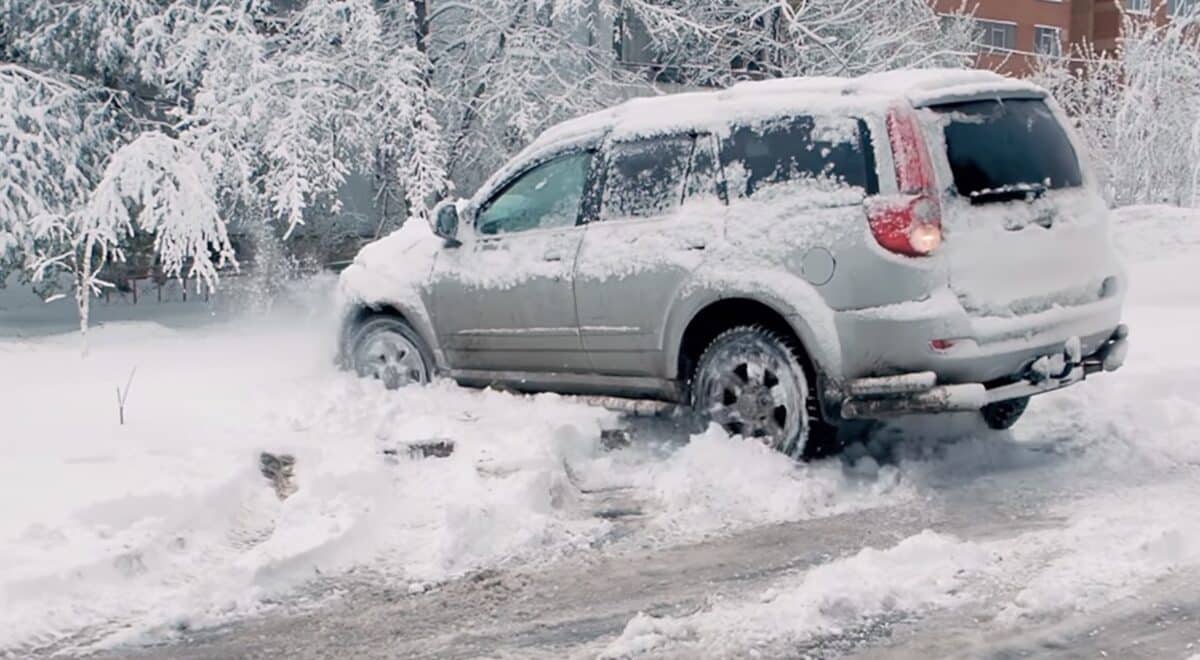
If you’re planning on driving in the mountains or through very snowy conditions, it’s important that you ensure your vehicle is prepared for slippery roads. While having four-wheel drive or all-wheel drive is vital but it isn’t always enough. This PSA from the Colorado Department of Transportation explains why having proper tires is absolutely necessary.
When the Passenger Vehicle Traction law is in effect in Colorado, drivers are required to have AWD or 4WD vehicles with winter tires, mud and snow tires, or all weather tires. If you don’t have those, alternative approved traction devices, including specific cable chains and chains, are allowed. A full list of approved traction devices is available here.
Stopping from 60mph on snowy pavement can require 800+ feet in summer tires. All season tires still usually require a solid 668+ feet, while true winter tires can usually stop in just 310 feet. No matter the case, that’s still quite a lot of distance, so make sure to always leave plenty of space between you and the cars around you.