

As the world’s first national park, Yellowstone National Park offers an exceptional opportunity to witness an intact ecosystem like no other. Visitors have the chance to explore geothermal areas that include nearly half of the world’s active geysers, spot remarkable geological features, and experience truly untamed wildlife.
Yellowstone is a hotspot for western wildlife with bison, elk, bighorn sheep, mountain goats, wolves and bears all living inside the park. Around 150-200 grizzly bears have home ranges fully inside or partially inside Yellowstone but 965 are estimated to live in the greater area. Grizzlies typically do their best to avoid humans but hiking well off-trail alone far from populated areas can increase your chances of a surprise encounter.
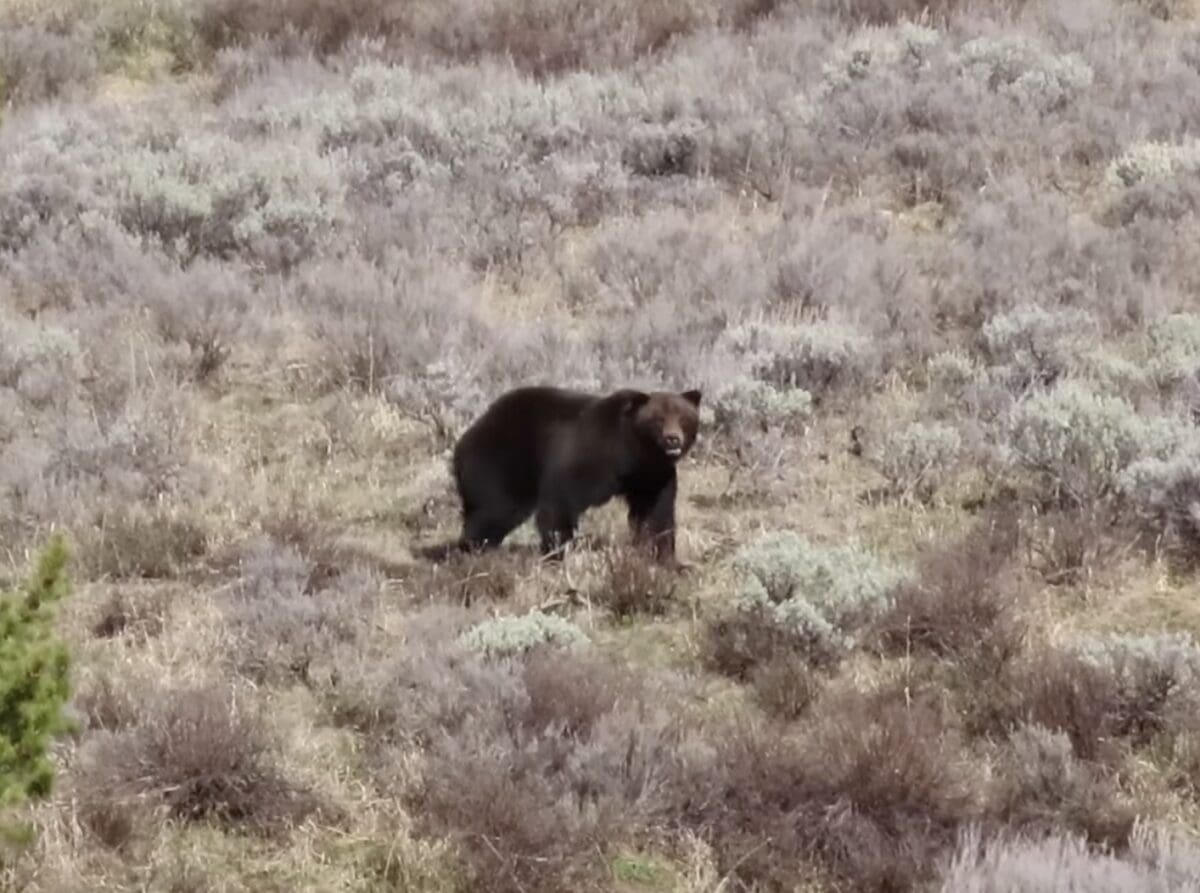
Yellowstone National Park enthusiast Stan Mills states that he didn’t see this bear until it was just 20 feet away but that’s a real danger of hiking solo and off-trail in grizzly country. Yellowstone does not prohibit hiking off-trail, but hiking alone is strongly discouraged. 91% of people injured by bears in Yellowstone since 1970 were either hiking alone or with just one partner. Bears should always be given at least 100 yards of space (300 feet) and those hiking in bear country should periodically shout “Hey bear!” to alert the animals of their presence. Fortunately the bear didn’t attack Mills but encounters like this can end very poorly.
Yellowstone National Park Bear Safety Guidelines:
All of Yellowstone is bear country, from the trails in the park’s backcountry to the boardwalks and parking lots around Old Faithful. Your safety cannot be guaranteed, but you can play an active role in protecting yourself and the bears people come here to enjoy.
- Give bears space. Keep at least 100 yards (93 meters) from bears at all times and never approach a bear to take a photo.
- Carry bear spray and know how to use it. We recommend each person carry one can of bear spray in a readily accessible location like a quick-draw holster (not stowed away in your backpack).
- Hike in groups and make noise. Since 1970,91% of the people injured by bears in Yellowstone were hiking alone or with only one hiking partner. Only 9% of the people injured by bears were in groups of three or more people. While hiking on a trail, periodically yell “Hey bear!” to alert bears of your presence. Learn more about backcountry safety.
- Respect closures. Do not travel in areas closed for bear management.
- Never feed bears. Bears that become dependent on human food may become aggressive toward people and will be killed.
- Stay with your stuff. Do not leave packs or bags containing food unattended, even for a few minutes, as bears learn new food sources quickly.
- If a bear approaches or touches your car, honk your horn and drive away. We want to discourage this behavior for the bears’ safety and yours.
- Help us spread the word! Share posters from our “A Bear Doesn’t Care” campaign.
If you’re involved in a conflict with a bear, regardless of how minor, contact us or report it to a park ranger as soon as possible. If cell service is available, dial 911. The lives of other people, and the bear, may depend on it.