

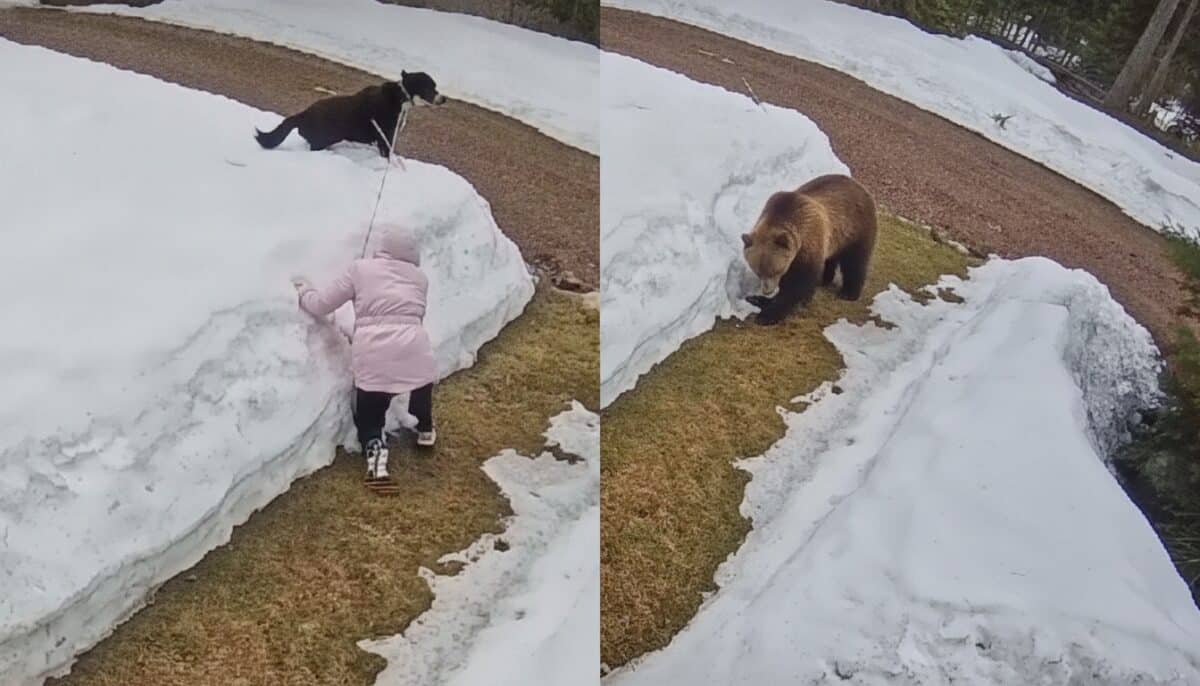
A woman out for an early afternoon walk with her dog had quite a scare when she came upon a grizzly bear strolling through her property.
Updated 21 September 2026 — where Montana’s grizzlies stand now
The Northern Continental Divide Ecosystem around Glacier, where Essex sits, held 1,163 grizzlies at the last published estimate and occupied range there grew 12% between 2008 and 2022. Federal delisting of grizzlies in the lower 48 is under active consideration this year, which would hand day-to-day management to the states. The den-emergence timings below are unchanged.
The encounter was captured on Ring Doorbell in Essex, Montana as Lynn Simpson was returning to her home on April 8th at 2:17pm. In the video you can see Lynn’s dog react to something out of frame and when she looks up Lynn makes a hasty retreat to her front door. Lynn struggled to get her dog to follow as it barked at the approaching grizzly but the dog finally relented as she tugged on its leash.
The grizzly must have lingered close by as it only comes into frame 13 minutes after the initial encounter. The bear walked straight up the shoveled path in front the home and seemed to sniff the scent the dog left in the snow before walking away.
Montana is home to an estimated roughly 2,000 grizzly bears and this encounter serves as a reminder for Montana residents to stay safe and be aware as the state’s grizzly bear population emerge from hibernation.
Bear Aware Montana Guidelines:
Winter is almost over. The snow is starting to melt, the days are getting longer, troops and crews are planning extended hikes and campouts as the weather starts to get warmer. Sounds great, but do you know when bears start coming out of hibernation? Are you bear aware? Don’t be surprised by a bear encounter. Be ready, be alert, have a plan and carry bear spray. Educate your scouts and venturers about bear encounters.
GRIZZLY BEARS:
Male grizzlies come out of hibernation in mid to late March. Females with cubs emerge later, in April to early May. After an unseasonably warm winter, bears may temporarily emerge from their dens as early as January or February, and usually go back in when colder weather returns.
BLACK BEARS:
Black bears den at lower elevations and therefore wake earlier, typically in March. Sometimes, if there is a warm winter and food is available, bears
might emerge out of their dens to eat.
BEING SAFE IN BEAR HABITAT.
Here are some important rules to be safe in bear country:
Be Vigilant – Being vigilant for bears and bear sign (tracks, scat, feeding sites) can reduce the chances of stumbling onto a bear at a close distance, thereby reducing the risk of bear attack. Be especially vigilant if hiking off-trail.
Carry Bear Spray – Bear spray has proven to be effective at stopping aggressive bear behavior during surprise encounters when the person involved has time to deploy it.
Make Noise – Making noise while hiking is an effective method of forewarning bears of your presence, thereby reducing the chances of surprise encounters and related attacks.
Don’t Run – Running during an encounter can trigger a chase response in a bear. In addition, jogging in bear country increases the odds of surprise encounters at close distances and surprised bears are more likely to be aggressive.
Do not Hike Alone – Hiking in group sizes of 3 or more people or traveling by horseback is known to reduce the risks of bear attack. Larger groups are more intimidating to bears and more likely to have at least one member making noise or being vigilant, thereby reducing the risk of bear attack.