

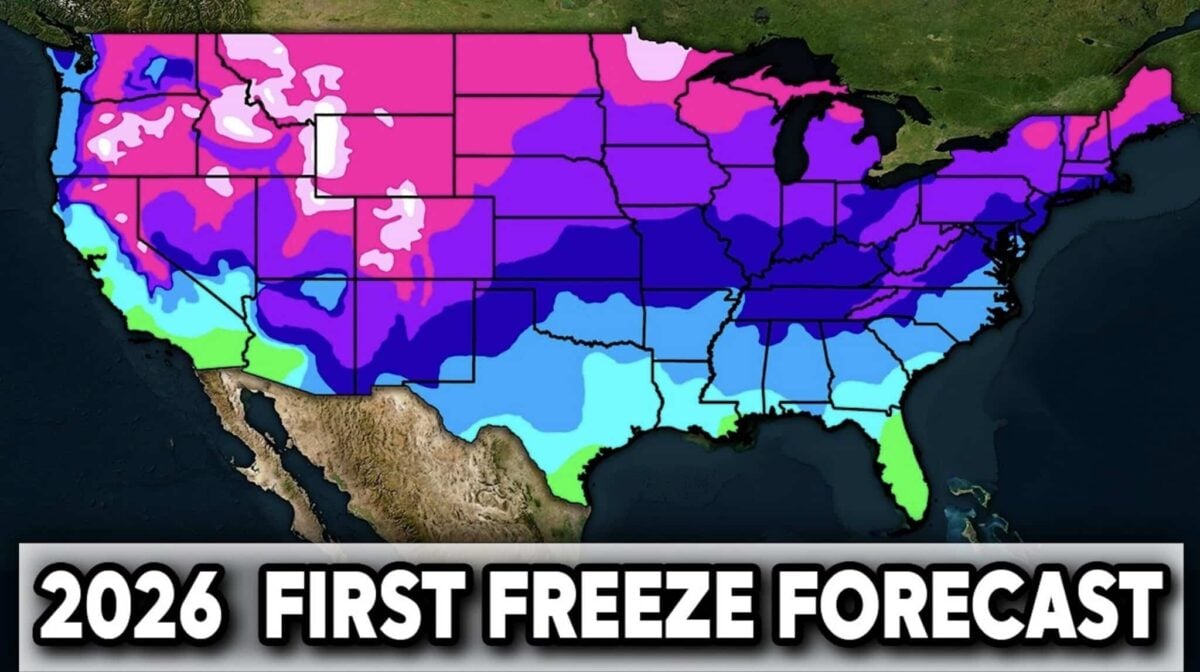
The first freeze is the starting gun for snowmaking, so it matters well beyond the garden. Direct Weather has published its first freeze analysis for autumn 2026, comparing average first freeze dates against its own temperature outlook, and the Farmers’ Almanac has published its first frost dates for the year. Here is where the freeze line is expected to arrive, and where this year’s pattern moves it.
Western Mountains: Late August Into September
The highest ground in the Sierra Nevada, Cascades and Rockies can freeze by late August. The northern Sierra, Oregon Cascades and northern central Rockies become more active in early September, and by late September most major western ranges are inside the first freeze zone. The complication this year is warmth: Direct Weather expects above normal temperatures across much of the Northwest and parts of the northern Rockies, which can delay the freeze in mountain communities and push back the first snowmaking window at resorts that rely on it.
Northern Plains And Midwest: September Into October
The freeze expands across the northern Plains and Upper Midwest through September. By early October much of Iowa, Illinois, Indiana, lower Michigan and parts of Ohio are typically inside the window, along with portions of the central Plains. Resorts in the Upper Midwest often get their first snowmaking nights in this stretch.
The East: Earlier Than Usual This Year
Direct Weather expects below normal temperatures across much of the eastern United States this autumn, with the Ohio Valley, Mid-Atlantic and Northeast carrying the highest confidence. That points to an earlier than average first freeze and, for eastern ski areas, an earlier start to serious snowmaking. Higher ground in the Greens, Whites, Adirondacks and northern Maine is usually freezing by late September regardless.
The South And The No-Freeze Zones
Late October and November brings the freeze to New Mexico, the Texas Panhandle, northern Oklahoma, Arkansas and the northern Deep South, then to the Mid-Atlantic and most of New England. Far southeastern Louisiana, southern Texas, parts of coastal California and Arizona, and most of Florida rarely freeze at all, although an El Niño winter raises the odds of an unusual cold snap reaching further south than normal.
Farmers’ Almanac Average First Frost Dates For 2026
- Nome, Alaska: around 26 August. Fairbanks: around 4 September.
- Bismarck, North Dakota: around 23 September. Concord, New Hampshire: around 29 September.
- Denver: around 6 October. Indianapolis: around 15 October.
- Charlotte: around 30 October. Washington DC: around 12 November.
- New Orleans: around 5 December, with much of the South running well into November.
The Almanac draws a distinction worth keeping: a freeze is an air temperature of 32°F or lower, while frost is ice forming on surfaces, and its published dates are average light-frost dates in the 29 to 32°F range. An average date is not a guarantee for any given year.
Direct Weather’s full first freeze forecast is here, and the 2026-2027 winter outlook is here.
