

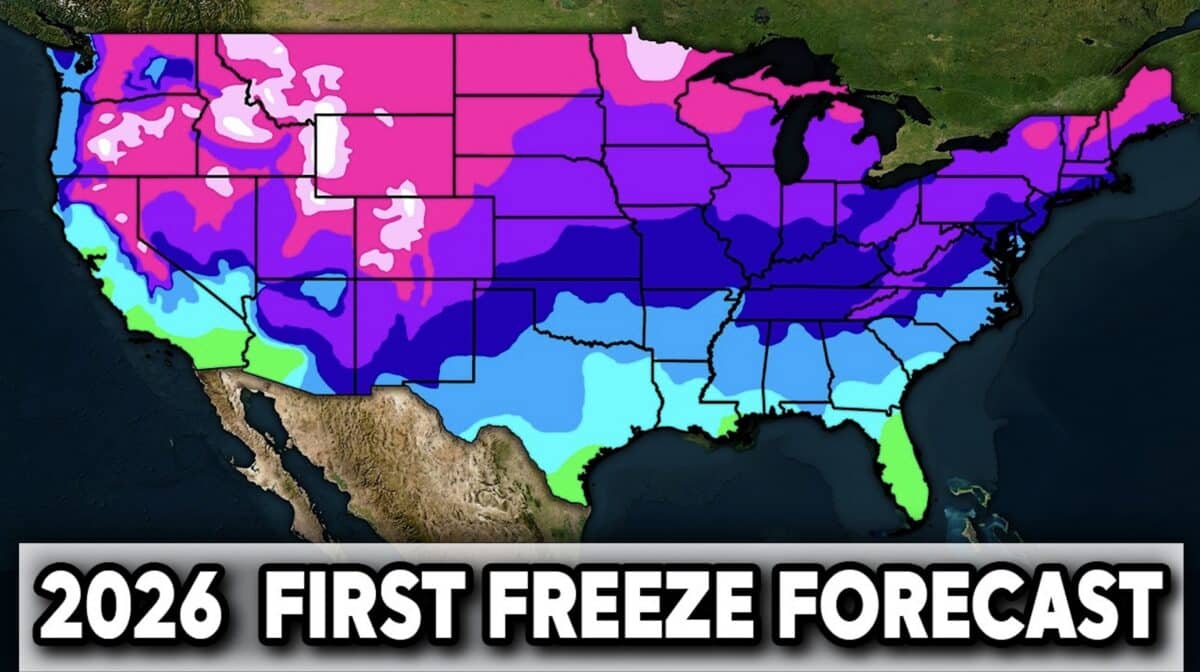
The first freeze of 2026 is approaching for parts of the United States, but the timing will vary widely by region and elevation. Direct Weather has released an analysis comparing average first freeze dates with its fall and winter temperature forecasts to determine where the first freeze could arrive earlier or later than normal. The forecast shows freezing temperatures first reaching the highest mountain locations before spreading across the country through September, October and November.
Western Mountains
Some of the highest elevations in the Sierra Nevada, Cascades and Rockies can see their first freeze by late August. Direct Weather noted that elevation creates major differences across these regions, with temperatures changing significantly over short distances.
The northern Sierra Nevada, Oregon Cascades and northern central Rockies become more active during early September. By late September, most major western mountain ranges typically fall within the first freeze zone.
However, Direct Weather expects above normal temperatures across much of the Northwest and parts of the northern Rockies this fall. That could delay the first freeze in some mountain communities.
Northern Plains and Midwest
The first freeze expands across the northern Plains and upper Midwest during September before reaching more areas in October.
By early October, much of Iowa, Illinois, Indiana, lower Michigan and parts of Ohio typically enter the first freeze window. Portions of the central Plains also begin seeing freezing temperatures around this time.
Direct Weather expects below normal temperatures across much of the eastern United States. The Ohio Valley, Mid Atlantic and Northeast have some of the highest confidence for colder than normal conditions, potentially bringing the first freeze one or two weeks earlier than average.
Northeast
The Adirondack Mountains, Green Mountains, White Mountains and northern Maine typically see their first freeze during late September. More of New England enters the freeze zone during early October.
A colder fall pattern could result in an earlier first freeze across parts of the Northeast. Direct Weather noted that timing will be particularly important. A warm September followed by a cold October and November could still produce an earlier seasonal freeze.
South
The southern Plains and Southeast generally wait until late October or November for their first freeze. Texas, Oklahoma, Arkansas, Tennessee, Mississippi, Alabama and Georgia gradually enter the freeze zone during this period.
Farther south, freezing temperatures are much less reliable. Parts of northern Florida and southern Texas may not see a freeze every year.
Direct Weather believes the upcoming El Niño pattern could bring cooler conditions to the South and allow freezing temperatures to reach farther south than usual. Some areas that do not normally freeze every year could potentially experience a freeze this season.
The map is hand drawn, meaning small differences, particularly across mountainous terrain, may not be captured perfectly. The timing should become clearer as fall approaches.
