

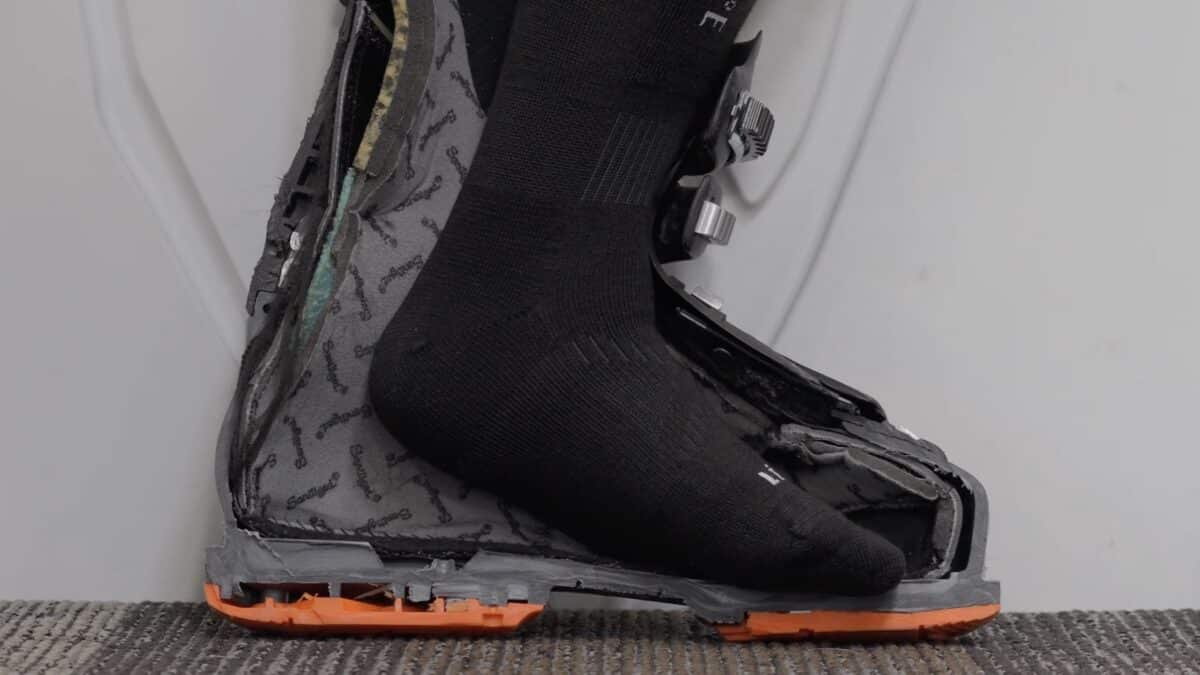
Heel lift is one of the most common problems skiers experience with their ski boots, but the cause is not always obvious. Excessive movement in the heel can reduce control, create discomfort and make it harder to get the most out of a pair of ski boots. Boot fitter JP with Boot Solutions explained the several different things that can cause heel lift, ranging from improper boot sizing to liner wear and an incorrect flex. Identifying when and how the heel moves can help determine what needs to be changed.
Heel Lift Can Point to the Wrong Boot Size
Extreme heel lift that happens whenever a skier initiates a turn can be a sign that the boot is simply too large or has too much volume. Another warning sign is constantly tightening the buckles, particularly the instep buckle, in an attempt to create a secure fit. JP warns that overtightening a boot that is too large will not necessarily solve the problem. Instead, it can restrict circulation and create additional foot pain.
Heel Lift That Appears When Skiing Harder
Some skiers only experience heel lift when they increase their speed or move onto more challenging terrain. This can indicate that the boot is the correct size but that its specific shape does not match the skier’s foot. Skiers with particularly narrow heels, ankles or low insteps may also need additional customization. An aftermarket liner can help provide a more precise fit when a standard boot cannot adequately secure the foot.
The Wrong Flex Can Cause Heel Movement
JP also identifies inappropriate boot flex as another potential cause. A boot that is too soft may feel secure while skiing easy terrain but fail to provide enough support when a skier drives harder into a turn.
A properly matched boot should provide a noticeable rebound as the skier reaches the deepest part of the turn. If the skier continues moving forward through the boot and the heel begins to lift, the flex may be part of the problem.
Custom Footbeds Can Help Reduce Heel Lift
Side-to-side heel movement can indicate that the heel pocket is too wide. However, as JP explains, one of the most important pieces of the setup is a properly fitted footbed. A custom footbed helps keep the heel grounded and limits movement in multiple directions. It can also support the instep, reducing the need to aggressively tighten the buckles.
Heel lift can also develop after years of use. Liners typically wear out before the shell, with packing out becoming noticeable after roughly 125 to 150 days of skiing. A newer boot may benefit from an aftermarket liner. If both the liner and shell have deteriorated after multiple seasons, replacing the entire boot may be the better option.