
An Oregon judge has dismissed a $3.6 million lawsuit filed by a skier who suffered severe spinal injuries after falling from a chairlift at Willamette Pass in 2023.
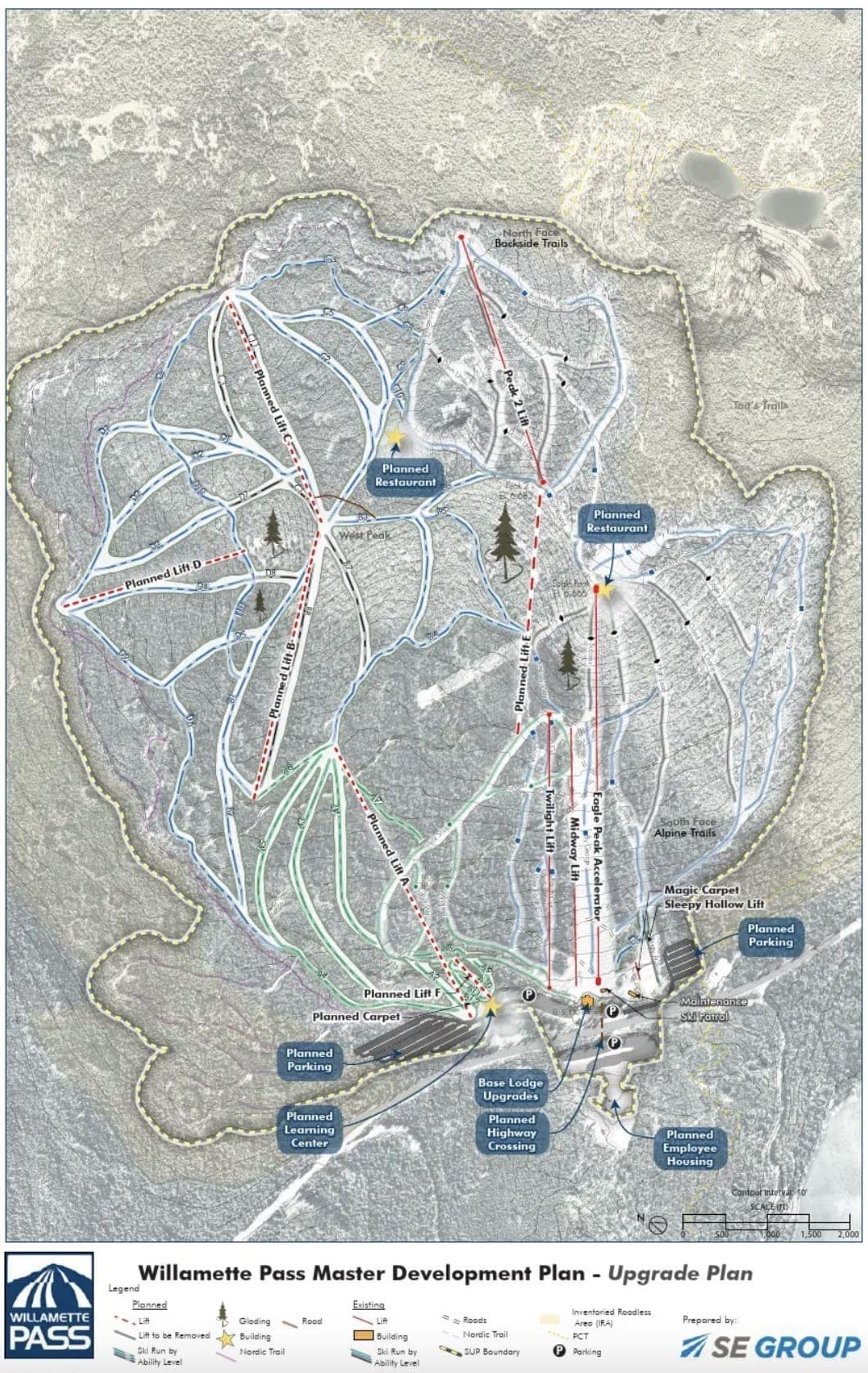
Paul Richmond was 65 when he fell from the Peak 2 triple chair on Jan. 15, 2023, while riding with his 10-year-old grandson. Richmond alleged that strong winds caused their chair to swing unpredictably from side to side and that the lift did not have a lap bar or other safety restraint they could lower in front of them.
According to the complaint, Richmond was thrown from his seat shortly after passing the lift’s second tower and managed to hang onto the bottom of the chair for several seconds before falling an estimated 25 to 40 feet. He suffered compression and burst fractures to four vertebrae and other injuries that ultimately required back surgery and a later hernia operation.
Richmond subsequently filed a $3.6 million lawsuit over the fall, naming Mountain Capital Partners, Oregon Skyway, Willamette Pass Holdings and Willamette Pass Ski Patrol. The lawsuit accused the defendants of negligence related to the operation of the lift in windy conditions and the absence of a restraint bar.
The complaint said Richmond had accumulated more than $330,000 in medical expenses and anticipated another $250,000 in future medical costs.
The Peak 2 Chairlift Did Not Have A Safety Bar
The lack of a restraint bar was one of the issues raised in Richmond’s lawsuit. Peak 2 was constructed in 1992, well before newer industry standards recommended restraint bars on newly installed or relocated chairlifts. Those later standards did not automatically require every older chairlift in the country to be retrofitted with bars.
Richmond’s complaint did not argue that simply operating an older chair without a bar automatically made Willamette Pass liable. Instead, it alleged the resort should not have been operating the lift under the conditions described in the lawsuit and should have provided a restraint capable of helping riders remain seated.
The judge has now dismissed the lawsuit. The full dismissal order and the court’s detailed reasoning are not currently.
Oregon’s Ski Liability Laws Have Been Changing
The case unfolded during a period of significant change in Oregon’s recreational liability laws.
In 2014, the Oregon Supreme Court ruled against Mt. Bachelor in Bagley v. Mt. Bachelor, finding that a liability release signed by an injured snowboarder was unenforceable under the circumstances of that case. The court focused on factors including unequal bargaining power and the take-it-or-leave-it nature of the agreement, but it did not establish a blanket rule that every recreational liability waiver in Oregon was invalid.
Oregon lawmakers revisited the issue earlier this year. Senate Bill 1517 allows operators of sports, fitness and recreational businesses to require participants to release certain claims involving ordinary negligence when specified conditions are met. The legislation became law in 2026, years after Richmond’s January 2023 fall.
Richmond’s lawsuit had become another closely watched case involving the legal responsibilities of Oregon ski areas, particularly because it combined questions about weather, chairlift operation and an older lift without a restraint bar.