
Yellowstone National Park is urging visitors to use extra caution this time of year as the annual bison rut gets underway. In a recent PSA, the park described the behavior visitors are likely to see as bulls compete for the chance to breed.
What Happens During the Rut
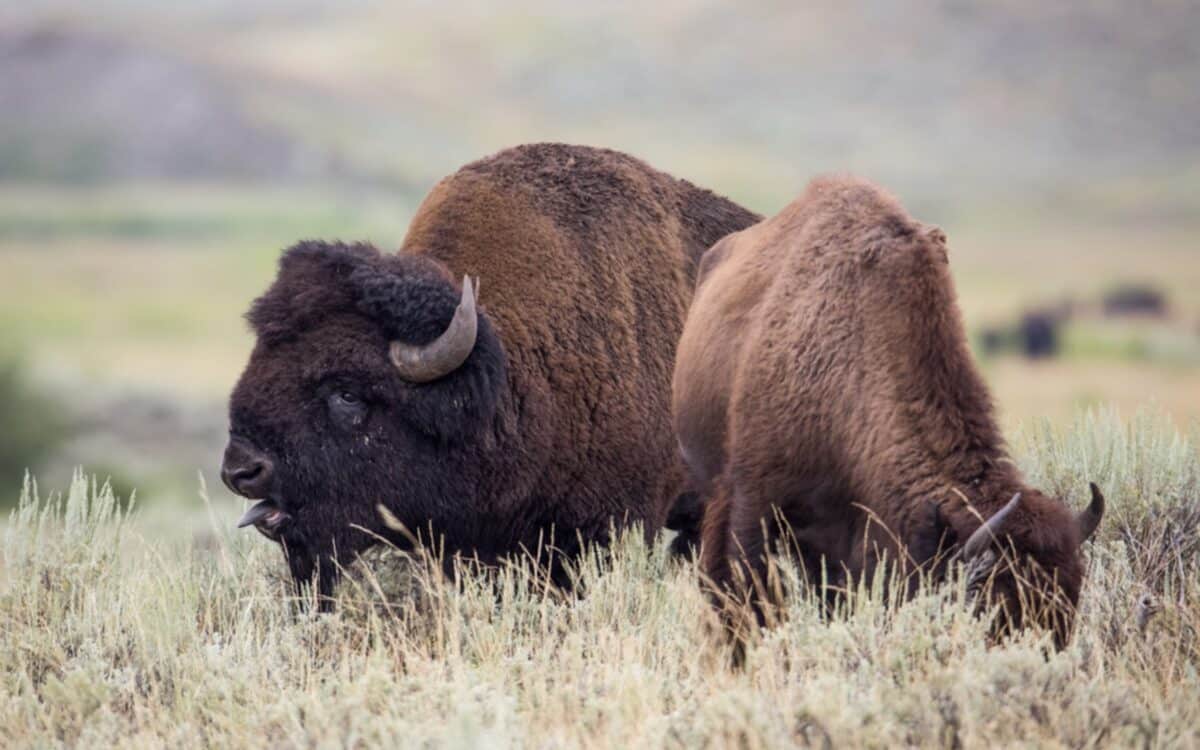
According to the park, mature male bison may be seen with their mouths open, tongues out, and upper lips pulled back. This allows bulls to sniff out pheromones and determine whether a nearby female is ready to breed. Bulls also display their dominance by bellowing, wallowing, and fighting with other bulls, with the winners earning the right to mate with receptive females.
Yellowstone bison mate in late July through August, and group sizes swell to a maximum of about 1,000 animals during this stretch, known as the rut. Once a bull finds a female close to estrus, he stays by her side until she is ready to mate before moving on to another female. Following courtship, mature males separate and spend the rest of the year alone or in small groups.
Bison are the largest land dwelling mammal in North America, with bulls weighing up to 2,000 pounds and cows weighing up to 1,000 pounds. Despite their size, they are remarkably agile and strong, capable of running up to 35 miles per hour and jumping over objects roughly 5 feet high. That combination of bulk and speed is part of why the park treats bison encounters so seriously.
Why Caution Matters
Bison may appear tranquil, but they have injured more people in the park than any other animal. Even a bison that looks calm and slow moving can close distance far faster than a person expects, since these animals can run three times faster than humans. The park’s caption echoes that same message, stating plainly that bison are wild and unpredictable no matter how docile they may appear to be.
How to Stay Safe
Yellowstone’s safety guidelines lay out a few simple rules for anyone who encounters bison during the rut or at any other time of year. Visitors should never approach or feed wildlife under any circumstances. When it comes to bison specifically, the park instructs visitors to stay at least 25 yards, or 75 feet, away at all times. That distance applies whether an animal is standing beside a trail, grazing near a boardwalk, or walking down a paved road.
If a bison charges, run away. The same guidance applies to drivers, who are reminded to use extra care and drive carefully whenever bison are near roadways.
The park also encourages visitors to report any wildlife conflicts they witness and to keep their group and belongings close while viewing animals from a safe distance. With bull bison expected to remain active and on edge through August, officials say the safest approach is to give the animals plenty of room, watch for signs of agitation, and never mistake a bison’s calm appearance for tameness.