

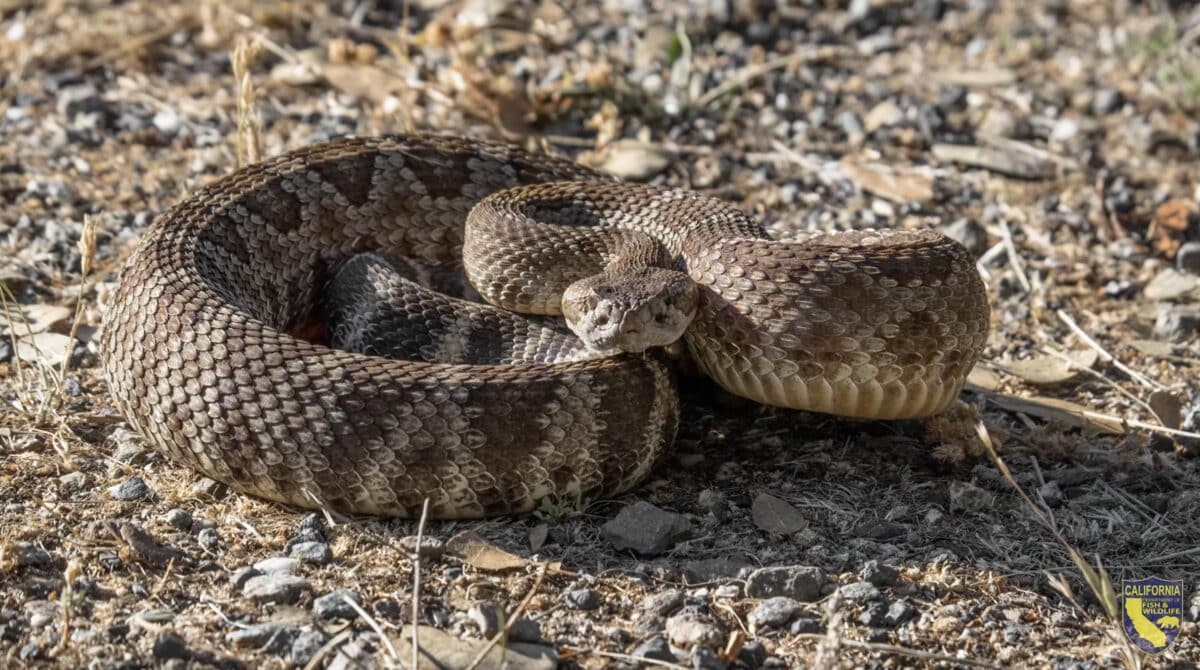
As temperatures rise in the Golden State, so does rattlesnake activity so Department of Fish and Wildlife thought it appropriate to issue a PSA about the importance of taking precautions to help reduce the risk of encountering or being bitten by rattlesnakes.
Rattlesnakes are not generally aggressive towards humans and will avoid people if given the chance. They usually retreat if given safe space to move and not provoked or threatened. Do not attempt to touch or handle snakes and know what to do in the event of a bite.
A startled rattlesnake may not actually rattle before a defensive strike. They also may not deliver an envenomed bite, a “dry bite” may be used as a warning because venom creation and use can be energetically costly for the snake. However, all bites from a rattlesnake should be treated as a venomous bite until appropriate medical attention is provided.
Remember, prevention is key to human safety around rattlesnakes. Watch the following video for a quick lesson on rattlesnake safety and find more information from Department of Fish and Wildlife below.
Potential Conflict and Coexistence:
Rattlesnakes typically avoid people. Bites are uncommon, but can occur if a snake feels threatened. Most bites occur between April and October when snakes and humans are most active outdoors. Prevention is key to avoiding unwanted encounters.
Remember!
- Stay alert when outdoors.
- Wear sturdy boots and loose-fitting long pants. DO NOT wear sandals or flip-flops in brushy areas.
- Stay on well-used trails. Avoid tall grass, weeds, and heavy underbrush.
- Check rocks, stumps or logs before sitting down.
- Shake out sleeping bag and tent before use.
- Let others know where you are going, when you plan to return, and carry a cell phone. Hike with a companion when possible.
- DO NOT grab “sticks” in water. Rattlesnakes can swim.
- DO NOT let dogs off leash. Dogs are at increased risk when sniffing the ground near brushy areas.
- DO NOT try to touch or handle a snake, dead or alive. Dead rattlers may still inject venom shortly after death.
Be Rattlesnake Safe
Rattlesnake bites are uncommon, but can and do still occur. On rare occasions, rattlesnake bites can cause severe injury or death. Prevention is key to human safety.
In the event of a snake bite
- Stay calm – but act quickly!
- Remove items which may constrict swelling (e.g., watches, rings, shoes).
- Transport victim to the nearest medical facility.
- Do NOT apply a tourniquet.
- Do NOT pack the bite area in ice.
- Do NOT cut the wound with a knife or razor.
- Do NOT use your mouth to suck out the venom.
- If a pet is bitten – Speak to your veterinarian about canine rattlesnake vaccine options.
