

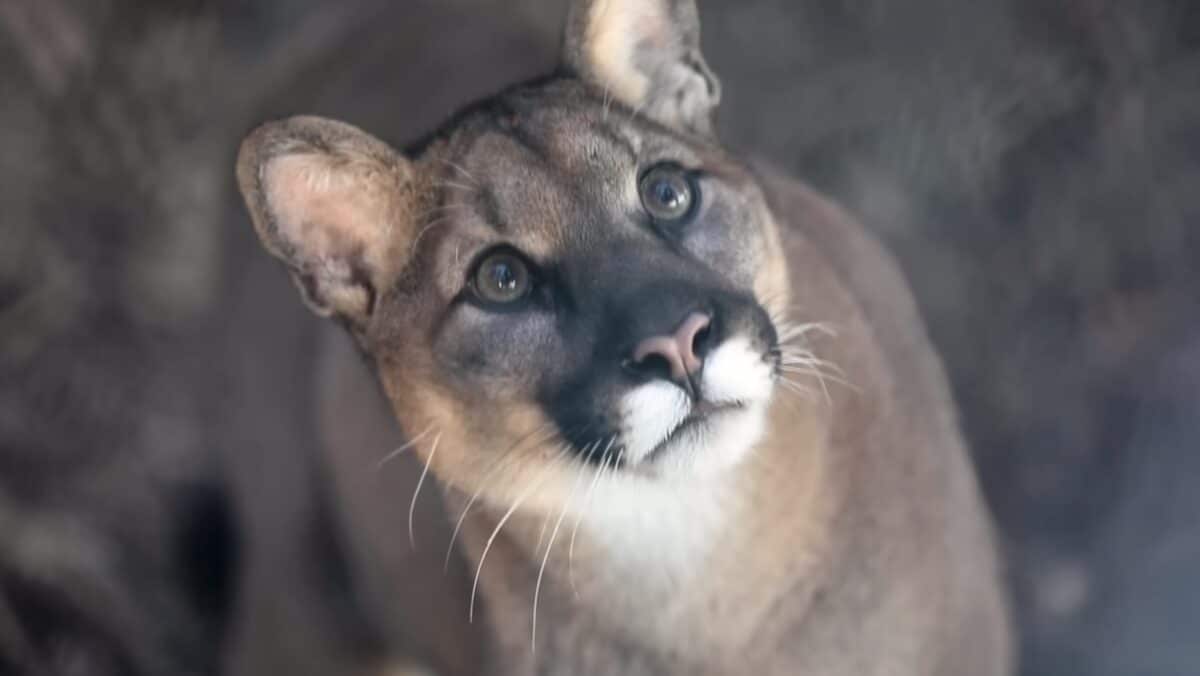
A new study published in the journal Current Biologys used GPS data from hikers and cyclists on Strava to map how mountain lions respond to outdoor recreation in California’s Santa Cruz Mountains, offering some of the most detailed behavioral data ever collected on the species.
Researchers from UC Santa Cruz tracked 36 free-ranging mountain lions with high-resolution GPS collars from 2018 to 2023 and cross-referenced their movements against recreational activity recorded through Strava Metro, the platform’s data-sharing program used by public agencies to study human mobility. Because Strava users continuously log their location during hikes, runs, and bike rides, the app gave researchers an hourly, trail-by-trail picture of how many people were moving through the landscape at any given time.
By testing 109 different combinations of spatial and temporal scales, researchers found that mountain lions responded most strongly to long-term rolling averages of hourly trail use within 30 meters of their location. That means the cats weren’t just reacting to hikers in the moment, but were anticipating human presence based on patterns built up over a full year.
The animals also moved faster and more directly through trail-heavy areas, suggesting they treat recreational corridors as territory to cross rather than places to linger. At night, when trail use dropped, mountain lions relaxed their avoidance behavior, demonstrating what researchers described as a high degree of behavioral plasticity.
Not all lions responded the same way. Individual animals exposed to consistently high levels of recreational activity showed a reduced avoidance response over time, which the researchers interpreted as a form of habituation that likely helps the cats maximize usable habitat in a fragmented landscape.
Possibly the most interesting finding challenges a common assumption in wildlife management. The study found that more human-tolerant mountain lions were not more likely to be involved in conflict events. Instead, the strongest predictor of conflict near trails was simply the concentration of human activity. More hikers and cyclists in a given area meant higher conflict risk, regardless of individual lion behavior.
The researchers concluded that management strategies aimed at reducing human-wildlife overlap, such as enforcing nighttime trail closures or limiting backcountry access in key areas, are likely more effective than targeting individual animals perceived as too comfortable around people.
