

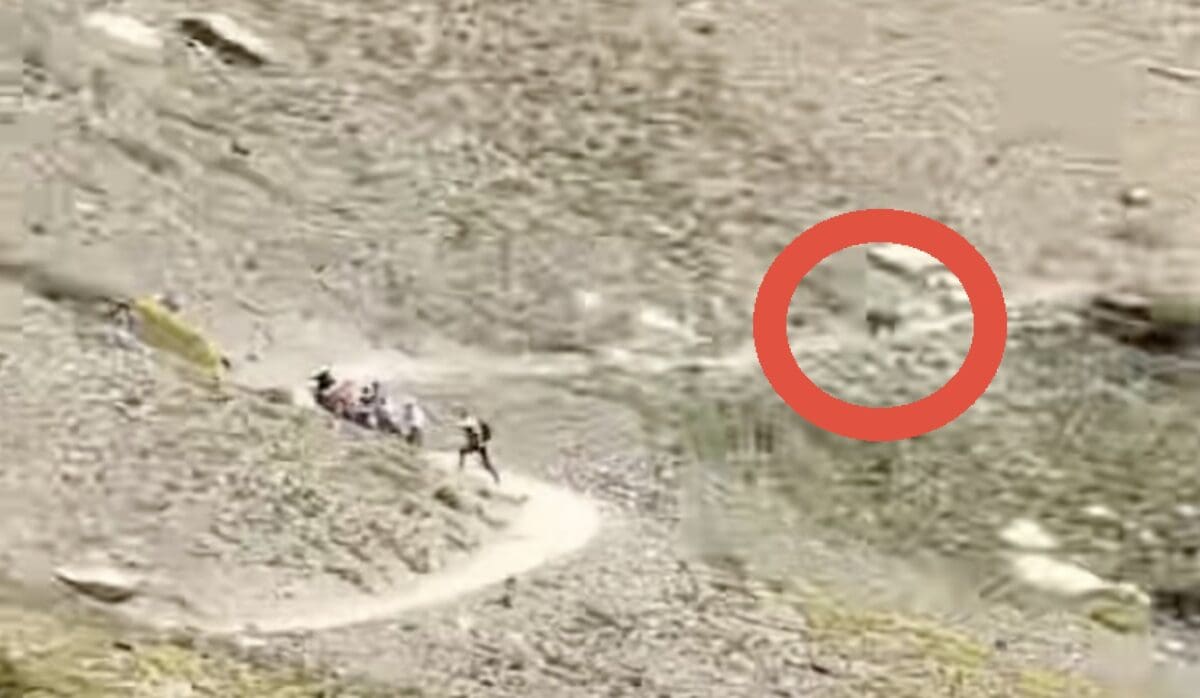
Absolutely terrifying scene from Glacier National Park where a group of hiker were sent scurrying for safety as a grizzly bear chasing its next meal blew past their position on a hiking trail.
Grizzly bear predation on mountain goats is well documented throughout North America with grizzly bears tending to favor ambushing goats when possible, using the element of surprise in forested areas or near mineral licks to secure their prey. In this instance it seems the mountain goats were approached in a more wide open area and capitalized their speed and sure-footedness to evade the apex predators.
Witnesses to the event confirmed the mountain goats sought higher ground and were able to create distance from the less agile grizzly in the challenging terrain. The grizzly gave up after its initial sprint.
Glacier National Park’s 1583 square miles provide ample habitat for a large population of both black and grizzly bears (nearly 1000 combined). Before hiking in Glacier, visitors are highly encouraged familiarize themselves with basic bear safety information needed to ensure a safe visit for both you and the animals. Learn more about bear safety in Glacier National Park below.
Glacier National Park Bear Country Hiking Safety Guidelines:
If you encounter a bear inside the minimum recommended safe distance (100 yards), you can decrease your risk by following these guidelines:
- If a bear or other animal is moving in your direction on a trail, get out of its way and let it pass.
- If you can move away, do so. If moving away appears to agitate the bear, stop. In general, bears show agitation by swaying their heads, huffing, and clacking their teeth. Lowered head and laid-back ears also indicate aggression. Bears may stand on their hind legs or approach to get a better view, but these actions are not necessarily signs of aggression. The bear may not have identified you as a person and may be unable to smell or hear you from a distance. Help the bear recognize you as a friendly human.
- Talk quietly.
- Do not run! Back away slowly. Stop if it seems to agitate the bear.
- Use your peripheral vision. Bears may interpret direct eye contact as threatening.
- Continue to move away as the situation allows.
- If a bear appears intent on approaching you, your group, or your campsite in a non-defensive manner (not showing signs of agitation), gather your group together, make noise, and try to discourage the bear from further approaching. Prepare to deploy your bear spray. If you are preparing or consuming food, secure it. DO NOT LET THE BEAR GET YOUR FOOD!
- If a bear approaches in a defensive manner (appears agitated and/or charges), stop. Do not run. Talk quietly to the bear. Prepare to deploy your bear spray. If contact appears imminent and you do not have bear spray, protect your chest and abdomen by falling to the ground on your stomach, clasp your hands around the back of your neck, and leave your pack on for protection. If the bear attempts to roll you over, try to stay on your stomach. If the attack is defensive, the bear will leave once it recognizes you are not a threat. If the attack is prolonged, FIGHT BACK!
