

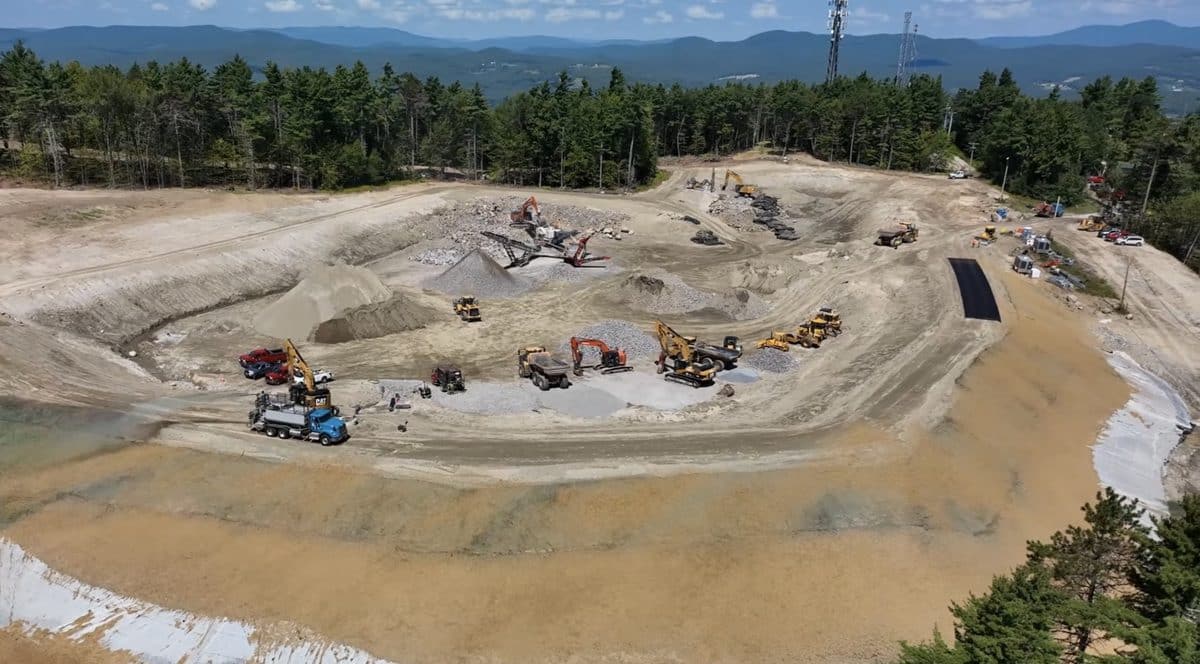
21-million-gallon snowmaking reservoir, anew lift opening more than 100 acres, a snowmaking system getting a 50% capacity bump…these sound like projects you might expect at some of the biggest ski resorts in the country. Instead, they are happening at smaller mountains where a single infrastructure project can dramatically change how the entire ski area operates.
For this list, we gave the most weight to 2026-27 improvements that expand accessible terrain, significantly improve snowmaking or solve an operational problem that has historically limited the mountain. The size of the project matters, but so does its size relative to the ski area receiving it.
Here are five small ski areas making unusually consequential improvements this winter.
1. Snowland Resort, Utah
The big improvement: New 2,450-foot surface lift
Newly accessible terrain: Approximately 107 acres
Previous public lift setup: Rope tow
Reopened to the public: January 2026
It is difficult to find a project that changes a small ski area more than the one underway at Snowland Resort.
The nonprofit Utah ski area reopened to the public last winter after 46 years, with skiing centered around a rope tow and a deliberately small-scale operation.
Now Snowland is building its Ridgeline Surface Lift.
The roughly 2,450-foot lift is expected to expand lift access to approximately 107 acres, turning what was essentially a rope-tow operation into a much more substantial ski hill.
Construction began this fall, with the goal of having the lift operating during the 2026-27 season. Snowland has also secured a new long-term special-use permit from the U.S. Forest Service, giving the nonprofit additional stability as it rebuilds the ski area.
Future plans include more parking, a new lodge, tubing and yurt rentals, but the new lift is the project that should immediately change the skiing.
Why it matters: Snowland isn’t replacing an old lift with a newer version. It is substantially expanding what a skier can access at a mountain that only returned to public operation last winter.
2. Pats Peak, New Hampshire
The big improvement: 21-million-gallon snowmaking reservoir
Pumping capacity: Nearly 8,000 gallons per minute
Snowguns operating simultaneously: Increasing from about 100 to more than 200
Expected result: Roughly half the time to reach 100% open terrain
Pats Peak was already unusually aggressive about snowmaking for a family-owned New Hampshire ski area.
This winter it is taking that advantage much further.
The centerpiece of one of the largest capital projects in the mountain’s history is a new 21-million-gallon reservoir dedicated to snowmaking. Pats Peak is also adding 3,000 gallons per minute of pumping capacity, bringing its total to nearly 8,000 gallons per minute.
Electrical capacity to the summit is being tripled, allowing the mountain to operate more than 200 snowguns simultaneously instead of roughly 100.
The result is not simply more snow. Pats Peak expects the upgraded system to cut roughly in half the amount of time required to bring the entire mountain online.
Other projects include improvements to the Bluster Carpet, regrading around the Hurricane Quad unload and another Prinoth Bison snowcat.
Why it matters: At a mountain built around short weather windows and 100% snowmaking coverage, doubling the number of guns that can operate simultaneously could noticeably change how quickly Pats Peak recovers from warm weather and opens terrain early in the season.
3. Pajarito Mountain, New Mexico
The big improvement: Major snowmaking expansion
Capacity increase: Approximately 50%
Trails receiving dedicated snowmaking work: Nine
Additional project: Major Aspen lift overhaul
Natural snowfall has long been one of the biggest variables at Pajarito Mountain.
The 280-acre New Mexico ski area is trying to make it much less important.
A new water supply created through the broader Jemez Mountain Fire Protection Project has allowed Pajarito to undertake what the resort describes as a multimillion-dollar transformation of its snowmaking system.
The current project is expected to increase snowmaking capacity and coverage by approximately 50%. New electrical infrastructure, buried lines and snowmaking equipment are being installed across nine trails, including beginner terrain and important connectors.
Pajarito has said its snowgun fleet is increasing dramatically as part of the project, while pumping improvements will allow the mountain to actually supply those guns with enough water.
The work goes beyond snowmaking. The Aspen lift is receiving an extensive overhaul that includes new controls, drive components, communications equipment and brake, gearbox and motor work.
As we covered when Pajarito detailed the largest infrastructure upgrade in its history, the goal is greater consistency at a mountain that has historically been highly exposed to dry New Mexico winters.
Why it matters: Pajarito isn’t adding a flashy high-speed chair. It is attacking the infrastructure problem that has the greatest influence on whether its 280 acres can open reliably in the first place.
4. Pico Mountain, Vermont
The big improvement: Temporary lift restoring Outpost access
New beginner lift: Second covered carpet
Snowmaking: Additional hydrants and infrastructure upgrades
Permanent Outpost replacement: $3.8 million quad planned for 2027-28
Pico Mountain is bigger than the other areas on this list, with 468 skiable acres and nearly 2,000 feet of vertical, but it comparative size to nearby Killington makes it seem diminutive when you’re in town.
Pico’s biggest problem entering this winter was straightforward: the Outpost Double suffered a mechanical failure last season that could not be repaired.
Instead of leaving the terrain pod without lift service until a replacement chair arrives, Pico is installing a temporary rope tow on That A Way. The tow will bring skiers and snowboarders from the Prospector intersection to the top of Bronco, restoring lift access to the Outpost terrain.
Five additional snowmaking hydrants were installed on That A Way to help keep enough coverage beneath the new tow.
Pico is also installing a second covered carpet in its Bonanza learning area and completing additional snowmaking work around the mountain.
The rope tow is an interim solution. A new $3.8 million Doppelmayr fixed-grip quad is scheduled to replace the Outpost Double for Pico’s 90th anniversary season in 2027-28.
We previously looked at the broader Killington and Pico capital plan, but the important development for this winter is that Outpost isn’t simply sitting inaccessible while the permanent replacement works through permitting and construction.
Why it matters: The temporary tow is inexpensive compared with a new chairlift, but it keeps an entire terrain pod lift-served while Pico prepares a permanent solution.
5. Cuchara Mountain Park, Colorado
The big improvement: New beginner trail and snowmaking work
Current lift-served terrain: Approximately 47 acres
Current chairlift: One double chair
Longer-term project: Three donated surface lifts
At Cuchara Mountain Park, even relatively modest infrastructure projects can reshape a large percentage of the ski experience.
The nonprofit Colorado ski area only returned to conventional public chairlift skiing last winter, when Chair 4 carried skiers uphill for the first time since the former resort closed in 2000.
This winter, the 47-acre lift-served area is adding a new beginner trail from near the top of Chair 4.
Crews have also been replacing thousands of feet of aging snowmaking pipe, an important project for a mountain that had to rely heavily on machine-made snow during its comeback season.
Cuchara has bigger plans waiting in the wings. Winter Park and Eldora donated three Pony surface lifts that the nonprofit hopes to install for beginner skiing, tubing and terrain park access.
Those lifts should not be counted as completed 2026-27 improvements yet. Cuchara is still raising the money necessary to install them.
But the new trail and snowmaking work continue a remarkable transformation for a mountain where public chairlift skiing had disappeared for a quarter century.
Why it matters: With only 47 lift-served acres, a new trail and a more dependable snowmaking network affect a much larger percentage of Cuchara’s skiing than similar projects would at a destination resort.
The Improvements at a Glance
| Ski Area | Biggest 2026-27 Project | What Changes |
|---|---|---|
| Snowland, UT | New 2,450-foot surface lift | Opens lift access to roughly 107 acres |
| Pats Peak, NH | 21-million-gallon snowmaking reservoir | More than doubles simultaneous snowgun capacity |
| Pajarito, NM | 50% snowmaking expansion | More reliable coverage across nine key trails |
| Pico, VT | Temporary Outpost rope tow | Keeps an entire terrain pod lift-served |
| Cuchara, CO | New trail and snowmaking upgrades | Expands and strengthens a 47-acre lift-served operation |
Small Projects Aren’t Always Small Changes
A high-speed six-pack at a 5,000-acre destination resort can be a major investment without fundamentally changing the mountain.
At a small ski area, the math is different.
Snowland’s new lift could transform the amount of terrain its visitors can realistically reach. Pats Peak’s reservoir could dramatically shorten the time needed to open the entire mountain. Pajarito’s snowmaking expansion could make its operating season less dependent on waiting for natural snow.
Pico and Cuchara are using smaller projects to solve equally important problems, keeping terrain accessible and strengthening infrastructure that directly affects whether people can ski.
That’s what puts these five projects on this list. They may not carry the biggest price tags in skiing this winter, but relative to the mountains receiving them, their impact could be enormous.
Which small ski area do you think is making the most impressive improvements this winter? Let us know.
