
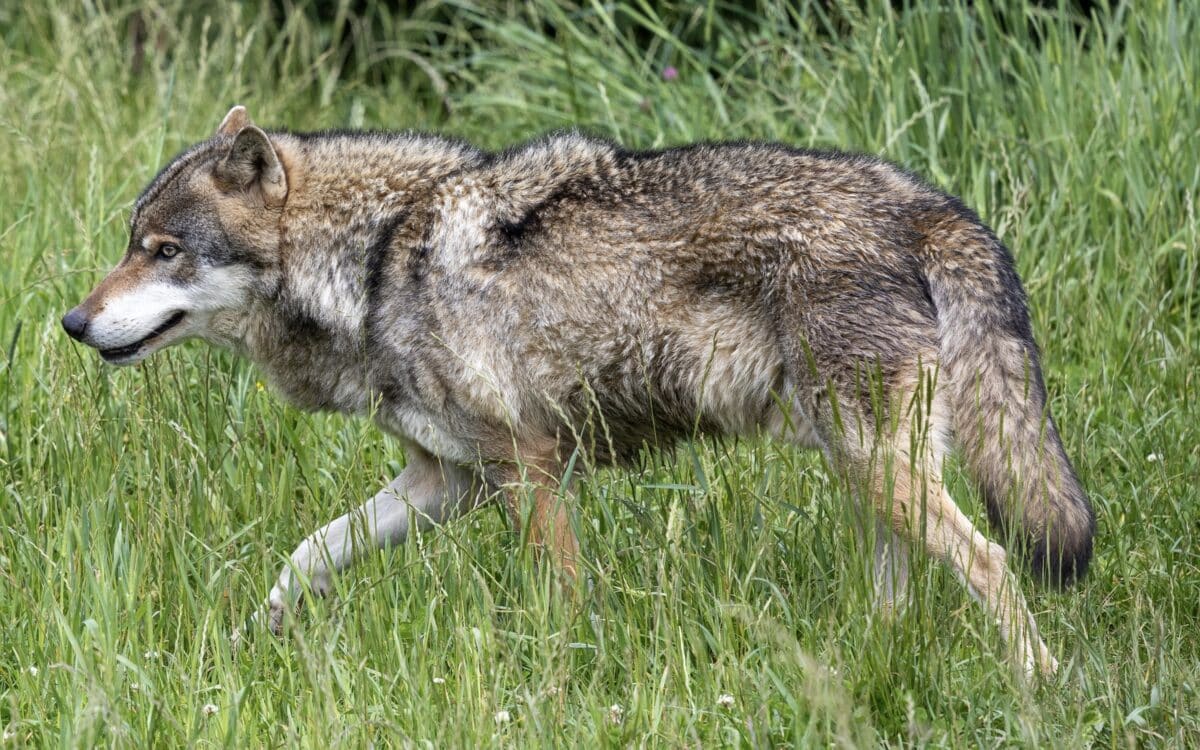
Colorado Parks and Wildlife has completed two separate lethal wolf removal operations following repeated livestock depredation incidents in western Colorado.
The agency and its agents removed an uncollared male yearling wolf from the Copper Creek Pack in Pitkin County and another uncollared male yearling from the Three Creeks Pack in Rio Blanco County. Both operations concluded on September 7th.
Wolves Removed After Repeated Depredations
The Copper Creek Pack removal followed four confirmed depredation events in Pitkin County during July, August and September. The Three Creeks Pack removal came after four confirmed depredation events in Rio Blanco County during August and September.
CPW said the incidents met its definition of chronic depredation, which requires three depredation events within 30 days with at least one supported by clear and convincing evidence.
The agency said affected livestock producers had already used several non-lethal methods to reduce conflicts with wolves. Those efforts included increased monitoring through cellular-connected cameras, active human presence from range riders and hazing when possible.
“CPW’s field staff in Northwest Colorado is working hard to implement conflict minimization tools and techniques to help reduce wolf-livestock conflict in the region.” – CPW Director Laura Clellan.
CPW Will Evaluate Wolf Pack Behavior
CPW said it will now evaluate whether the lethal removals achieved the goal of changing the behavior of the two wolf packs. Producers will continue using non-lethal conflict reduction measures during the evaluation period. The removals were conducted in consultation with the U.S. Fish and Wildlife Service and in accordance with applicable legal requirements, including the federal 10(j) rule.
Wolf-livestock conflicts can be particularly challenging during summer when cattle and other livestock may occupy pastures and grazing allotments covering tens of thousands of acres. Range riders and remote cameras can provide important monitoring across these large landscapes. The agency increased the number of range riders contracted through the Colorado Range Rider Program in 2026. Those riders have traveled more than 20,000 miles and provided over 6,000 hours of coverage and support to livestock producers.
Final reports detailing the two removal operations will be posted on its website once they are complete.