

Earthquakes are widely recognized as a major natural hazard, but new research from Yellowstone National Park suggests that seismic activity may also play an unexpected role in supporting life deep beneath the surface.
A study highlighted by the Yellowstone Volcano Observatory examined subsurface microbial communities and found a strong connection between earthquake activity and changes in the chemistry of underground water. The findings suggest that earthquakes may periodically replenish the chemical ingredients that sustain microbes living far below the surface.
The research was led by Dr. Eric Boyd of Montana State University and focused on microbes living in an aquifer beneath Yellowstone. These organisms are known as lithoautotrophs and obtain energy from chemical reactions involving inorganic compounds rather than relying on sunlight or organic food from the surface.
Yellowstone Borehole Provided a Window Underground
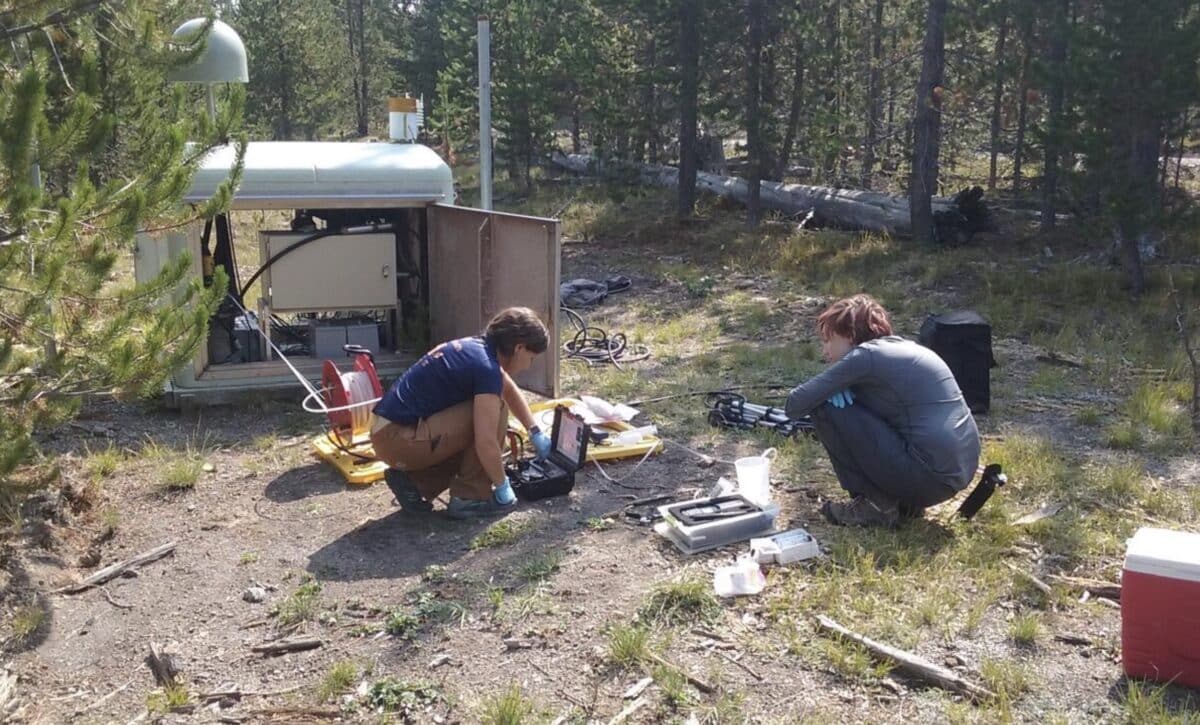
Scientists collected samples from a borehole located just south of the West Thumb of Yellowstone Lake. The borehole extends nearly 100 meters underground and intersects an aquifer contained within rhyolite, one of the most common rocks beneath Yellowstone. Five sampling periods were conducted between May and November 2021. During that time, Yellowstone experienced roughly 2,000 earthquakes, including significant earthquake swarms during May and June and again in July.
Researchers compared the underground water chemistry and microbial populations with changes in seismic activity. The results showed that the chemistry of the aquifer changed dramatically as earthquake activity increased. Concentrations of hydrogen, sulfide, and dissolved organic carbon all rose sharply during periods of heightened seismicity. Hydrogen levels were particularly notable. Concentrations reached roughly 10 to 20 times the highest levels previously recorded in Yellowstone.
Microbial Populations Exploded During Earthquake Activity
The chemical changes were accompanied by a major increase in the number of microbes living in the aquifer, with researches observing a microbial bloom following the earthquake swarms and the strongest growth occurring among organisms that use hydrogen as an energy source. At the peak of seismic activity, total cell concentrations had increased to more than 6.5 times their initial levels.
As the earthquakes subsided later in the study, concentrations of the chemicals and microbes declined sharply. The scientists believe earthquakes could produce these changes in several ways. Seismic shaking can alter underground fluid pathways and allow water to move through previously inaccessible areas. Earthquakes can also crush and shear rock, potentially exposing fresh mineral surfaces or releasing molecules that had previously been trapped underground.